
Jumping Genes Become Active in Critical Brain Areas as We Age Study

Jumping Genes Become Active in Critical Brain Areas as We Age: Study

  • Research Stash
  • News
  • 2.3K

Aging is a complex phenomenon. Scientists have been trying to figure out mechanisms underlying changes that occur in behavior and cognition processes due to aging. Among various possibilities, the role of retrotransposons – popularly known as jumping genes – is suspected to be critical in the process of aging.

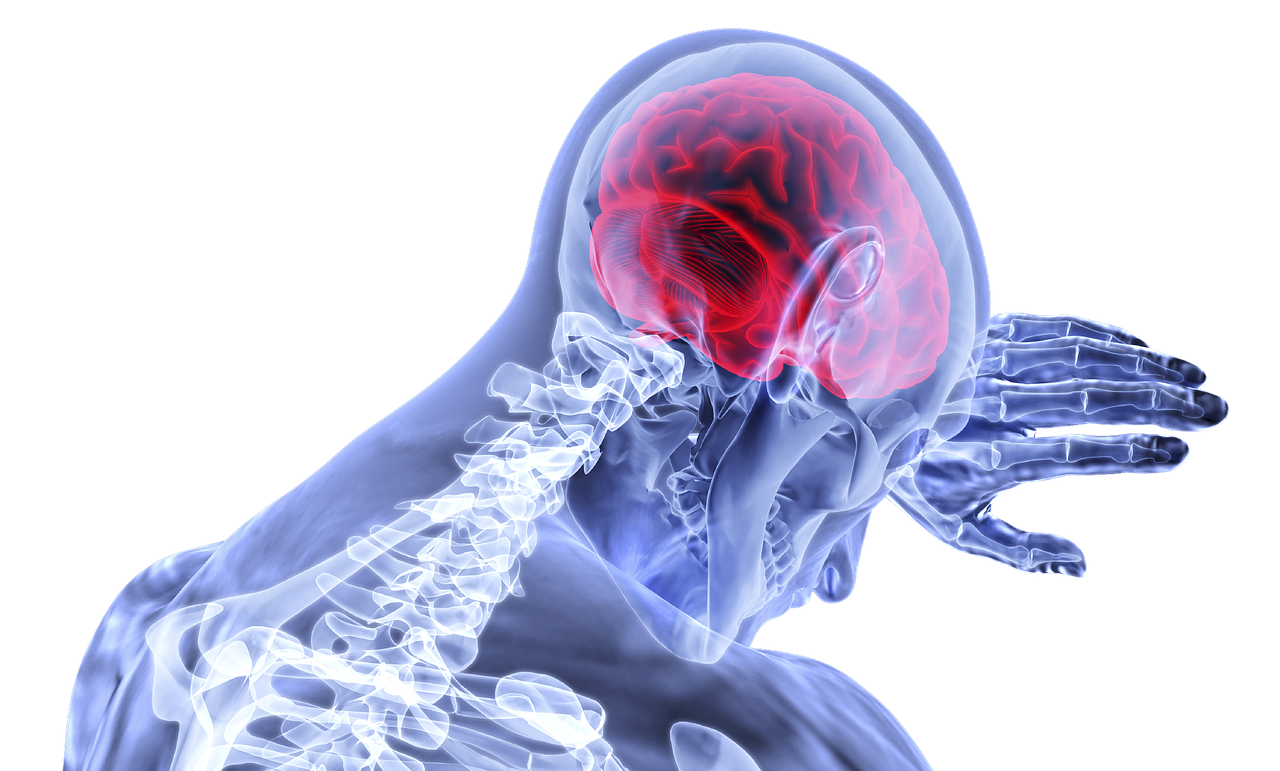
Now a group of Indian scientists have found that a jumping gene known as LINE-1 retrotransposons becomes highly active with age in different anatomical regions of the human brain like frontal cortex, hippocampus, and basal ganglia. This indicates that alteration of neuronal genome occurs as age advances. The group is now engaged in finding out the correlation between activation of retrotransposons in the human brain and its possible effects on behavior.
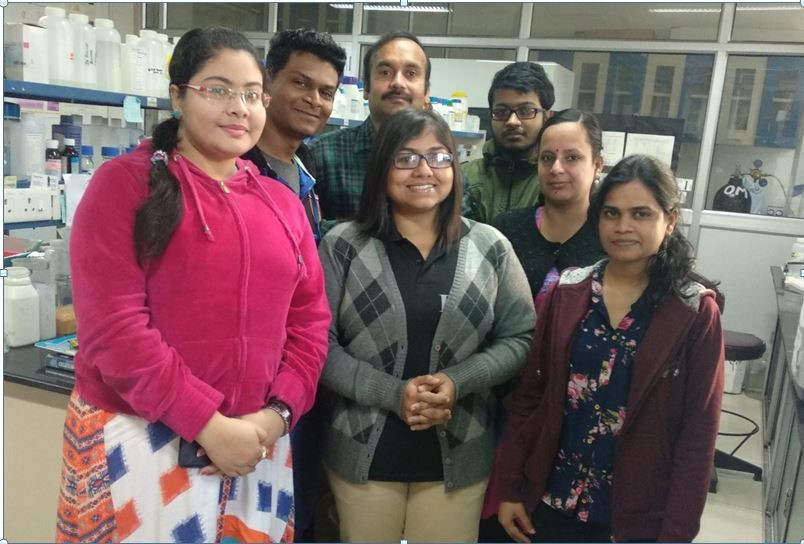
Research team at Department of Biotechnology, IIT Roorkee

Research team at Department of Biotechnology, IIT Roorkee

“We have demonstrated that LINE-1 jumping gene is highly active in different anatomical regions of the normal human brain like frontal cortex, hippocampus, and basal ganglia as compared to other non-brain tissues like kidney, heart, liver, and lung,” explained Dr. Prabhat Mandal from Department of Biotechnology, Indian Institute of Technology Roorkee. The experiments were conducted using post-mortem tissue obtained National Institute of Mental Health and Neurosciences, Bengaluru.

A transposon is a piece of DNA sequence with an inherent ability to move from one genomic location to another. Its discovery in 1956 went against the notion of the genome being static. There are two types of transposons – DNA transposon where a piece of DNA sequence moves from one place in the genome to another either by ‘cut and paste’ or ‘copy and paste’ mechanism, and RNA transposons – also called retrotransposon-  which moves within a genome using RNA as an intermediate.

LINE-1 or Long INterpersed Element-1 is the most abundant and active jumping gene sequence in the human genome. Almost 500,000 copies of LINE-1 sequences are present in the human genome with 100 to 150 copies actively jumping. An active LINE-1 encodes two proteins designated as ORF1p and ORF2p; both proteins are required for jumping LINE-1 sequences from one place of the genome to another place.

Studies on jumping genes are significant as it can cause insertional mutations leading to several diseases. Till date, more than 100 disease-causing jumping gene insertions have been identified.

“Our work reveals that the number of L1 copies are more in neurons compared to other somatic cells. This work also pointed that the copy number of L1 retrotransposon might increase with age and making neuronal genome plastic as we get older,” he added. The research results have been published in journal Mobile DNA.

The study was done by IIT Roorkee in collaboration with Jawaharlal Nehru University, New Delhi and Human Brain Tissue Repository (HBTR), Neurobiology Centre at NIMHANS. The research team included Debpali Sur, Raj Kishor Kustwar, Savita Budania, Anita Mahadevan, Dustin C. Hancks, Vijay Yadav, S. K. Shankar and Dr. Prabhat K. Mandal. The study was funded by the Department of Science and Technology (DST). (India Science Wire)

Journal Article

Detection of the LINE-1 retrotransposon RNA-binding protein ORF1p in different anatomical regions of the human brain

By Vaishali Lavekar

For the latest Science, Tech news and conversations, follow Research Stash on TwitterFacebook, and subscribe to our YouTube channel 

Rate

Research team at Department of Biotechnology, IIT Roorkee

“We have demonstrated that LINE-1 jumping gene is highly active in different anatomical regions of the normal human brain like frontal cortex, hippocampus, and basal ganglia as compared to other non-brain tissues like kidney, heart, liver, and lung,” explained Dr. Prabhat Mandal from Department of Biotechnology, Indian Institute of Technology Roorkee. The experiments were conducted using post-mortem tissue obtained National Institute of Mental Health and Neurosciences, Bengaluru.

A transposon is a piece of DNA sequence with an inherent ability to move from one genomic location to another. Its discovery in 1956 went against the notion of the genome being static. There are two types of transposons – DNA transposon where a piece of DNA sequence moves from one place in the genome to another either by ‘cut and paste’ or ‘copy and paste’ mechanism, and RNA transposons – also called retrotransposon-  which moves within a genome using RNA as an intermediate.

LINE-1 or Long INterpersed Element-1 is the most abundant and active jumping gene sequence in the human genome. Almost 500,000 copies of LINE-1 sequences are present in the human genome with 100 to 150 copies actively jumping. An active LINE-1 encodes two proteins designated as ORF1p and ORF2p; both proteins are required for jumping LINE-1 sequences from one place of the genome to another place.

Studies on jumping genes are significant as it can cause insertional mutations leading to several diseases. Till date, more than 100 disease-causing jumping gene insertions have been identified.

“Our work reveals that the number of L1 copies are more in neurons compared to other somatic cells. This work also pointed that the copy number of L1 retrotransposon might increase with age and making neuronal genome plastic as we get older,” he added. The research results have been published in journal Mobile DNA.

The study was done by IIT Roorkee in collaboration with Jawaharlal Nehru University, New Delhi and Human Brain Tissue Repository (HBTR), Neurobiology Centre at NIMHANS. The research team included Debpali Sur, Raj Kishor Kustwar, Savita Budania, Anita Mahadevan, Dustin C. Hancks, Vijay Yadav, S. K. Shankar and Dr. Prabhat K. Mandal. The study was funded by the Department of Science and Technology (DST). (India Science Wire)

Journal Article

Detection of the LINE-1 retrotransposon RNA-binding protein ORF1p in different anatomical regions of the human brain

By Vaishali Lavekar

For the latest Science, Tech news and conversations, follow Research Stash on TwitterFacebook, and subscribe to our YouTube channel 
" }
Astronomers witness galaxy megamerger

Astronomers Have Witnessed the Beginnings of A Gargantuan Cosmic Pileup

Peering deep into space -- an astounding 90 percent of the way across the observable universe -- astronomers have witnessed the beginnings of a gargantuan cosmic pileup, the impending collision of 14 young, starbursting galaxies.

  • News
  • 2.2K
Read more
Scientists Pave the Way for a Vaccine against Tuberculosis

Scientists Pave the Way for a Vaccine against TB

The scope for developing a new vaccine against the dreaded disease of Tuberculosis through the biological route has become brighter, with researchers at Kolkata-based Indian Institute of Chemical Biology (IICB) and Bose Institute identifying a potential trouble spot and figuring out ways to deal with it.

  • News
  • 2.7K
Read more
New Material from Silk Protein & Silver Nano-particles May Make Implants Safe

New Material from Silk Protein & Silver Nano-particles May Make Implants Safe

A scaffold made from silk protein fibroin and silver nanoparticles has been found to have antimicrobial properties and may have application as a biomaterial for implants

  • News
  • 3K
Read more

Internet is huge! Help us find great content

Newsletter

Never miss a thing! Sign up for our newsletter to stay updated.

About

Research Stash is a curated collection of tools and News for S.T.E.M researchers

Have any questions or want to partner with us? Reach us at hello@researchstash.com

Navigation

Submit