
Scientific Protocol in The Offing for Cloud Seeding
-
Research Stash
- News
- 1.8K

Scientists at the Indian Institute of Tropical Meteorology (IITM) here are preparing to launch a study during the coming monsoon season to understand physical properties of clouds and particulate matter in the atmosphere and also their interaction, as part of an exercise to formulate a scientific protocol for cloud seeding operations to produce artificial rains.
Recent years have seen a growing demand for cloud seeding to overcome the problem of drought in different regions. It has been tried in some places. However, such exercises have been in the nature of hit and trial in the absence of clear understanding of the science behind it. The proposed experiment is expected to fill this knowledge gap.
IITM has been engaged in Programme called ‘Cloud Aerosol Interaction and Precipitation Enhancement Experiment’ (CAIPEEX) since 2009, over different parts of India. Under this, airborne observations of aerosol particles, cloud droplets, raindrops and ice particles are conducted together with a collection of information on environmental parameters like temperature, relative humidity, and winds. Ground-based observations were also conducted in a campaign mode. These observations have yielded insights into cloud vertical structure and development, aerosol-cloud interaction and processes influencing raindrop formation, especially over land regions.
The new study planned for the next monsoon season will be conducted over a ‘rain shadow’ region for cloud seeding. It would involve seeding of hygroscopic material at the cloud base using cloud seeding flares using aircraft. While one aircraft will seed clouds, the other would be flown into the clouds at different altitudes to record various parameters to see the impact of seeding. The experiment would be conducted through the four-month season with a view to getting data over a wide spectrum of meteorological conditions and types of clouds.
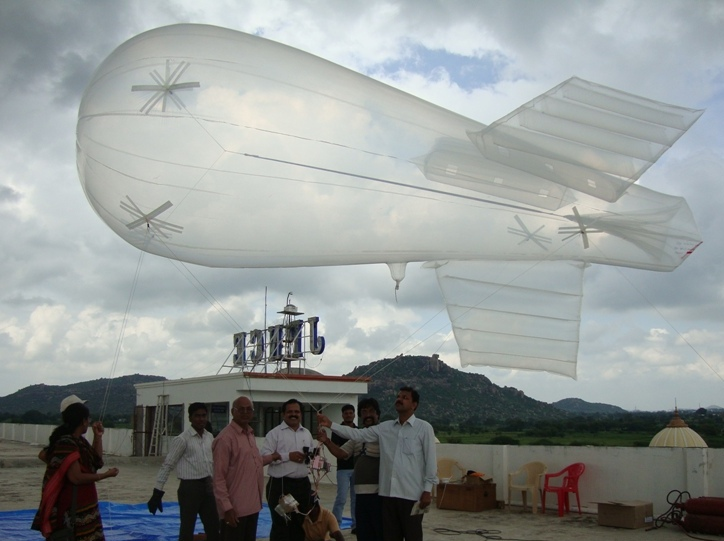
Solapur has been chosen for the study as it falls in a rain transition zone. Meteorological data collected over the past 100 years shows that as one moves eastwards from the west coast the rainfall keeps decreasing and it becomes significantly less as one reaches Solapur. A radar has been set up at an engineering college in the city to help select clouds for seeding. A dense network of 100 rain gauges will measure the amount of rainfall and for evaluation and calibration of radar. Weather balloons are used to send instruments to higher altitudes and measure thermodynamic state of the atmosphere in which seeding experiment is conducted.
“Newer technologies are emerging that promise to enhance rain formation. However, there is a need to ensure that they are employed properly. Our study would hopefully help achieve this,” Project Director Thara Prabhakaran explained while speaking to India Science Wire. The study, he said, could help in formulating a scientific basis and protocol for cloud seeding.
The study would dwell on finding answers to basic scientific questions such as understanding the changes that may occur in the clouds on the infusion of the seeding material, gauging how they impact rain formation and into surface precipitation and developing methods to quantify direct and indirect effects. The observations could also help change the way the numerical models represent clouds and precipitation processes. (India Science Wire)
By Sundararajan Padmanabhan