
Researchers Have Found A Pest Gene Which Can Help Fight Pesticide Contamination In The Environment

  • Research Stash
  • News
  • 2.7K

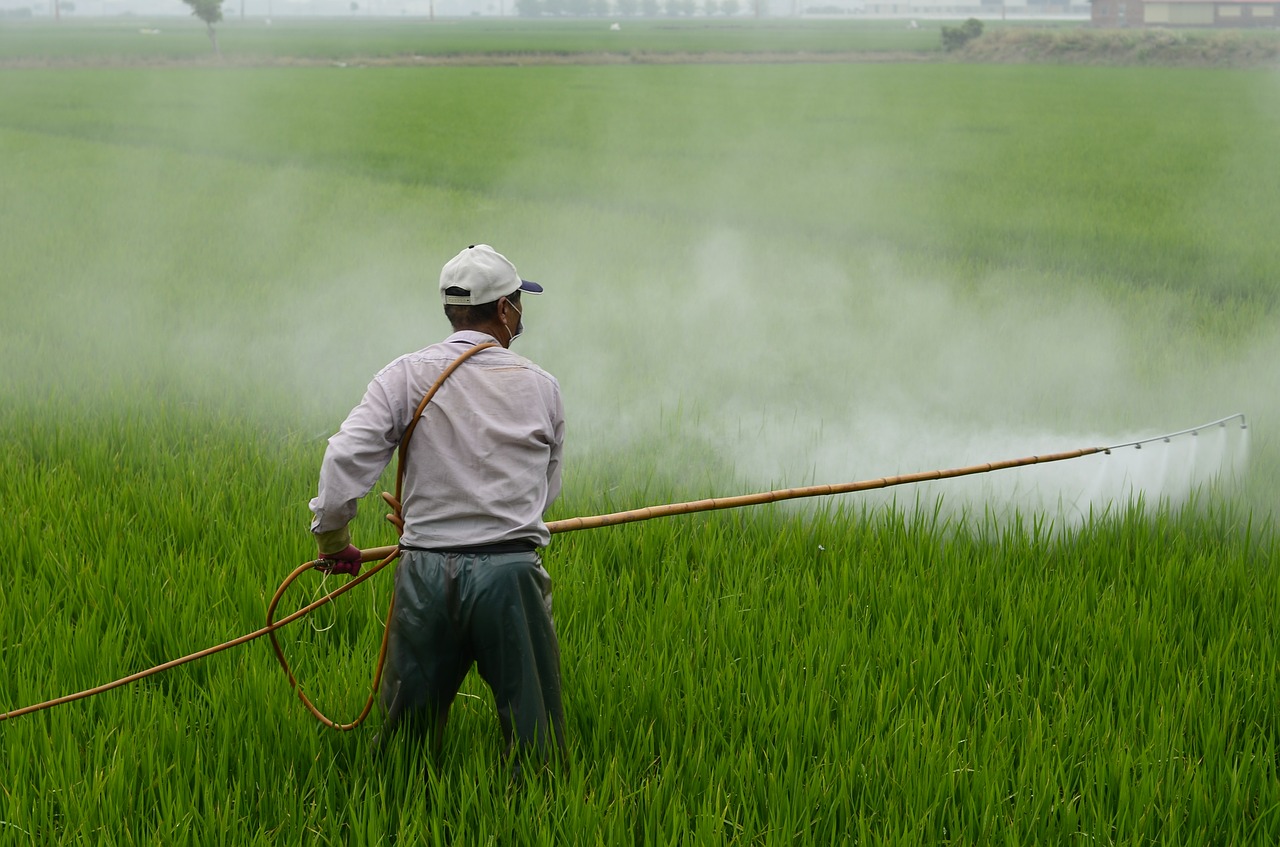
Persistent use of chemical pesticides to increase crop productivity has led to their accumulation in soil, water, and even food. Now a group of researchers from Pune have isolated an enzyme from a pest and found that it can be used to clean up pesticide residues from food and environment.

Ms. Chaitali Labade (Top left), Dr. Vaijayanti Tamhane (Top right), Mr. Abhilash Jadhav (Bottom left), Dr. Smita Zinjarde (Bottom right).pngImage Ms. Chaitali Labade (Top left), Dr. Vaijayanti Tamhane (Top right), Mr. Abhilash Jadhav (Bottom left), Dr. Smita Zinjarde (Bottom right)

Researchers from Savitribai Phule Pune University have isolated a gene that produces a highly efficient enzyme (Glutathione –S-transferase or GST) from bollworm, a pest. This enzyme, they say, can be used for removing pesticides from food and environment.

Over the years, a common pest called Helicoverpa armigera has acquired resistance towards pesticides. This, scientists hypothesized, might be due to an efficient detoxification carried out by enzyme, Glutathione –S-transferase, expressed in this pest allowing it to survive despite the high amount of pesticides sprayed in fields.

To prove this hypothesis, researchers fed this pest with high amounts of pesticides in the diet in the laboratory and then isolated Glutathione –S-transferase RNA from its tissues. It showed that this enzyme can detoxify commonly used pesticides such as organophosphate, pyrethroid, organochloride, carbamate, and neonicotinoid. The transfer of this gene to a yeast allowed it to grow profusely in the presence of high level of pesticides by detoxifying them. Therefore, this enzyme can potentially be used for bioremediation.

“We have found that GST expressed in H. armigera exposed to high doses of pesticides (organophosphate and pyrethroid), making it effective for bioremediation. This HaGST-8 (a variant of GST) protein containing formulation can be used for applications such as wastewater treatment and removal of pesticides from vegetables. We are working on a combination of enzymes for efficient removal of most pesticides used in agriculture,” Dr. Vaijayanti Tamhane, principal investigator this study, told India Science Wire.

Different factors affecting the delivery of the proteins to plants such as contact time, adherence to plant surface, emulsification, stability in suspension will be addressed to reduce wash-offs and wastage after spraying, she added. The degradative products of pesticides and their toxicity are also being analyzed, following which control trials of the formulation can be carried out.

“We are also planning a crop pre-harvest HaGST containing formulation, which can be sprayed directly crops or vegetables before their harvest, to eliminate the pesticides present on it before it is consumed”, said Dr. Tamhane.

The research findings have published in journal Ecotoxicology and Environmental Safety. The research team included Chaitali P. Labade, Abhilash R. Jadhav, Mehul Ahire, Smita S. Zinjarde, and Vaijayanti A. Tamhane from Savitribai Phule Pune University. (India Science Wire)

Journal Article

Role of induced glutathione-S-transferase from Helicoverpa armigera (Lepidoptera: Noctuidae) HaGST-8 in detoxification of pesticides.

For the latest tech news and conversations, follow Research Stash on TwitterFacebook, and subscribe to our YouTube channel.

Over the years, a common pest called Helicoverpa armigera has acquired resistance towards pesticides. This, scientists hypothesized, might be due to an efficient detoxification carried out by enzyme, Glutathione –S-transferase, expressed in this pest allowing it to survive despite the high amount of pesticides sprayed in fields.

To prove this hypothesis, researchers fed this pest with high amounts of pesticides in the diet in the laboratory and then isolated Glutathione –S-transferase RNA from its tissues. It showed that this enzyme can detoxify commonly used pesticides such as organophosphate, pyrethroid, organochloride, carbamate, and neonicotinoid. The transfer of this gene to a yeast allowed it to grow profusely in the presence of high level of pesticides by detoxifying them. Therefore, this enzyme can potentially be used for bioremediation.

“We have found that GST expressed in H. armigera exposed to high doses of pesticides (organophosphate and pyrethroid), making it effective for bioremediation. This HaGST-8 (a variant of GST) protein containing formulation can be used for applications such as wastewater treatment and removal of pesticides from vegetables. We are working on a combination of enzymes for efficient removal of most pesticides used in agriculture,” Dr. Vaijayanti Tamhane, principal investigator this study, told India Science Wire.

Different factors affecting the delivery of the proteins to plants such as contact time, adherence to plant surface, emulsification, stability in suspension will be addressed to reduce wash-offs and wastage after spraying, she added. The degradative products of pesticides and their toxicity are also being analyzed, following which control trials of the formulation can be carried out.

“We are also planning a crop pre-harvest HaGST containing formulation, which can be sprayed directly crops or vegetables before their harvest, to eliminate the pesticides present on it before it is consumed”, said Dr. Tamhane.

The research findings have published in journal Ecotoxicology and Environmental Safety. The research team included Chaitali P. Labade, Abhilash R. Jadhav, Mehul Ahire, Smita S. Zinjarde, and Vaijayanti A. Tamhane from Savitribai Phule Pune University. (India Science Wire)

Journal Article

Role of induced glutathione-S-transferase from Helicoverpa armigera (Lepidoptera: Noctuidae) HaGST-8 in detoxification of pesticides.

For the latest tech news and conversations, follow Research Stash on TwitterFacebook, and subscribe to our YouTube channel.
" }

Indian Scientists Have Discovered A Diagnostic Marker For Prostate Cancer

A group of Indian scientists have identified a sensitive and specific diagnostic marker for prostate cancer that may differentiate between cancerous and non-cancerous prostate enlargement.

  • News
  • 2.9K
Read more
Edible Coating Materials to Improve Shelf Life of Fruit Crops

Edible Coating Materials to Improve Shelf Life of Fruit Crops

Scientists at the Department of Biotechnology’s Mohali-based National Agri-Food Biotechnology Institute have developed non-toxic and edible composite coatings based on wheat straw hemicellulosic polysaccharide and stearic acid derivatized oat bran polysaccharide that promises to overcome the problems.

  • News
  • 3.1K
Read more
Children participating in quiz during Sci-Connect in Gangtok this week

Making Science Education Fun for Schools Kids in NE India

In order to promote scientific temper and original thinking in school kids, a programme is underway in remote areas of the Northeast. Children are shown a series of short films on a range of subjects, and then a quiz competition is held along with hands-on activities

  • News
  • 2.2K
Read more

Internet is huge! Help us find great content

Newsletter

Never miss a thing! Sign up for our newsletter to stay updated.

About

Research Stash is a curated collection of tools and News for S.T.E.M researchers

Have any questions or want to partner with us? Reach us at [email protected]

Navigation

Submit