
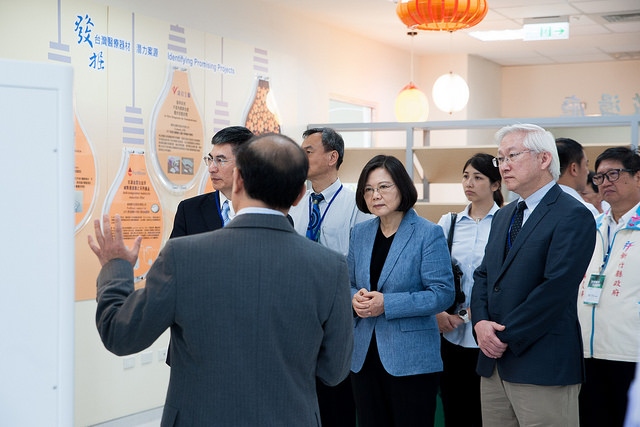
President Tsai Highlights Progress In Fostering Biomedical Sector

  • Research Stash
  • News
  • 2K

President Tsai Ing-wen said June 26 that the government is committed to fostering Taiwan’s potential-laden biomedical and pharmaceuticals sector through such measures as strengthening local companies’ positions in international markets and bolstering interministerial collaboration on industry development initiatives.
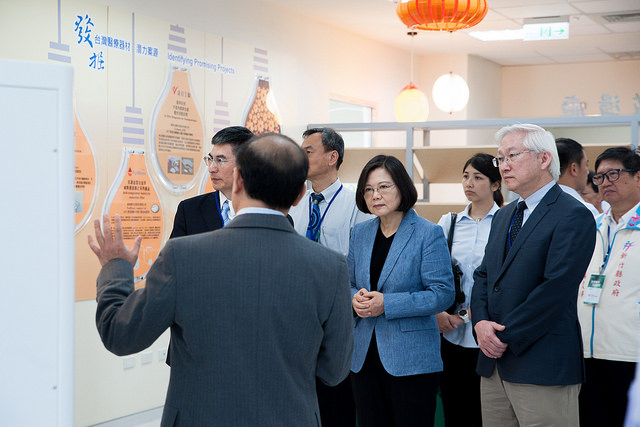
img20170629113417667.jpgImage: President Tsai Ing-wen (center) tours the Center of Biomedical Industry Innovation Program June 26 in northern Taiwan’s Hsinchu County. (Courtesy of Office of the President)

Tsai made the comments while visiting the Center of Biomedical Industry Innovation Program in northern Taiwan’s Hsinchu County. The facility was established in January by the Ministry of Science and Technology under the Biomedical Industry Innovation Program, a comprehensive plan aimed at transforming the country into a hub of biotech and medical R&D in Asia.

The center’s Biomedical Development Board, comprising experts from the public and private sectors, serves as a government think tank for the biomedical industry while working to expand exchanges between local and overseas experts and enterprises. It is also preparing to launch Biomedical i-Hub, a startup accelerator, and international matchmaking platform.

According to the president, as biotech and pharmaceuticals are one of five sectors directed for strategic promotion under the five-plus-two innovative industries initiative, the government has moved quickly in implementing a range of measures to foster industry growth. In addition to the center, these include amending legislation to promote the development of cutting-edge medical devices and pharmaceuticals, she said.

A key component of Tsai’s economic revitalization program, the initiative targets the five emerging and high-growth sectors of biotech and pharmaceuticals, green energy, national defense, smart machinery and Internet of Things, as well as focuses on the promotion of two core concepts: the circular economy and a new paradigm for agricultural development.

To bolster Taiwan’s biomedical exports, Tsai said that the government is seeking to integrate innovative business clusters and enhance domestic ecosystems, highlighting the recent establishment of the Taiwan Pharmaceutical Alliance. Launched by the Ministry of Economic Affairs, the coalition of 14 local firms facilitates the joint exploration of foreign markets and promotes export diversification.

The government will also support industry collaboration on export expansion by helping Taiwan biomedical products acquire certification in new markets, including New Southbound Policy target countries, Tsai stated.

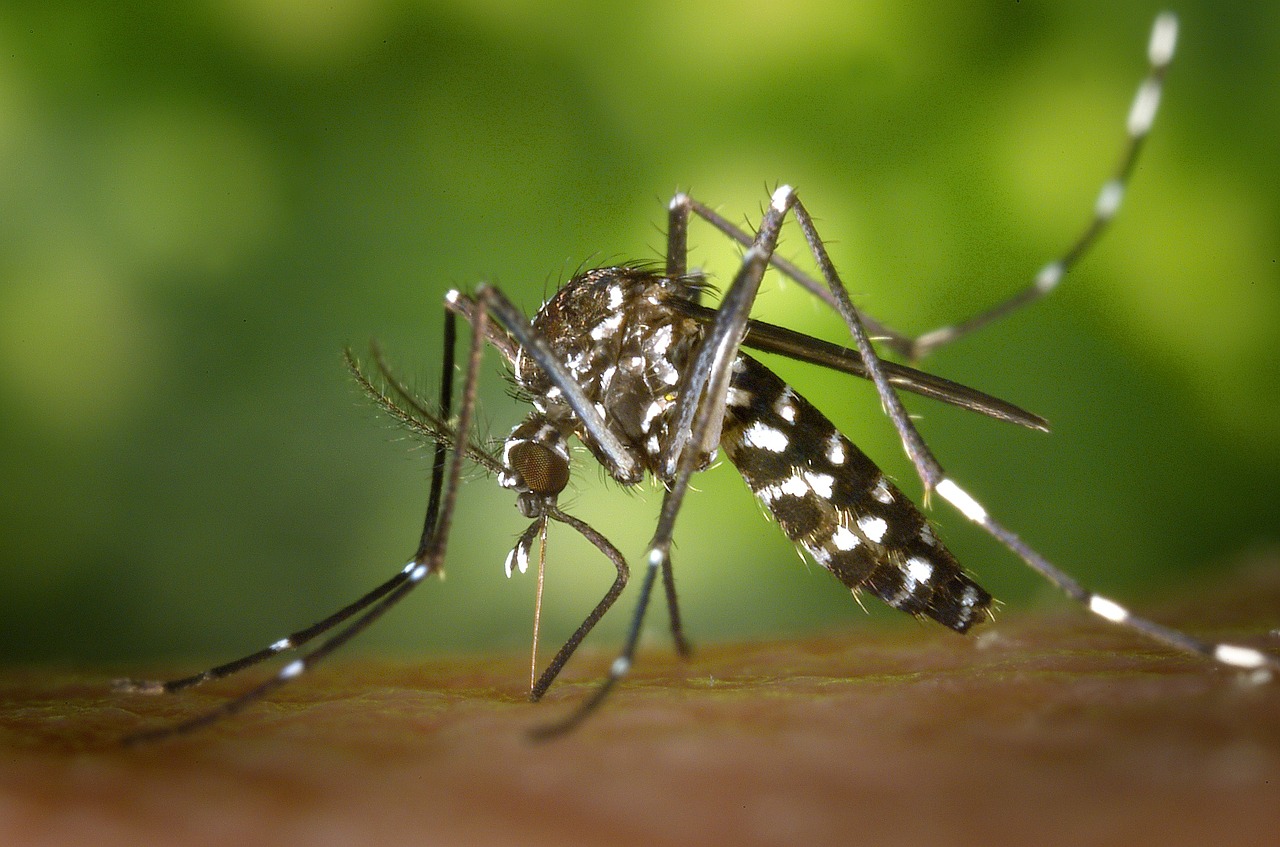
According to the MOST, Taiwan possesses sought-after biomedical expertise in areas such as the prevention of dengue fever and other mosquito-borne illnesses. The government will work with local companies to export-related technologies and strategies to Southeast Asian nations where such diseases remain prevalent so as to create mutual benefits, forge regional links and promote economic collaboration—core objectives of the New Southbound Policy.

The initiative, a central plank of the national development strategy, seeks to deepen the nation’s agricultural, business, cultural, education, trade, and tourism links with the 10 Association of Southeast Asian Nations member states, six South Asian countries, Australia and New Zealand. (CPY-E)
Source: http://nspp.mofa.gov.tw

Rate

The center’s Biomedical Development Board, comprising experts from the public and private sectors, serves as a government think tank for the biomedical industry while working to expand exchanges between local and overseas experts and enterprises. It is also preparing to launch Biomedical i-Hub, a startup accelerator, and international matchmaking platform.

According to the president, as biotech and pharmaceuticals are one of five sectors directed for strategic promotion under the five-plus-two innovative industries initiative, the government has moved quickly in implementing a range of measures to foster industry growth. In addition to the center, these include amending legislation to promote the development of cutting-edge medical devices and pharmaceuticals, she said.

A key component of Tsai’s economic revitalization program, the initiative targets the five emerging and high-growth sectors of biotech and pharmaceuticals, green energy, national defense, smart machinery and Internet of Things, as well as focuses on the promotion of two core concepts: the circular economy and a new paradigm for agricultural development.

To bolster Taiwan’s biomedical exports, Tsai said that the government is seeking to integrate innovative business clusters and enhance domestic ecosystems, highlighting the recent establishment of the Taiwan Pharmaceutical Alliance. Launched by the Ministry of Economic Affairs, the coalition of 14 local firms facilitates the joint exploration of foreign markets and promotes export diversification.

The government will also support industry collaboration on export expansion by helping Taiwan biomedical products acquire certification in new markets, including New Southbound Policy target countries, Tsai stated.

According to the MOST, Taiwan possesses sought-after biomedical expertise in areas such as the prevention of dengue fever and other mosquito-borne illnesses. The government will work with local companies to export-related technologies and strategies to Southeast Asian nations where such diseases remain prevalent so as to create mutual benefits, forge regional links and promote economic collaboration—core objectives of the New Southbound Policy.

The initiative, a central plank of the national development strategy, seeks to deepen the nation’s agricultural, business, cultural, education, trade, and tourism links with the 10 Association of Southeast Asian Nations member states, six South Asian countries, Australia and New Zealand. (CPY-E)

Source: http://nspp.mofa.gov.tw
" }

Metro Rail System Cause the Artificial Magnetic Disturbance

An obvious magnetic disturbance has been repeatedly observed by magnetometers located outside of urban areas in Yangmingshan National Park and has affected the monitoring of volcanic activity in the northern region of Taiwan.

  • Videos
  • 1.4K
Read more
Nano sheets Can Be Chemical Reagents Too

Nanosheets Can Be Chemical Reagents Too

The research team at the Indian Institute of Technology, Gandhinagar, has found that boron-rich nanosheets, developed by them earlier this year, can also act as a chemical reagent

  • News
  • 2.9K
Read more
India and UK Launch New Research Initiative on Cancer

India and UK Launch New Research Initiative on Cancer

India and the United Kingdom today launched a British Pounds 10 million collaborative research programme that will address issues of affordability, prevention and care of cancer by bringing together Indian and UK experts across clinical research

  • News
  • 2.4K
Read more

Internet is huge! Help us find great content

Newsletter

Never miss a thing! Sign up for our newsletter to stay updated.

About

Research Stash is a curated collection of tools and News for S.T.E.M researchers

Have any questions or want to partner with us? Reach us at hello@researchstash.com

Navigation

Submit