
A Treatment For ‘Retinitis Pigmentosa’ Could Be in the Offing

A Treatment For ‘Retinitis Pigmentosa’ Could Be in the Offing

  • Research Stash
  • News
  • 3K

In a significant development in the area of ophthalmology, a team of researchers has come out with a finding that shows the possibility for a cure for the progressively irreversible retinal degenerative disease which causes partial or complete blindness.
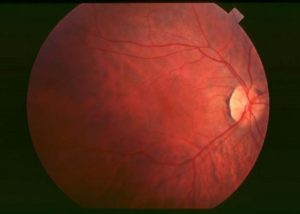
Fundus of patient with retinitis pigmentosa, early stage
Fundus of a patient with retinitis pigmentosa, early stage

Presently, there is no cure for the disease. Current modules of treatment offer only symptomatic relief. Some recent studies across the world have shown that cell therapy could be of help. However, it is difficult to find an accessible and abundant source of stem cells using minimally invasive techniques for this purpose. Besides, there is a lot of safety and ethical issues surrounding the use of stem cells.

Scientists have been toying with the alternative idea of using monocytes, which are a type of leukocyte, or white blood cell. Recent studies have shown that they could be converted into stem cell-like cells without needing to go through genetic modification.  A major plus point with monocytes, if the strategy is found effective, will be that they constitute as much as five to eight percent of blood and they are, thus, available in relatively larger quantities.

In their new study, researchers from the Department of Biotechnology’s National Institute of Immunology and  Dr. Rajendra Prasad Centre for Ophthalmic Sciences at All India Institute of Medical Sciences assessed the potential of monocytes obtained from peripheral blood and have found that they do fit the bill.

They first modified the monocytes into stem cell-like cells by culturing them in a unique media and then exposed them to biochemicals involved in the natural process of retinal differentiation, leading to a state that mimicked retinal neuron-like cells. These were studied for molecular, phenotypic, and functional properties followed by transplantation in a mouse model previously developed in their lab to test their integration within the body. They then checked if these induced cells could gain retinal neuron-like function upon transplantation in an eye with a degenerated retina. The study team has published a report on their work in the journal `Stem Cell Research and Therapy’.

Speaking to India Science Wire, the scientists noted that it was a proof-of-concept study to demonstrate that reconditioned monocytes can be induced to acquire retinal neuron-like properties through differentiation using a defined growth media and that it can be a potential candidate for cell therapy-based interventions and disease modeling for ocular diseases and cautioned against over-enthusiasm.

“We have crossed an important milestone. But, these retinal neuron-like cells survive only for a few weeks upon transplantation. We have to develop ways so that they survive sufficiently long”, they said. (ISW)

If you liked this article, then please subscribe to our YouTube Channel for the latest Science & Tech news. You can also find us on Twitter & Facebook
Rate

In their new study, researchers from the Department of Biotechnology’s National Institute of Immunology and  Dr. Rajendra Prasad Centre for Ophthalmic Sciences at All India Institute of Medical Sciences assessed the potential of monocytes obtained from peripheral blood and have found that they do fit the bill.

They first modified the monocytes into stem cell-like cells by culturing them in a unique media and then exposed them to biochemicals involved in the natural process of retinal differentiation, leading to a state that mimicked retinal neuron-like cells. These were studied for molecular, phenotypic, and functional properties followed by transplantation in a mouse model previously developed in their lab to test their integration within the body. They then checked if these induced cells could gain retinal neuron-like function upon transplantation in an eye with a degenerated retina. The study team has published a report on their work in the journal `Stem Cell Research and Therapy’.

Speaking to India Science Wire, the scientists noted that it was a proof-of-concept study to demonstrate that reconditioned monocytes can be induced to acquire retinal neuron-like properties through differentiation using a defined growth media and that it can be a potential candidate for cell therapy-based interventions and disease modeling for ocular diseases and cautioned against over-enthusiasm.

“We have crossed an important milestone. But, these retinal neuron-like cells survive only for a few weeks upon transplantation. We have to develop ways so that they survive sufficiently long”, they said. (ISW)

If you liked this article, then please subscribe to our YouTube Channel for the latest Science & Tech news. You can also find us on Twitter & Facebook

" }
Study Finds New Method to Deliver Nano-Based Drugs

Study Finds New Method to Deliver Nano-Based Drugs

Scientists have found that nano-based drugs could be effectively delivered by hitchhiking on the same transport mechanism that is used to carry iron in the body, without disrupting the natural process

  • News
  • 1.9K
Read more
New Material from Silk Protein & Silver Nano-particles May Make Implants Safe

New Material from Silk Protein & Silver Nano-particles May Make Implants Safe

A scaffold made from silk protein fibroin and silver nanoparticles has been found to have antimicrobial properties and may have application as a biomaterial for implants

  • News
  • 3.1K
Read more
Experts Call For Global Initiative to Tackle Nitrogen Pollution

Experts Call For Global Initiative to Tackle Nitrogen Pollution

Experts participating in the World Environment Day summit here have called upon governments, industries, and farmers to come together to tackle the unsolved challenge of nitrogen pollution.

  • News
  • 1.9K
Read more

Internet is huge! Help us find great content

Newsletter

Never miss a thing! Sign up for our newsletter to stay updated.

About

Research Stash is a curated collection of tools and News for S.T.E.M researchers

Have any questions or want to partner with us? Reach us at hello@researchstash.com

Navigation

Submit