EEG To Minimize Human Error

EEG To Minimize Human Error

  • Research Stash
  • News
  • 2.2K

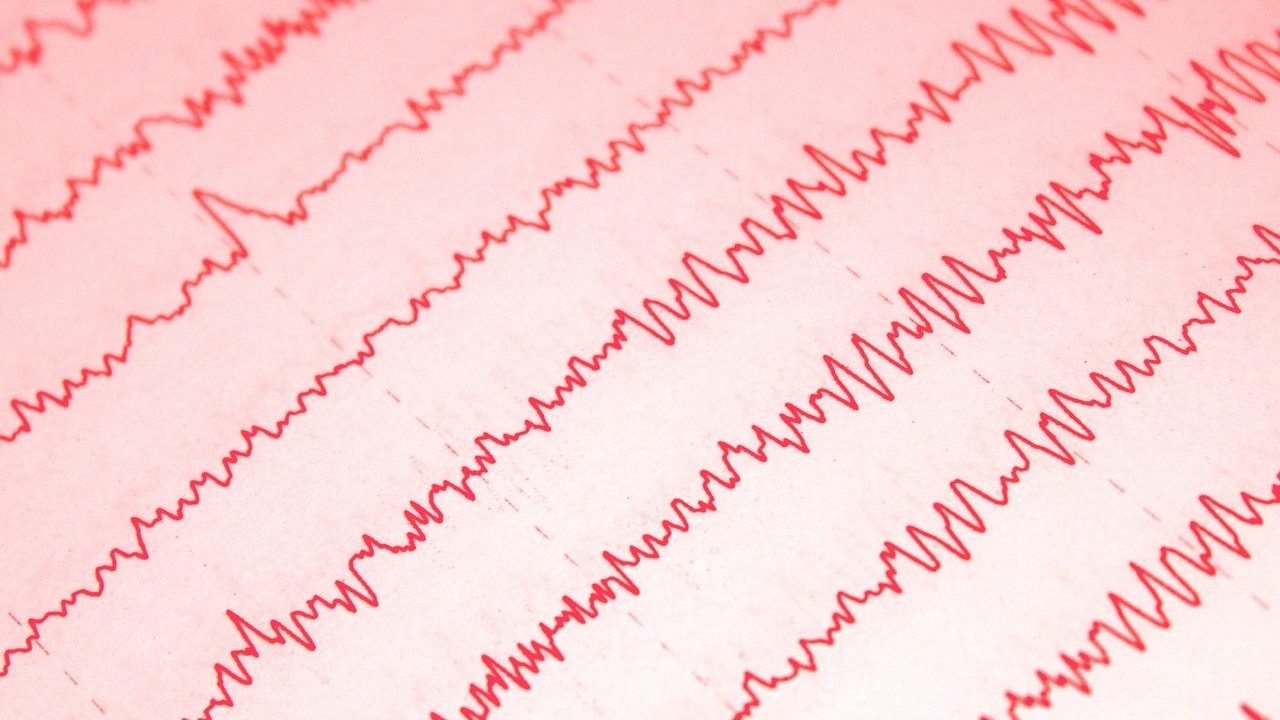
If the capability of the worker to respond to an emergency in real-time can be assessed, this could prevent accidents and mishaps on a factory floor. An electroencephalogram (EEG) is used to measure brain wave activity by placing sensors on the scalp. Researchers at the Indian Institute of Technology Madras (IIT Madras) have shown that EEG can also be used to measure brainwaves in industrial workers, to assess their mental sharpness, especially during times of crisis.
EEG To Minimize Human Error

The new study has shown the potential of EEG to assess the cognitive workload of human operators in a chemical plant control room. The cognitive workload is the level of measurable mental effort that is expended by an individual to perform a task. The high cognitive workload state of workers makes them prone to commit errors that can lead to accidents.

Prof. Rajagopalan Srinivasan, Department of Chemical Engineering, IIT Madras, said, “Human errors are the cause of nearly 70 percent of industrial accidents, the world over. Human errors, whether at the planning or execution stage, depend not only on the skill of the worker but also on his/her mental state and sharpness at that time. Anybody’s performance will become error-prone if there is a mismatch between the demands of the task in which the person is responsible and their ability at that moment to handle it. Such a mismatch leads to high cognitive workload in human operators, often a precursor to poor performance.”

Further, Prof. Rajagopalan Srinivasan explained, “All our thoughts and activities are driven by electrical signals between the cells in our brain called brain waves, which occur at different frequencies and are called alpha, beta, gamma, theta, and delta. The relative magnitudes of these waves along with their variation are a signature of our thought process and current mental state.”

The research team affixed sensors to the heads of six participants and had them perform eight tasks each. The nature of the tasks was to monitor a typical industrial section for any disturbances which, if not controlled by the participant in a given time frame, can lead to accidents. Thus, the nature of the job required them to understand the plant (industrial section) behavior and take appropriate decisions and actions if any disturbance occurred. The disturbance increased their cognitive workload, and only if the correct decision was made, did the cognitive workload reduce.

Their results showed that the amount of Theta Waves could identify any mismatch between the worker’s mental model of the process, and the actual plant behavior during abnormal situations. This makes sense because the ‘theta band’ of brainwaves has been thought to be responsible for the control process of working memory functions.

The determination of the varying cognitive workload, in turn, influences human performance and the researchers found that the power spectral density in the theta band, correlated well with participants’ successes and failures during the task. “We intend to study the potential of these EEG methods to improve human performance in various high-risk industries, thus opening a new paradigm to industrial safety and its relation to the real-time mental state of the worker,” announced Prof Srinivasan.

The research team includes Prof. Rajagopalan Srinivasan, Mr. Mohd Umair Iqbal, and Prof. Babji Srinivasan. The results have been published in the journal of Computers and Computer Engineering. (ISW)

If you liked this article, then please subscribe to our YouTube Channel for the latest Science & Tech news. You can also find us on Twitter & Facebook

Rate

Further, Prof. Rajagopalan Srinivasan explained, “All our thoughts and activities are driven by electrical signals between the cells in our brain called brain waves, which occur at different frequencies and are called alpha, beta, gamma, theta, and delta. The relative magnitudes of these waves along with their variation are a signature of our thought process and current mental state.”

The research team affixed sensors to the heads of six participants and had them perform eight tasks each. The nature of the tasks was to monitor a typical industrial section for any disturbances which, if not controlled by the participant in a given time frame, can lead to accidents. Thus, the nature of the job required them to understand the plant (industrial section) behavior and take appropriate decisions and actions if any disturbance occurred. The disturbance increased their cognitive workload, and only if the correct decision was made, did the cognitive workload reduce.

Their results showed that the amount of Theta Waves could identify any mismatch between the worker’s mental model of the process, and the actual plant behavior during abnormal situations. This makes sense because the ‘theta band’ of brainwaves has been thought to be responsible for the control process of working memory functions.

The determination of the varying cognitive workload, in turn, influences human performance and the researchers found that the power spectral density in the theta band, correlated well with participants’ successes and failures during the task. “We intend to study the potential of these EEG methods to improve human performance in various high-risk industries, thus opening a new paradigm to industrial safety and its relation to the real-time mental state of the worker,” announced Prof Srinivasan.

The research team includes Prof. Rajagopalan Srinivasan, Mr. Mohd Umair Iqbal, and Prof. Babji Srinivasan. The results have been published in the journal of Computers and Computer Engineering. (ISW)

If you liked this article, then please subscribe to our YouTube Channel for the latest Science & Tech news. You can also find us on Twitter & Facebook
" }
Drug-Coated Bone Implants May Help Tackle Post-Surgery Infections

Drug-Coated Bone Implants May Help Tackle Post-Surgery Infections

Researchers have now come up with a method to localize the drug delivery to the surgery site. This has been achieved by modifying the surface of metallic implants by loading them with an antibacterial drug that gets released gradually over a period of one week at the implant site to prevent infections.

  • News
  • 1.9K
Read more
Low Academic Performers Prone to Higher Stress

Low Academic Performers Prone to Higher Stress

In recent years, there has been an alarming increase in social, parental and institutional emphasis on academic performance. A new study done among high school students has shown that students who do not do well in academics are prone to higher stress

  • News
  • 1.9K
Read more
Researchers celebrate World Meteorological Day

Researchers celebrate World Meteorological Day

World Meteorological Day is observed every year on March 23 to commemorate the coming into force of the international convention establishing the World Meteorological Organisation on March 23, 1950.

  • News
  • 2.4K
Read more

Internet is huge! Help us find great content

Newsletter

Never miss a thing! Sign up for our newsletter to stay updated.

About

Research Stash is a curated collection of tools and News for S.T.E.M researchers

Have any questions or want to partner with us? Reach us at hello@researchstash.com

Navigation

Submit