

Novel Formulation for Cost-Effective and Thermo-Stable Insulin

Novel Formulation for Cost-Effective and Thermo-Stable Insulin

  • Research Stash
  • News
  • 2.1K

Researchers develop insulin that can be stored at room temperature

The availability of injectable insulin formulation has been a major breakthrough in diabetes management. However, insulin needs to be kept in a refrigerator, which, otherwise, after some hours becomes unfit for use due to fibrillation. Its prolonged storage even in a normal refrigerator is also not good.  Therefore, its thermal instability and fibrillation at non-refrigerated temperatures demand storage and maintenance of cold chain, making it expensive. Further, for diabetes patients who are staying at remote locations with no refrigerator facility or those who are traveling for long hours, the problem is more acute.

Globally efforts are being made to invent new formulations for thermo-stable, nontoxic, and bioactive insulin. Researchers from Bose Institute, CSIR-Indian Institute of Chemical Biology (CSIR-IICB), Kolkata in collaboration with CSIR-Indian Institute of Chemical Technology (CSIR-IICT), Hyderabad have shown that a small peptide molecule consists of four amino acids, named “Insulock” prevents both heat and storage induced insulin fibrillation and thereby loss of effective quantum of insulin.

The researchers found that the “Insulock” is non-toxic, non-immunogenic, and heat-stable and can maintain insulin in the active form at room temperature without any loss for months.  The “Insulock” has been tested in mice models.  This research work has been published in iScience, an international reputed journal of Cell Press.

The work involves two major contributions (1) identification of an appropriate small peptide to inhibit the insulin from fibrillation, which has been accomplished by Dr. Subhrangsu Chatterjee, Associate Professor of Bose Institute and Dr. Partha Chakrabarti (Principal Investigators), and (2) Determination of the 3-dimensional (3D) structure of the Insulock-insulin complex and its thermal stability by using high-resolution Nuclear Magnetic Resonance (NMR) Spectroscopy, which has been accomplished by Dr. B. Jagadeesh, Chief  Scientist, and Dr. Jithender Reddy, Scientist from NMR Centre of  CSIR-IICT.

Dr. Jagadeesh of CSIR-IICT said that “gaining the structural insights about the “Insulock” and establishing its 3D-structural similarity with respect to the native insulin injection are crucial steps, which have been carried out at the NMR center of CSIR-IICT. This NMR center has world-class facilities with USFDA-audited and National accreditations, that are best suited for regulatory studies of drug molecules.

The Kolkota-Hyderabad scientist’s team hopes that, upon successful completion of trials in humans, the novel Insulock formulation can give a rich scope for producing cost-effective insulin injection and will be extremely useful in delivering it to the patients even in resource-limited areas. Further, the team is planning to take up the developmental activity pertaining to trials in humans by collaborating with the Indian pharmaceutical industries.  This discovery is expected to attract pharma giants with a vested interest in thermo-stale Insulin production. (ISW)

If you liked this article, then please subscribe to our YouTube Channel for the latest Science & Tech news. You can also find us on Twitter & Facebook
Rate

The work involves two major contributions (1) identification of an appropriate small peptide to inhibit the insulin from fibrillation, which has been accomplished by Dr. Subhrangsu Chatterjee, Associate Professor of Bose Institute and Dr. Partha Chakrabarti (Principal Investigators), and (2) Determination of the 3-dimensional (3D) structure of the Insulock-insulin complex and its thermal stability by using high-resolution Nuclear Magnetic Resonance (NMR) Spectroscopy, which has been accomplished by Dr. B. Jagadeesh, Chief  Scientist, and Dr. Jithender Reddy, Scientist from NMR Centre of  CSIR-IICT.

Dr. Jagadeesh of CSIR-IICT said that “gaining the structural insights about the “Insulock” and establishing its 3D-structural similarity with respect to the native insulin injection are crucial steps, which have been carried out at the NMR center of CSIR-IICT. This NMR center has world-class facilities with USFDA-audited and National accreditations, that are best suited for regulatory studies of drug molecules.

The Kolkota-Hyderabad scientist’s team hopes that, upon successful completion of trials in humans, the novel Insulock formulation can give a rich scope for producing cost-effective insulin injection and will be extremely useful in delivering it to the patients even in resource-limited areas. Further, the team is planning to take up the developmental activity pertaining to trials in humans by collaborating with the Indian pharmaceutical industries.  This discovery is expected to attract pharma giants with a vested interest in thermo-stale Insulin production. (ISW)

If you liked this article, then please subscribe to our YouTube Channel for the latest Science & Tech news. You can also find us on Twitter & Facebook

" }
Researchers Develop New Method of Supporting Ultra Small Metal Nanoparticles on Silica

Researchers Develop New Method of Supporting Ultra Small Metal Nanoparticles on Silica

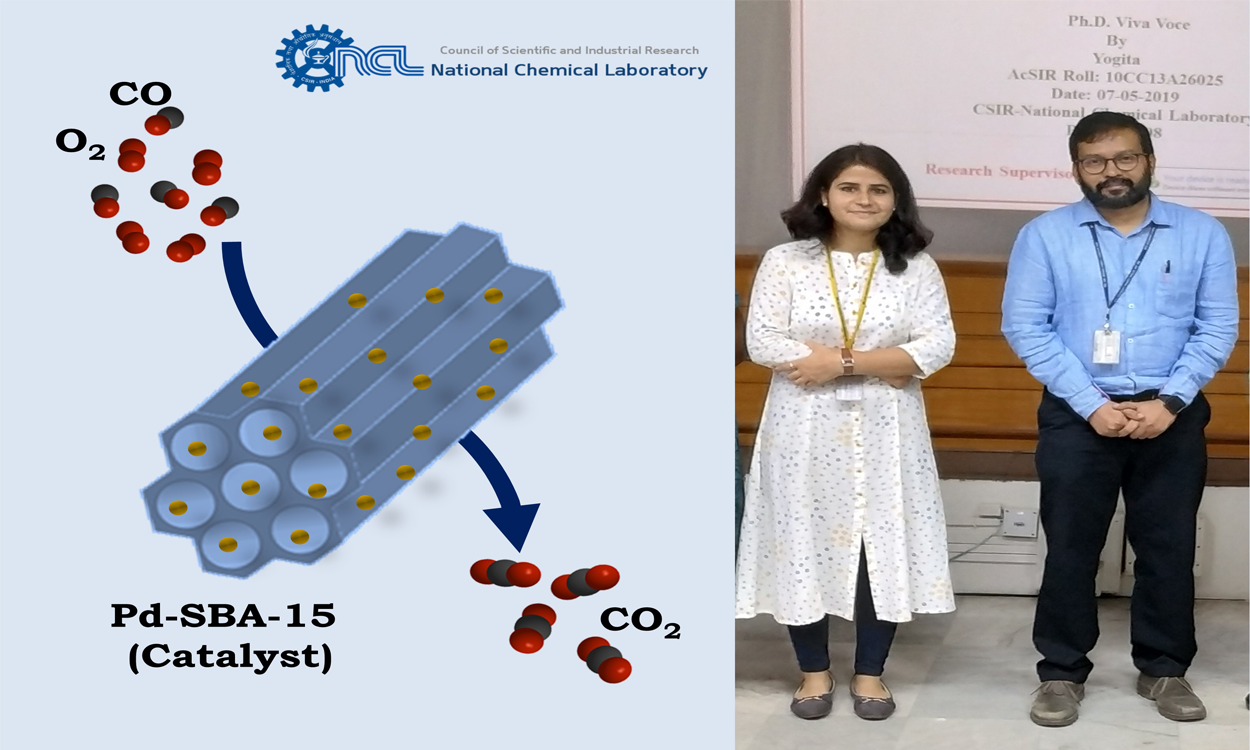
A research team at CSIR-National Chemical Laboratory, Pune - has developed a new method that could overcome the difficulties of supporting ultra-small metal nanoparticles on silica with desirable loading.

  • News
  • 1.7K
Read more
Scientists Solve Genetic Puzzle Surrounding Mundas

Scientists Solve Genetic Puzzle Surrounding Mundas

Genetic studies, in recent years, have traced the origins of the majority of population groups in the Indian sub-continent to two ancestral populations– Ancestral North Indian and Ancestral South Indian. At the same time, it is seen that the sizeable population group of Mundas in central and northeast India shares genetic ancestry with Southeast Asian populations as well

  • News
  • 3.1K
Read more
Air Pollution Killing More People Than Tobacco

Air Pollution Killing More People Than Tobacco

One in every eight deaths in India is attributable to air pollution in India, making it a leading risk factor for death in the country. This makes air pollution a bigger contributor to the disease burden than tobacco, according to a new study released on Thursday.

  • News
  • 2K
Read more

Internet is huge! Help us find great content

Newsletter

Never miss a thing! Sign up for our newsletter to stay updated.

About

Research Stash is a curated collection of tools and News for S.T.E.M researchers

Have any questions or want to partner with us? Reach us at hello@researchstash.com

Navigation

Submit