Study to Help Develop Better Treatment for Blood-Related Disorders

A Better Treatment for Blood-Related Disorders

  • Research Stash
  • News
  • 1.5K

Newer and better treatments could soon be on the anvil for leukemia and other blood-related disorders with researchers developing a new model that could give a better insight into the molecular mechanism behind their development.

Every cell in the human body, and that of other mammals, originates from stem cells and progenitor cells.  Studies have established Drosophila or fruit fly as the ideal model system to study how blood cells develop in human beings.

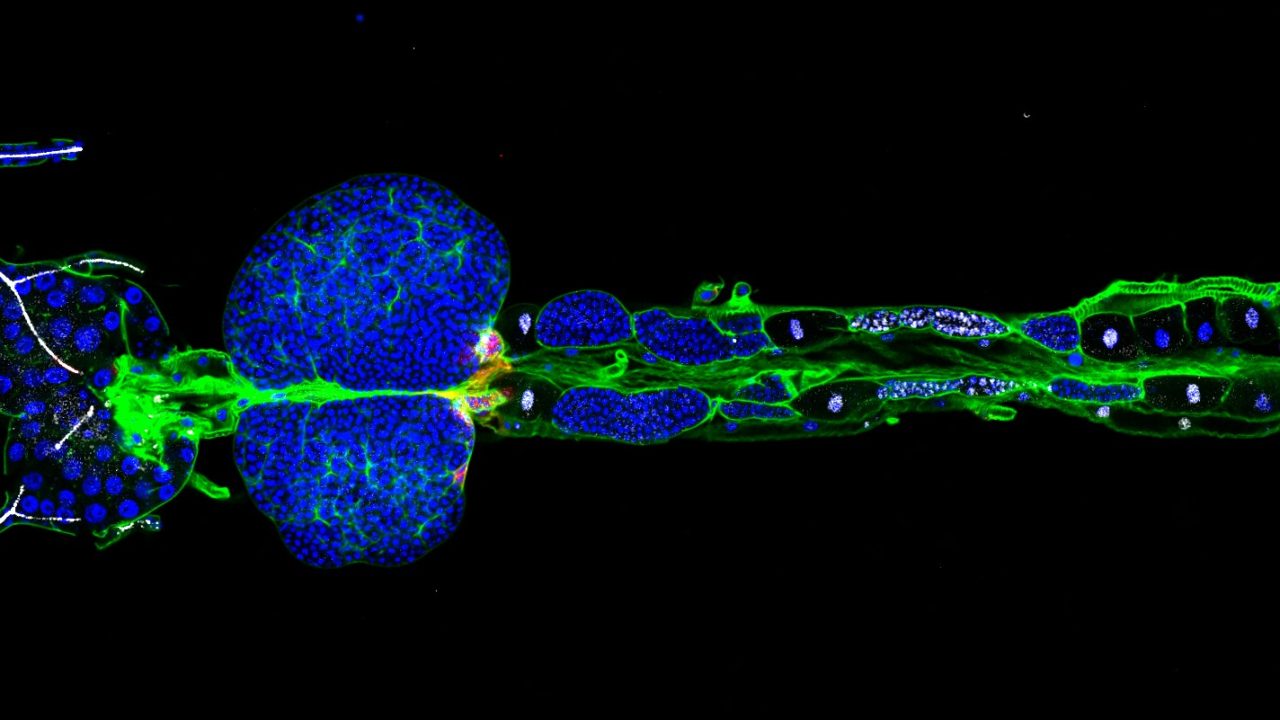
The blood-forming organ of the fruit fly larvae is a specialized multi-lobed system called the lymph gland. Spanning from the thoracic to the abdominal segment of the larvae, this organ comprises a pair of primary, secondary, and tertiary lobes. Studies so far have mainly been confined to understanding the happenings in the primary lobe. Secondary and tertiary lobes have remained mostly unexplored. Some studies have inferred that they are composed of progenitor cells that differentiate during pupation. However, the mechanistic basis of this extended progenitor state has remained unclear.

The new study conducted by researchers at the Indian Institutes of Science Education and Research (IISER) – Mohali, has now filled the gap. It has shown that a local signaling system defined by two genes called Ultrabithorax (Ubx) and Collier in the tertiary lobe regulated the activities of the progenitors in the tertiary as also secondary lobes and that the system shared several biomarkers with the local environment of the primary lobe.

Speaking to India Science Wire, the leader of the study team, Professor Lolitika Mandal, said, “Our study establishes the lymph gland as a model to tease out how the progenitors interface with the dual niches within an organ during development and disorders. Our work provides a model that can be used to understand how multiple niches interact with progenitors during development and disease. This will be particularly important since the blood stem cell “niche” in mammalian bone marrow has multiple niches. How diverse signals coming from multiple niches interact during development and blood-related disorders could be addressed in this testable model”.

The study team included Aditya Kanwal, Pranav Vijay Joshi, and Sudip Mandal. They have published a report on their findings in the journal `PLOS Genetics’.

Common blood disorders include anemia, bleeding disorders such as hemophilia, blood clots, and blood cancers such as leukemia, lymphoma, and myeloma. The new study would particularly help in dealing with blood cancers. (ISW)

If you liked this article, then please subscribe to our YouTube Channel for the latest Science & Tech news. You can also find us on Twitter & Facebook
Rate

The new study conducted by researchers at the Indian Institutes of Science Education and Research (IISER) – Mohali, has now filled the gap. It has shown that a local signaling system defined by two genes called Ultrabithorax (Ubx) and Collier in the tertiary lobe regulated the activities of the progenitors in the tertiary as also secondary lobes and that the system shared several biomarkers with the local environment of the primary lobe.

Speaking to India Science Wire, the leader of the study team, Professor Lolitika Mandal, said, “Our study establishes the lymph gland as a model to tease out how the progenitors interface with the dual niches within an organ during development and disorders. Our work provides a model that can be used to understand how multiple niches interact with progenitors during development and disease. This will be particularly important since the blood stem cell “niche” in mammalian bone marrow has multiple niches. How diverse signals coming from multiple niches interact during development and blood-related disorders could be addressed in this testable model”.

The study team included Aditya Kanwal, Pranav Vijay Joshi, and Sudip Mandal. They have published a report on their findings in the journal `PLOS Genetics’.

Common blood disorders include anemia, bleeding disorders such as hemophilia, blood clots, and blood cancers such as leukemia, lymphoma, and myeloma. The new study would particularly help in dealing with blood cancers. (ISW)

If you liked this article, then please subscribe to our YouTube Channel for the latest Science & Tech news. You can also find us on Twitter & Facebook

" }
Study Reveals Startling Findings on Arctic Sea Ice Decimation

Study Reveals Startling Findings on Arctic Sea Ice Decimation

A study on underwater sounds using a passive acoustic monitoring system during the winters has been able to probe sea ice melting in the Arctic and its contributing factors.

  • News
  • 1.4K
Read more
Here Is Why Researchers Working In Polar Regions Are Coming Together

Here’s Why Researchers Working In Polar Regions Are Coming Together

Polar regions have a major influence on global climate and this is making researchers working in both the Arctic and the Antarctic to come together to share knowledge and experience.

  • News
  • 2.9K
Read more

Kargil Fossil Unravels Climatic Conditions of Early Himalayas

A new study by researchers from Birbal Sahni Institute of Palaeosciences and the Geological Survey of India has indicated that the climate may have been warm and humid when the Indian and Eurasian tectonic plates began to collide leading to the formation of the Himalayas.

  • News
  • 2.5K
Read more

Internet is huge! Help us find great content

Newsletter

Never miss a thing! Sign up for our newsletter to stay updated.

About

Research Stash is a curated collection of tools and News for S.T.E.M researchers

Have any questions or want to partner with us? Reach us at hello@researchstash.com

Navigation

Submit