

New Project to Develop Human Monoclonal Antibodies for Neutralizing SARS-Cov-2

New Project to Develop Human Monoclonal Antibodies for Neutralizing SARS-Cov-2

  • Research Stash
  • News
  • 1.7K

The Council of Scientific and Industrial Research (CSIR), through its New Millennium Indian Technology Leadership Initiative (NMITLI) program, has approved a project towards the development of human monoclonal antibodies (hmAbs) that can neutralize SARS-CoV-2 in patients. This project on the generation of neutralizing human monoclonal antibodies as a therapeutic strategy will be implemented by a multi-institutional and multi-disciplinary team.

Monoclonal antibody therapy is a form of immunotherapy designed to produce immunity to a disease or to enhance resistance by the immune system. This new project aims to generate hmAbs to SARS-CoV-2 from the gradual recovery phase of COVID-19 patients and select high affinity and neutralizing antibodies. The project also aims to anticipate future adaptation of the virus and generate hmAbs clones that can neutralize the mutated virus so that could be readily used for combating future SARS-CoV infections.

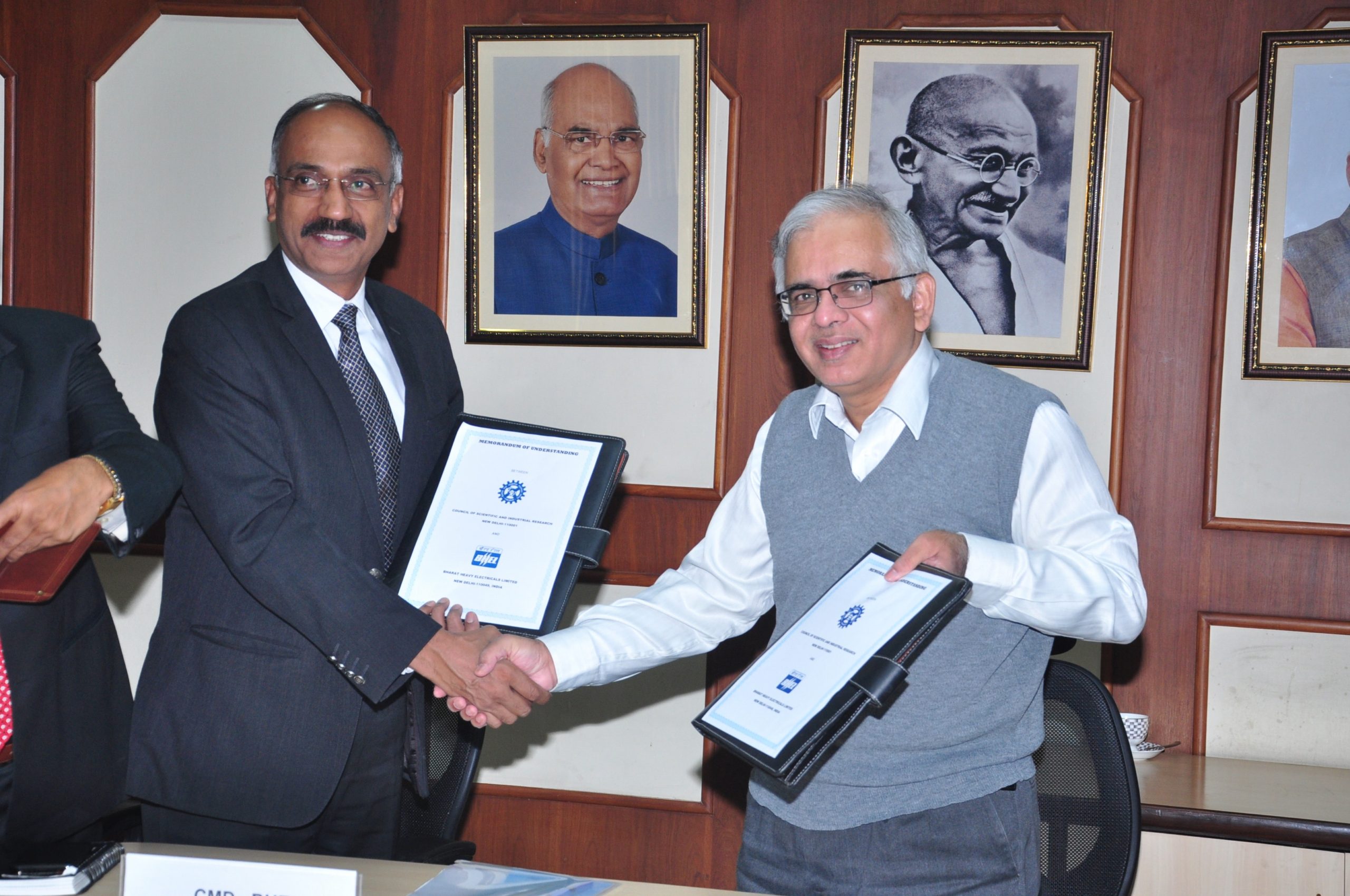
This industry-academia collaboration comprises National Centre for Cell Science (NCCS) Pune; Indian Institute of Technology (IIT), Indore; PredOmix Technologies Ltd, Gurugram; and Bharat Biotech International Ltd (BBIL), Hyderabad. Vaccines and biotherapeutics maker BBIL is leading the project to develop human monoclonal antibodies (hmAbs) for COVID-19 infection. BBIL will be the commercial partner and responsible for subsequent development and commercialization of the hmAbs generated.

DG-CSIR, Dr. Shekhar C Mande commented that “As the research into SARS-CoV-2 is in early days and our understanding is evolving each day, it is critical that we deploy all possible strategies to combat the virus. Hence, CSIR is exploring all avenues and we are supporting new ideas which have clear deployment strategy”.

CSIR is leading the fight against COVID-19 using a multi-pronged approach and multiple models of engagement. CSIR labs themselves are developing technologies and products and are working with industry and public sector undertakings for deployment. NMITLI is a flagship program of CSIR aimed to support new ideas and projects from academic institutions and industries. (ISW)

Umashankar Mishra

If you liked this article, then please subscribe to our YouTube Channel for the latest Science & Tech news. You can also find us on Twitter & Facebook
Rate

DG-CSIR, Dr. Shekhar C Mande commented that “As the research into SARS-CoV-2 is in early days and our understanding is evolving each day, it is critical that we deploy all possible strategies to combat the virus. Hence, CSIR is exploring all avenues and we are supporting new ideas which have clear deployment strategy”.

CSIR is leading the fight against COVID-19 using a multi-pronged approach and multiple models of engagement. CSIR labs themselves are developing technologies and products and are working with industry and public sector undertakings for deployment. NMITLI is a flagship program of CSIR aimed to support new ideas and projects from academic institutions and industries. (ISW)

Umashankar Mishra

If you liked this article, then please subscribe to our YouTube Channel for the latest Science & Tech news. You can also find us on Twitter & Facebook

" }

Peptide Nasal Spray to Delay Onset of Alzheimer’s disease

Dr. Rita P.-Y. Chen, an Associate Research Fellow at the Institute of Biological Chemistry along with Dr. Pang-hsien Tu, a former Assistant Research Fellow at the Institute of Biomedical Sciences, and their research teams recently found that a modified short peptide delays the onset of Alzheimer’s disease when delivered in the form of a nasal drop in a mouse model.

  • News
  • 5.1K
Read more
Popular Science Writing Contest for PhD Scholars and Postdoc Fellows

Popular Science Writing Contest for PhD Scholars and Postdoc Fellows

The Department of Science and Technology (DST) has called for entries from post-doctoral fellows and Ph.D. scholars for a writing contest where they can hope to get a prize of up to Rupees one lakh for a write up explaining their research work in simple and easy to understand language

  • News
  • 1.9K
Read more
New Technique Can Make Flexible Electronics Self-Repairing Too

New Technique Can Make Flexible Electronics Self-Repairing Too

Flexible electronics is making possible tiny gadgets for a variety of applications such as wearable devices and strip thermometers.  But circuits inside them are prone to breakage if such flexible electronic devices are bent in different directions over a period of time. A new technique developed by a group of Indian and British researchers promises to overcome this problem

  • News
  • 2K
Read more

Internet is huge! Help us find great content

Newsletter

Never miss a thing! Sign up for our newsletter to stay updated.

About

Research Stash is a curated collection of tools and News for S.T.E.M researchers

Have any questions or want to partner with us? Reach us at hello@researchstash.com

Navigation

Submit