
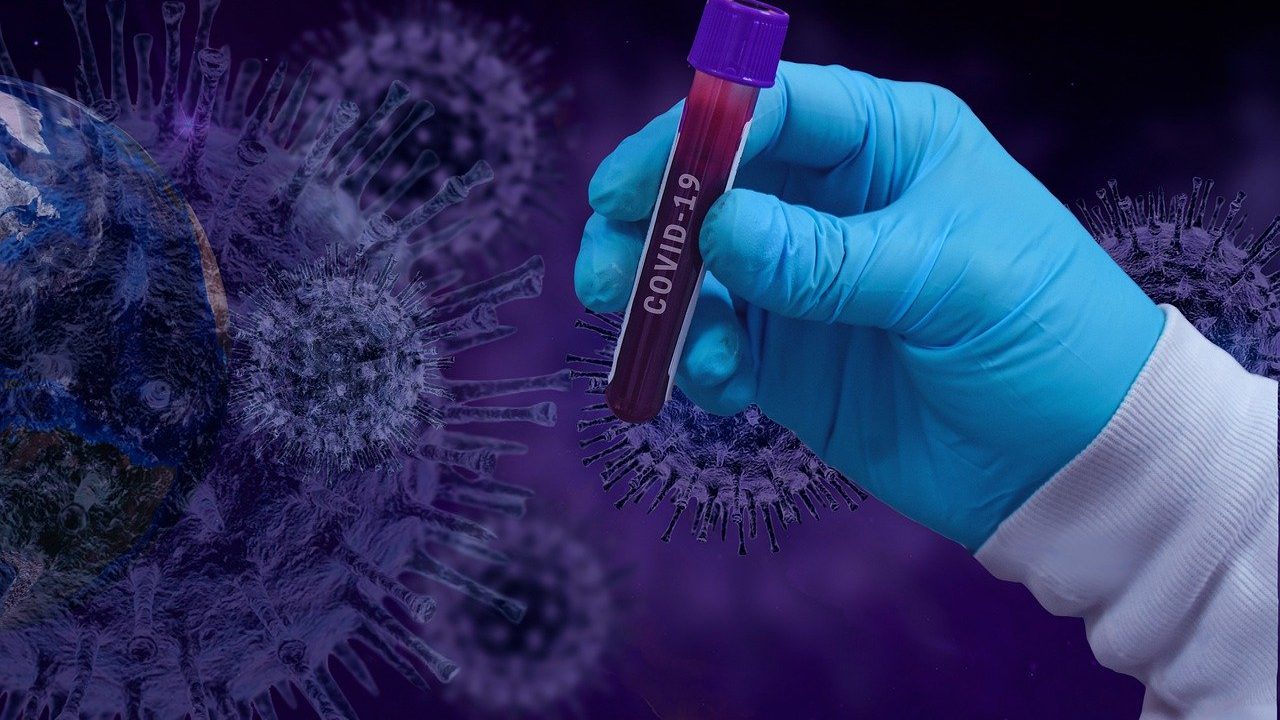
CSIR-IIP To Set Up Viral Testing Facility to Fight COVID-19

CSIR-IIP To Set Up Viral Testing Facility to Fight COVID-19

  • Research Stash
  • News
  • 1.7K

The Indian Institute of Petroleum (IIP) is establishing an RT-PCR-based COVID-19 viral testing facility in its Dehradun campus. IIP is a constituent laboratory of Council of Scientific and Industrial Research (CSIR).

CSIR has planned a community testing strategy to keep track of new outbreaks and thus restrict them from spreading further. “CSIR-IIP has always believed in working for national causes. Testing samples for COVID-19 is another opportunity where we assure our full commitment in line with protocols and standard operating procedures defined by the Indian Council of Medical Research (ICMR). This new COVID-19 testing facility will process at least 30 patient samples per day with appropriately trained manpower and adequate biosafety precautions”, said Dr. Anjan Ray, Director, CSIR-IIP.

The Biochemistry and Biotechnology team at CSIR-IIP is receiving continuous expert guidance from CSIR’s specialized biological sciences laboratories such as CSIR-Institute of Genomics and Integrative Biology (IGIB), CSIR-Institute of Microbial Technology (IMTECH) and CSIR-Centre for Cellular and Molecular Biology (CCMB) to enable their effective participation in the fight against coronavirus.

CSIR-IIP is in constant touch with Uttarakhand state health ministry and all government hospitals to make the facility fully operational and initiate testing by mid-May.  This state-of-the-art testing facility will be available for the long term as a state resource center for viral testing, as well as a key part of the planned environmental biotechnology center of excellence at CSIR-IIP.

“This effort will augment the capacity of the limited public testing facilities across Uttarakhand and help share a load of patient samples from the populous Dehradun district, which is currently supported for testing only by AIIMS and Doon Hospital.  Additionally, CSIR-IIP is also planning to adopt a faster micro RT-PCR-based analysis method for sample screening under the technical supervision of CSIR-IGIB”, said Dr. Ray.

Health experts believe that more testing can help in surveillance of the COVID-19 outbreak. One of the commonly accepted methods of diagnosis approved by the WHO is through the real-time reverse transcription PCR (RT-PCR) technique, wherein the researchers extract nucleic acid from the collected samples from individuals (typically either a nasal or throat swab or saliva) and amplify parts of the viral genome via RT-PCR. The test is positive if the samples harbor any viral RNA and return a negative result if the viral RNA is absent.

Other than this testing effort, CSIR-IIP is providing a free supply of in-house produced hand sanitizer in bulk to local hospitals and police stations, and masks to sanitation workers and needy migrants. The Institute is also developing a low-cost oxygen concentrator for medical use, using the lab’s industry-proven capability of adsorptive gas separation.

Umashankar Mishra

If you liked this article, then please subscribe to our YouTube Channel for the latest Science & Tech news. You can also find us on Twitter & Facebook

Rate

CSIR-IIP is in constant touch with Uttarakhand state health ministry and all government hospitals to make the facility fully operational and initiate testing by mid-May.  This state-of-the-art testing facility will be available for the long term as a state resource center for viral testing, as well as a key part of the planned environmental biotechnology center of excellence at CSIR-IIP.

“This effort will augment the capacity of the limited public testing facilities across Uttarakhand and help share a load of patient samples from the populous Dehradun district, which is currently supported for testing only by AIIMS and Doon Hospital.  Additionally, CSIR-IIP is also planning to adopt a faster micro RT-PCR-based analysis method for sample screening under the technical supervision of CSIR-IGIB”, said Dr. Ray.

Health experts believe that more testing can help in surveillance of the COVID-19 outbreak. One of the commonly accepted methods of diagnosis approved by the WHO is through the real-time reverse transcription PCR (RT-PCR) technique, wherein the researchers extract nucleic acid from the collected samples from individuals (typically either a nasal or throat swab or saliva) and amplify parts of the viral genome via RT-PCR. The test is positive if the samples harbor any viral RNA and return a negative result if the viral RNA is absent.

Other than this testing effort, CSIR-IIP is providing a free supply of in-house produced hand sanitizer in bulk to local hospitals and police stations, and masks to sanitation workers and needy migrants. The Institute is also developing a low-cost oxygen concentrator for medical use, using the lab’s industry-proven capability of adsorptive gas separation.

Umashankar Mishra

If you liked this article, then please subscribe to our YouTube Channel for the latest Science & Tech news. You can also find us on Twitter & Facebook

" }
New Hope for Treating Inflammation-Induced Anemia

New Hope for Treating Inflammation-Induced Anemia

Scientists in Pune have found that a traditional herb Tinospora cardiofolia commonly known as gudduchi or giloy could be useful in treating inflammation-induced anemia

  • News
  • 1.5K
Read more
New Combination Strategy May Kill Cancer Cells Better

New Combination Strategy May Kill Cancer Cells Better

In a preliminary study, Indian scientists have explored the possibility of reaching out to cancer cells and triggering their natural programmed death

  • News
  • 1.8K
Read more
Indigenous Radar to Track Monsoon Winds Is Now Functional

Indigenous Radar to Track Monsoon Winds Is Now Functional

A fully indigenously built radar to scan high skies over the Indian ocean for movement of air and monsoon winds has started functioning at the Cochin University of Science and Technology in Cochin. 

  • News
  • 2.2K
Read more

Internet is huge! Help us find great content

Newsletter

Never miss a thing! Sign up for our newsletter to stay updated.

About

Research Stash is a curated collection of tools and News for S.T.E.M researchers

Have any questions or want to partner with us? Reach us at hello@researchstash.com

Navigation

Submit