
Cost-Effective and Indigenous Personal Protective Suit to Combat COVID-19-1

Cost-Effective and Indigenous Personal Protective Suit to Combat COVID-19

  • Research Stash
  • News
  • 1.7K

Health-care workers across the nation are at high risk, as they have to work in a high viral load environment. To safeguard medical personnel deployed in COVID-19 treatment clinics, the National Aerospace Laboratories (NAL) has developed cost-effective and quality-certified fabric-based personal protective suits. NAL, along with MAF Clothing Private Limited, has developed these suits.

“The major advantages of these coveralls are that they are highly competitive in price as compared to other manufacturers and the import content is negligible,” Jitendra J Jadhav, Director, CSIR-NAL. The cost of the product is 500-600 rupees per piece as compared to those available in the market at 2000-3000 rupees per piece.

“We found polypropylene spun-laminated, multi-layered non-woven fabric as the best material for making the coverall or suits after testing a lot of fabric materials,” said Dr. Harish C Barshilia, Chief Scientist, NAL.

The non-woven fabrics are engineered fabrics that may have a limited life. Although it can be used only once, the fabric stands the test of durability very well.  Known for its sterility, non-woven fabrics also have the ability to repel liquids, absorb, bar bacteria. The joints of the suits have been sealed with innovative manufacturing processes by using slide machines so that neither blood nor a virus can penetrate the coverall.

In the first week, 5000 units would be manufactured, in the second to the third week, the production would be scaled up to 10,000 to 20,000 units. CSIR-NAL and MAF, Bengaluru, have plans to augment the production capacity to about 30,000 units per day within a period of four weeks.

Dr. Jadhav said that the South India Textile Research Association (SITRA) team worked round the clock for this national cause by accelerating the testing process. The coveralls have gone through stringent testing at SITRA, Coimbatore, and have been qualified for use. (ISW)

Jyoti Singh

If you liked this article, then please subscribe to our YouTube Channel for the latest Science & Tech news. You can also find us on Twitter & Facebook.

Rate

The non-woven fabrics are engineered fabrics that may have a limited life. Although it can be used only once, the fabric stands the test of durability very well.  Known for its sterility, non-woven fabrics also have the ability to repel liquids, absorb, bar bacteria. The joints of the suits have been sealed with innovative manufacturing processes by using slide machines so that neither blood nor a virus can penetrate the coverall.

In the first week, 5000 units would be manufactured, in the second to the third week, the production would be scaled up to 10,000 to 20,000 units. CSIR-NAL and MAF, Bengaluru, have plans to augment the production capacity to about 30,000 units per day within a period of four weeks.

Dr. Jadhav said that the South India Textile Research Association (SITRA) team worked round the clock for this national cause by accelerating the testing process. The coveralls have gone through stringent testing at SITRA, Coimbatore, and have been qualified for use. (ISW)

Jyoti Singh

If you liked this article, then please subscribe to our YouTube Channel for the latest Science & Tech news. You can also find us on Twitter & Facebook.

" }
Scientists Uncover A New Approach to Inhibit Zika Virus Replication

Scientists Uncover A New Approach to Inhibit Zika Virus Replication

Efforts to find an effective treatment for the Zika virus could get a boost with researchers at the Indian Institute of Technology Indore identifying some structures in the genetic makeup of the virus that could be used as targets for drugs.

  • News
  • 1.9K
Read more

Researchers Quantify Breast Cancer Risk Based on Rare Variants and Background Risk Findings Reported at ASHG 2017 Annual Meeting

Rare variants combined with background genetic risk factors may account for many unexplained cases of familial breast cancer, and knowing the specific genes involved could inform choice of prevention and treatment strategies

  • News
  • 1.8K
Read more
India’s First Robotic Telescope Opens Its Eyes to the Universe

India’s First Robotic Telescope Opens Its Eyes to the Universe

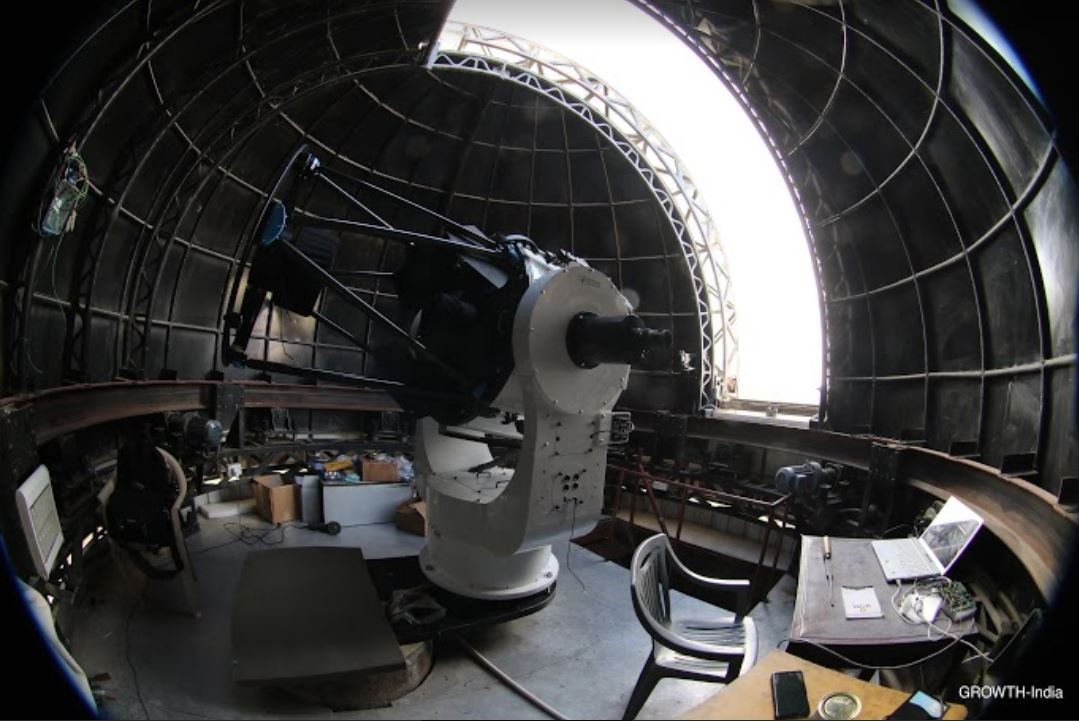
India’s newest telescope has started observing the skies. The telescope located at the Indian Astronomical Observatory (IAO) at Hanle in Ladakh is the country’s first robotic telescope and the first one designed to observe dynamic or transient events in the universe.

  • News
  • 3.8K
Read more

Internet is huge! Help us find great content

Newsletter

Never miss a thing! Sign up for our newsletter to stay updated.

About

Research Stash is a curated collection of tools and News for S.T.E.M researchers

Have any questions or want to partner with us? Reach us at hello@researchstash.com

Navigation

Submit