
Diagnostics for Asymptomatic Malaria

Diagnostics for Asymptomatic Malaria

  • Research Stash
  • News
  • 1.8K

The fight against Malaria could get easier with a joint team of scientists from the Department of Biotechnology’s Bhubaneswar-based Institute of Life Sciences (ILS) and Bengaluru-based Jigsaw Bio Solutions, coming up with a method that promises to overcome the problem of inadequate identification of asymptomatic carriers of the disease.

Light microscopy and protein immunoassay-based rapid diagnostic tests (RDTs) are used in the diagnosis of Malaria, in mass screening and treatment programs for the diseases, and in surveillance of malaria control measures. They, however, miss out about 30-50% of low-density infections, which typically have less than two parasites/microliter and are frequently observed in asymptomatic carriers who serve as “silent” reservoirs of the infection capable of transmitting the disease through mosquitoes.

The identification of asymptomatic carriers in the endemic areas is recognized as a major hurdle in malaria eradication programs. New diagnostic methods with higher sensitivity are needed.

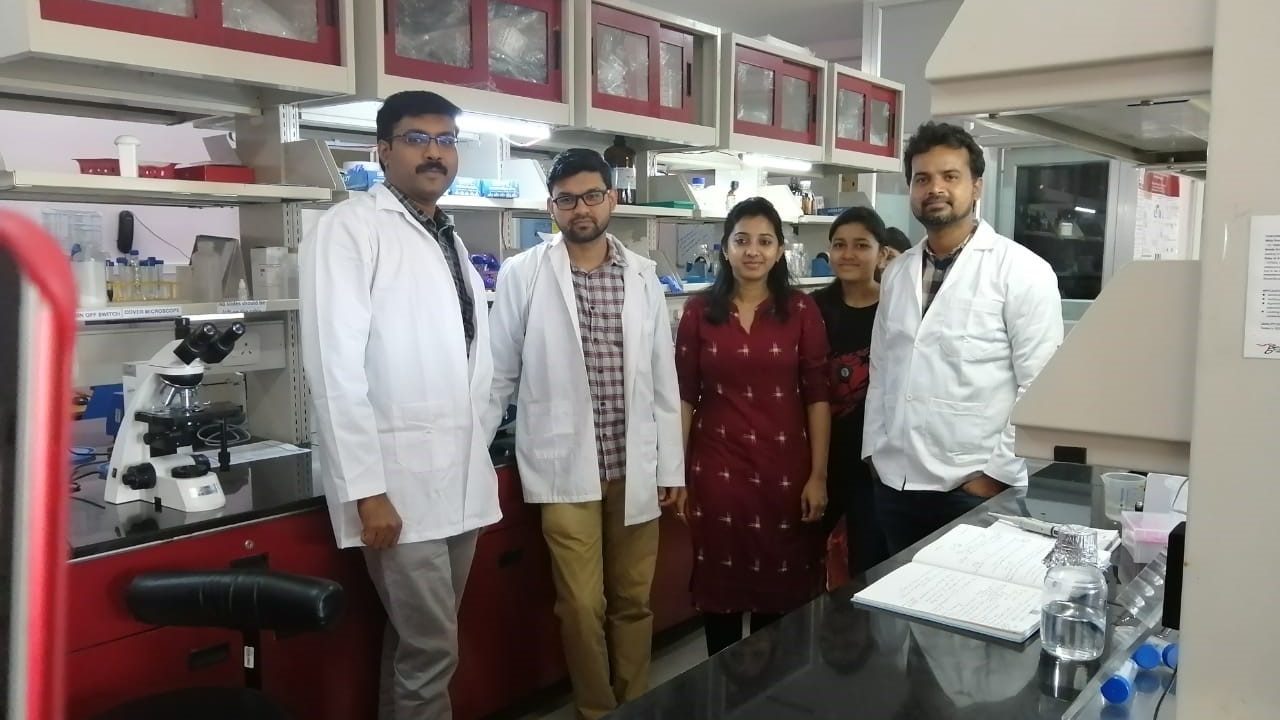
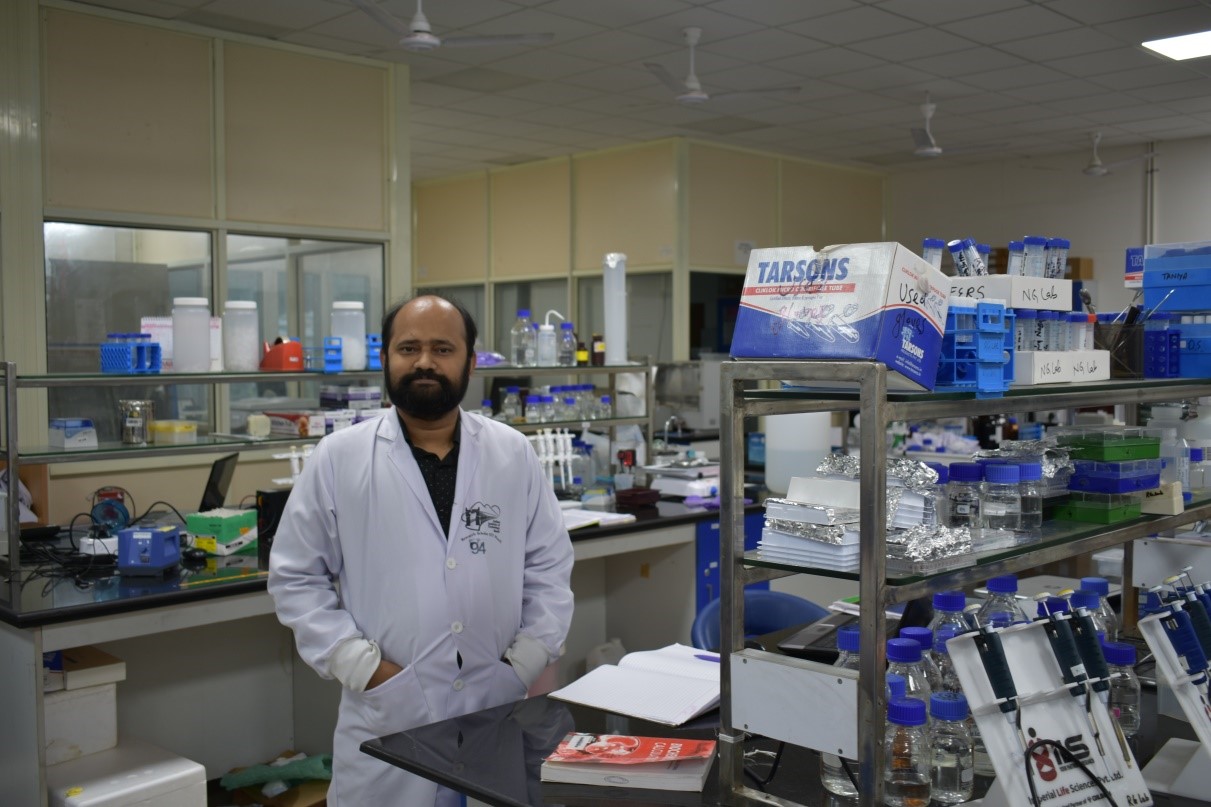
In a new study, a team of researchers led by Dr. V. Arun Nagaraj of Institute of Life Sciences and Mr. Srinivasa Raju of Jigsaw Bio Solutions Pvt. Ltd used a new concept of genome mining that identifies identical multi-repeat sequences (IMRS) distributed throughout the malaria parasite genome and successfully targeted them to develop what is called an “ultra-sensitive” qPCR assay for malaria diagnosis.

Validation with clinical samples collected from malaria-endemic regions in India showed that those assays were highly sensitive – about 20-100 times more than the traditional methods. They could detect submicroscopic samples. They were four to eight times better than other high-sensitive methods. Further, they were extremely specific for Plasmodium falciparum, which is the deadliest species of the malaria parasite and did not cross-react with Plasmodium vivax species, which is the most frequent and widely distributed cause of recurring malaria, but far less virulent.

Speaking to India Science Wire, Dr. Nagaraj said there is a scope to develop multiplexed assays for the simultaneous identification of different species. “Our study could lead to the development of highly sensitive, point-of-care molecular diagnostics that can be explored in miniaturized, isothermal, microfluidic platforms and lab-on-a-chip devices. The IMRS approach can serve as a platform technology for the diagnosis of other infectious diseases as well”.

India has developed a National Framework for eliminating malaria by 2030 and to achieve this goal, identifying the asymptomatic carriers in the endemic areas and clearing their infections are very much important. The new finding could help with this. DBT’s Biotechnology Industry Research Assistance Council funded the project. (ISW)

Sunderarajan Padmanabhan

If you liked this article, then please subscribe to our YouTube Channel for the latest Science & Tech news. You can also find us on Twitter & Facebook.
Rate

In a new study, a team of researchers led by Dr. V. Arun Nagaraj of Institute of Life Sciences and Mr. Srinivasa Raju of Jigsaw Bio Solutions Pvt. Ltd used a new concept of genome mining that identifies identical multi-repeat sequences (IMRS) distributed throughout the malaria parasite genome and successfully targeted them to develop what is called an “ultra-sensitive” qPCR assay for malaria diagnosis.

Validation with clinical samples collected from malaria-endemic regions in India showed that those assays were highly sensitive – about 20-100 times more than the traditional methods. They could detect submicroscopic samples. They were four to eight times better than other high-sensitive methods. Further, they were extremely specific for Plasmodium falciparum, which is the deadliest species of the malaria parasite and did not cross-react with Plasmodium vivax species, which is the most frequent and widely distributed cause of recurring malaria, but far less virulent.

Speaking to India Science Wire, Dr. Nagaraj said there is a scope to develop multiplexed assays for the simultaneous identification of different species. “Our study could lead to the development of highly sensitive, point-of-care molecular diagnostics that can be explored in miniaturized, isothermal, microfluidic platforms and lab-on-a-chip devices. The IMRS approach can serve as a platform technology for the diagnosis of other infectious diseases as well”.

India has developed a National Framework for eliminating malaria by 2030 and to achieve this goal, identifying the asymptomatic carriers in the endemic areas and clearing their infections are very much important. The new finding could help with this. DBT’s Biotechnology Industry Research Assistance Council funded the project. (ISW)

Sunderarajan Padmanabhan

If you liked this article, then please subscribe to our YouTube Channel for the latest Science & Tech news. You can also find us on Twitter & Facebook.

" }
Dr Rajanish Giri in his lab at IIT-Mandi

Scientists Find Antimalarial Drug May Be Repurposed to Treat Zika

In their search for a possible treatment for Zika virus infection, a team of Indian researchers has identified a viral protein that can be targeted by an already available antimalarial drug, hydroxychloroquine

  • News
  • 3.1K
Read more
Northeast Losing Canopy Cover at an Alarming Rate

Northeast Losing Canopy Cover at an Alarming Rate

Large swathes of forests in the Northeast are an abode for the Indian elephant. But a new study has warned that parts of Assam and Arunachal Pradesh are losing canopy cover at an alarming rate.

  • News
  • 1.9K
Read more
No More Slaughtering of Animals for Meat

No More Slaughtering of Animals for Meat

The traditional way of producing meat by slaughtering animals may be a matter of past in a few years as Indian scientists begin work on ‘cultured meat’ - meat made by cells extracted from animals

  • News
  • 2.2K
Read more

Internet is huge! Help us find great content

Newsletter

Never miss a thing! Sign up for our newsletter to stay updated.

About

Research Stash is a curated collection of tools and News for S.T.E.M researchers

Have any questions or want to partner with us? Reach us at [email protected]

Navigation

Submit