
Smart Microscopy Solution for Better Diagnostics

Smart Microscopy Solution for Better Diagnostics

  • Research Stash
  • News
  • 1.8K

Given the current health burden and scarcity of health professionals in rural areas, the Indian health system is in need of innovative and affordable solutions. There is a lack of diagnostic labs and trained pathologists in many areas. In such a situation, it is necessary to develop a smart solution for diagnostics.
Smart Microscopy Solution for Better Diagnostics

To address these challenges, a smart microscopy solution has been developed by researchers at Chandigarh-based Central Scientific Instruments Organization (CSIO) of the Council of Scientific and Industrial Research (CSIR). It can acquire microscopic images or use stored microscopic images of a blood sample understudy for the quantification of Red Blood Cells (RBC) and White Blood Cells (WBC).

“It is a telepathology based technique, which can be operated by any technician and the reports can be sent to the experts. It can be a very useful tool particularly for remote and inaccessible rural areas that lack diagnostic facilities,” said Dr. Suman Tiwari, the lead researcher, while speaking with India Science Wire.

This microscopy technique is based on the deep learning algorithm. It uses the mathematical formulation which can be used as an optimized model for optimal outputs.  It uses software that calculates red and white blood cells using microscopic images of blood samples. The existing methods are visual, manual methods but this technique will use the automated visual method.

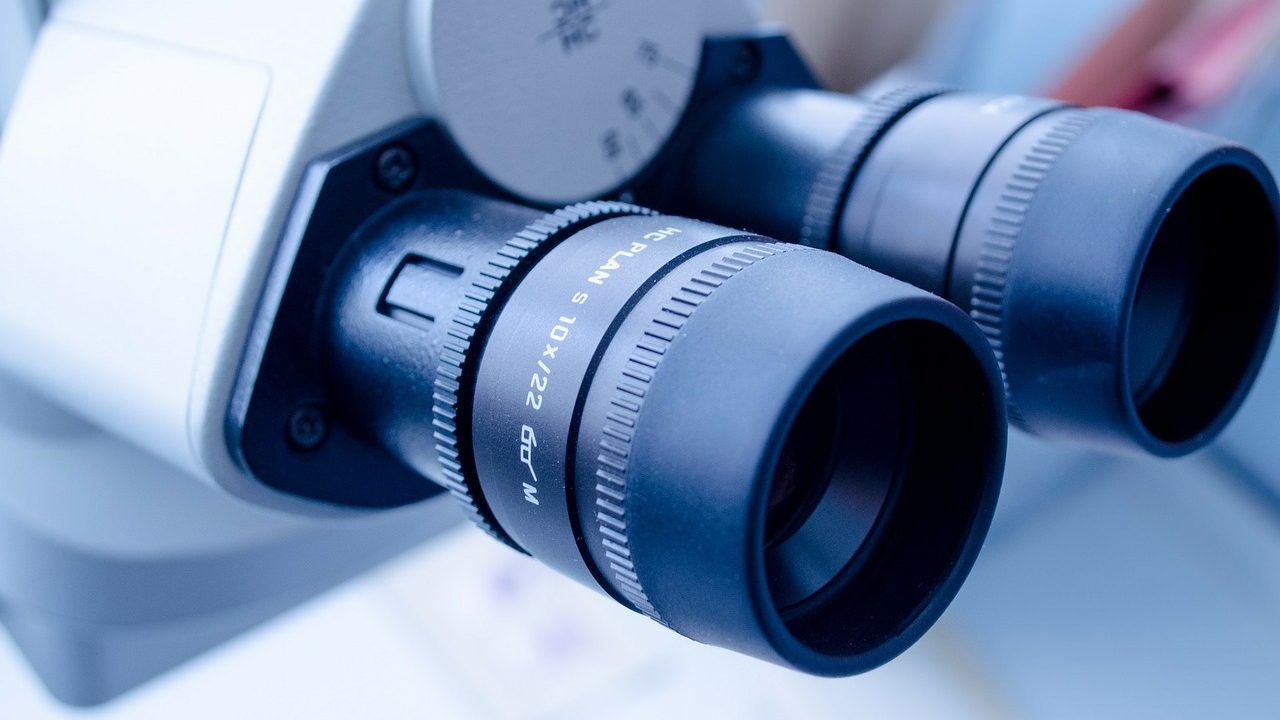
In this, the microscope will have a camera mounted on it and from that camera images will be acquired. These images are then read in computers where the backend algorithm can produce tell the results.  In this approach, detection and quantification for RBC and subtypes of WBC have shown 93% accuracy. The software can be mounted on a digital microscope developed by CSIO.

Dr. Tiwari said “the system has been trained on data obtained from different clinical centers for lab-specific quantification. It can be developed an integrated approach and automated solution for real-time quantification of blood cells in diagnostic inferencing.”

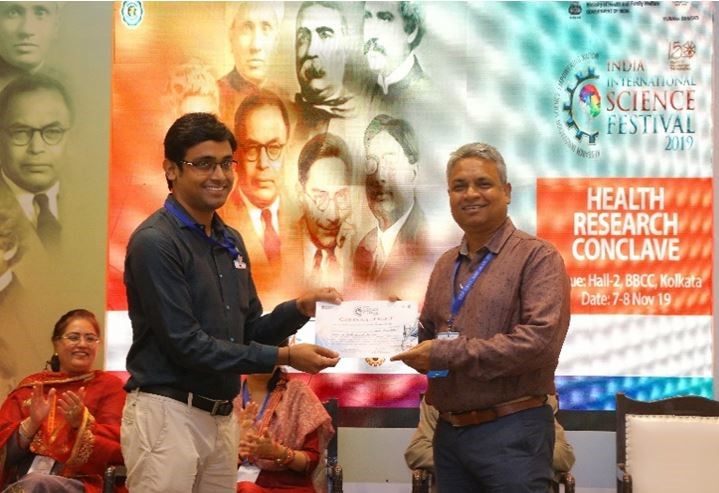
This microscopy technique was demonstrated in the Medical Innovations category at the Health Research Conclave held recently under the India International Science Festival-2019 in Kolkata, where the technique has won first prize.

CSIO Director Prof. R. Sinha congratulated the researchers who developed this microscopy technique, saying that “limited access of equipment and experts for diagnostic testing of diseases to India’s vast population and people living in remote areas is a major problem. This smart technology can be useful in ensuring access to affordable and accessible diagnostic services. ”

The technology of this digital microscope has recently been transferred to a Hyderabad-based company. (ISW)

Jyoti Singh

If you liked this article, then please subscribe to our YouTube Channel for the latest Science & Tech news. You can also find us on Twitter & Facebook.

Rate

This microscopy technique is based on the deep learning algorithm. It uses the mathematical formulation which can be used as an optimized model for optimal outputs.  It uses software that calculates red and white blood cells using microscopic images of blood samples. The existing methods are visual, manual methods but this technique will use the automated visual method.

In this, the microscope will have a camera mounted on it and from that camera images will be acquired. These images are then read in computers where the backend algorithm can produce tell the results.  In this approach, detection and quantification for RBC and subtypes of WBC have shown 93% accuracy. The software can be mounted on a digital microscope developed by CSIO.

Dr. Tiwari said “the system has been trained on data obtained from different clinical centers for lab-specific quantification. It can be developed an integrated approach and automated solution for real-time quantification of blood cells in diagnostic inferencing.”

This microscopy technique was demonstrated in the Medical Innovations category at the Health Research Conclave held recently under the India International Science Festival-2019 in Kolkata, where the technique has won first prize.

CSIO Director Prof. R. Sinha congratulated the researchers who developed this microscopy technique, saying that “limited access of equipment and experts for diagnostic testing of diseases to India’s vast population and people living in remote areas is a major problem. This smart technology can be useful in ensuring access to affordable and accessible diagnostic services. ”

The technology of this digital microscope has recently been transferred to a Hyderabad-based company. (ISW)

Jyoti Singh

If you liked this article, then please subscribe to our YouTube Channel for the latest Science & Tech news. You can also find us on Twitter & Facebook.
" }
Scientists Develop High-Efficiency Rapid Test for Hepatitis B Diagnosis

Scientists Develop High-Efficiency Rapid Test for Hepatitis B Diagnosis

In a new study, teams of researchers from DBT-Translational Health Science and Technology Institute, DBT-International Centre For Genetic Engineering And Biotechnology and University of Turku, Finland, have come together to develop an ultra-sensitive rapid diagnostic test that circumvents the sensitivity gap.

  • News
  • 2.4K
Read more

NCKU President shares her love of science with high school girls in Taiwan

National Cheng Kung University (NCKU) President Huey-Jen Jenny Su was invited by Taipei First Girls High School (TFG) to share her learning experience and reflection on being a female scientist in global community on April 14 in Taipei.

  • News
  • 3.2K
Read more
Are We Alone In This Universe Big Data Algorithms May Help Find Answer

Are We Alone In This Universe? Big Data Algorithms May Help Find Answer

The search for life outside the earth is all set to get intensified. Indian astronomers have developed a new technique to know if any of the newly discovered exoplanets - planets outside our solar system – are potentially habitable.

  • News
  • 2.9K
Read more

Internet is huge! Help us find great content

Newsletter

Never miss a thing! Sign up for our newsletter to stay updated.

About

Research Stash is a curated collection of tools and News for S.T.E.M researchers

Have any questions or want to partner with us? Reach us at [email protected]

Navigation

Submit