
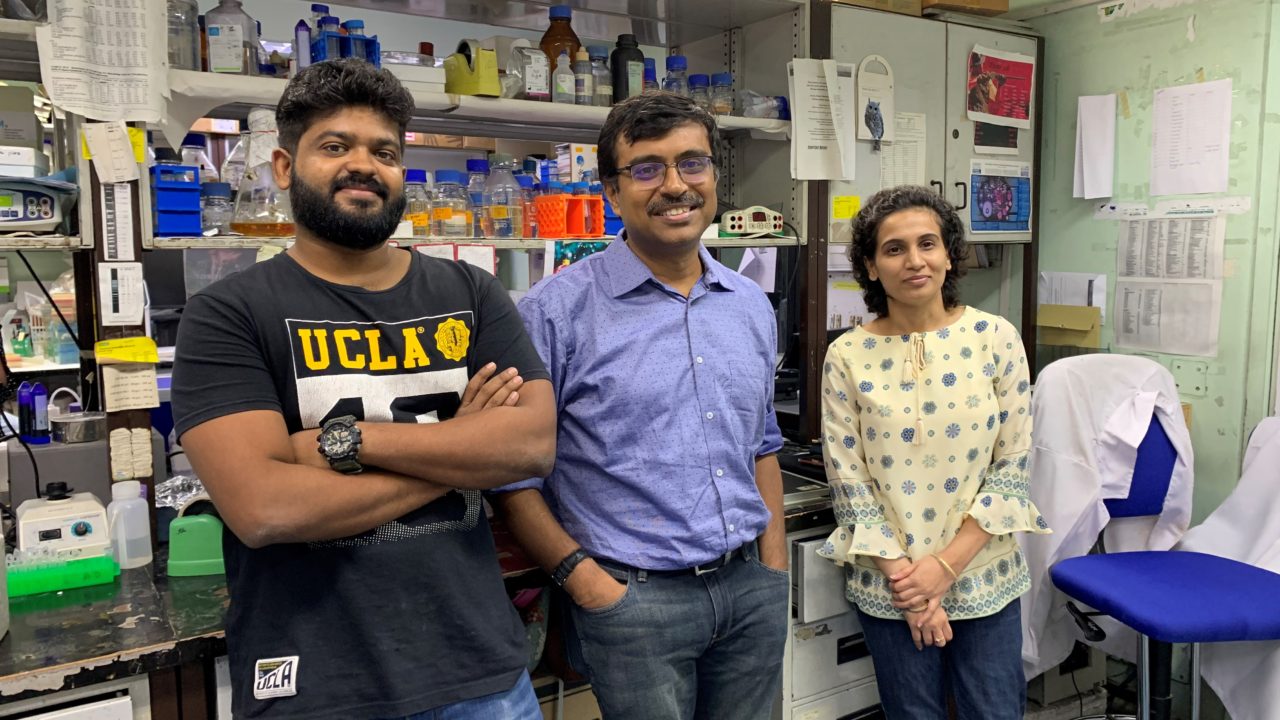
Dr Sagar Sengupta with his colleagues in his lab

Study Opens New Avenue for Preventing Cancer

  • Research Stash
  • News
  • 4K

In a new development in the area of cancer research, scientists at Delhi-based National Institute of Immunology (NII) have found a way to stop the degradation of a protein called p53 that prevents cancer cells from proliferating and forming tumors in the body.
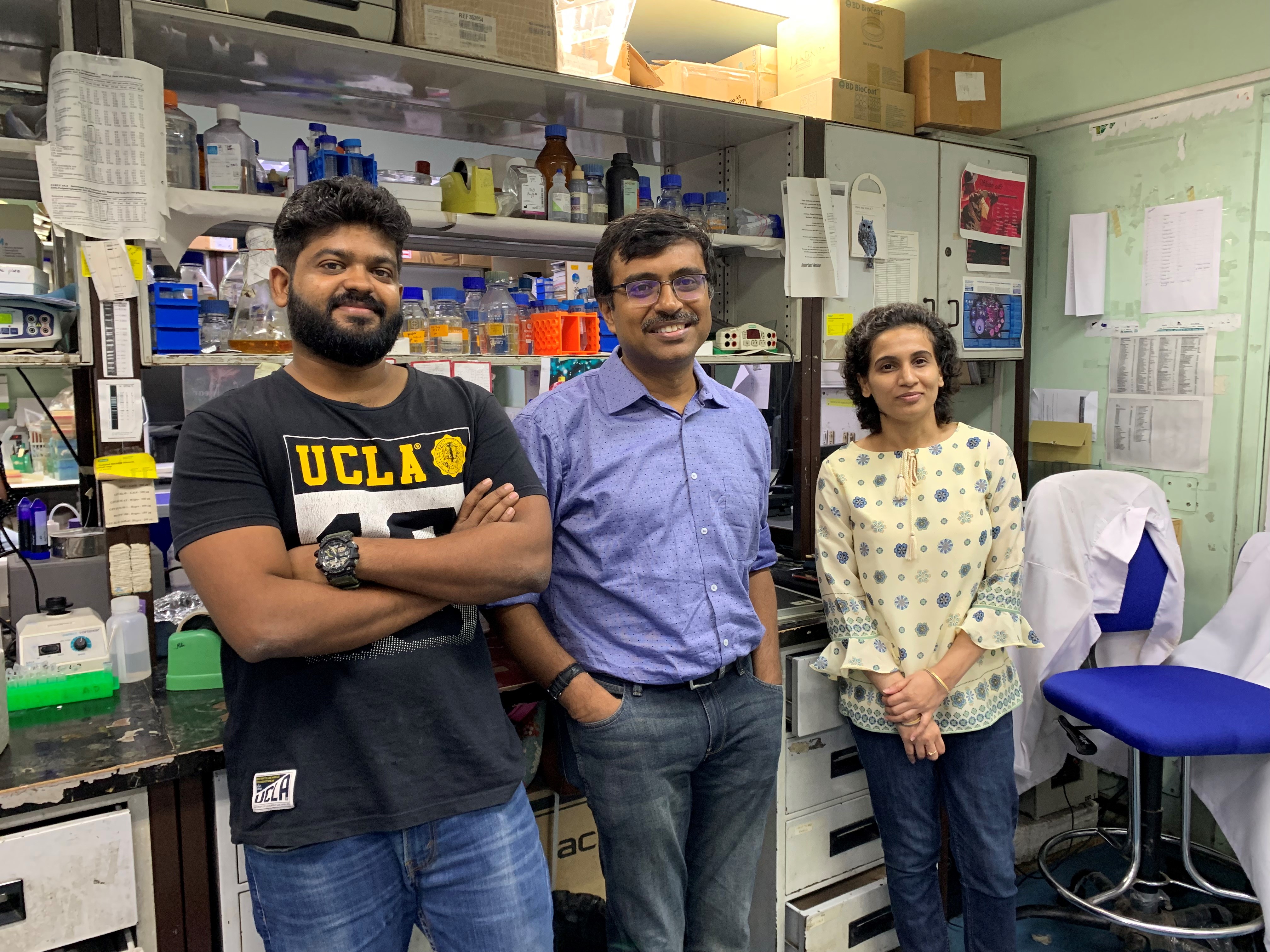
Dr Sagar Sengupta with his colleagues in his lab
Dr. Sagar Sengupta with his colleagues in his lab

p53 is one of the most well-studied proteins in cancer biology. Like all proteins, its levels and activity are tightly controlled and they go through cycles of birth-existence-death: the protein is synthesized, it does its function and then it is degraded.  When required, the protein is re-synthesized and the cycle keeps repeating.

Scientists across the world have been trying to find out how the level of p53 is regulated and what are the mechanisms underlying its degradation. The team of scientists at NII has now have shown that a protein called FBW7 is responsible for degrading p53. It degrades not only the wild type p53 but also mutant p53version, which is involved in tumor promotion. As a validation of their finding, researchers have shown that the half-life of p53 is increased and its function as tumor suppressor got enhanced in cancer cells that lacked FBW7.

The team has also worked out the mechanistic details of how FBW7a recognizes p53 and degrades it. Further, they have shown that the degradation happens as a result of damage to DNA induced by radiation and chemotherapy. Interestingly, FBW7 expression itself is dependent on p53 and it gets induced when cancer cells are exposed to DNA-damaging events. This indicates the presence of auto-regulatory loop in cells which tightly regulates the amount of p53 required to be present in the cells at any particular time.

“The results from our research provide novel ways of improving tumor regression by improving the function of p53 by stabilizing its levels. This could be achieved by using a mutant of p53, which will not be degraded by FBW7α and may accentuate the therapeutic potential. Future work is needed to build on this strategy to find clinical application,” explained Dr. Sagar Sengupta, leader of the research team, while speaking to India Science Wire.

The study results have been published in the Journal of Biological Chemistry. The team included Vivek Tripathi, Ekjot Kaur, Suhas Sampat Kharat, Mansoor Hussain, Arun Prasath Damodaran, and Swati Kulshrestha. The work was supported by the Department of Biotechnology, Council of Scientific and Industrial Research, Science and Engineering Research Board and Department of Science and Technology. (ISW)

Sunderarajan Padmanabhan

If you liked this article, then please subscribe to our YouTube Channel for the latest Science & Tech news. You can also find us on Twitter & Facebook.

Rate

The team has also worked out the mechanistic details of how FBW7a recognizes p53 and degrades it. Further, they have shown that the degradation happens as a result of damage to DNA induced by radiation and chemotherapy. Interestingly, FBW7 expression itself is dependent on p53 and it gets induced when cancer cells are exposed to DNA-damaging events. This indicates the presence of auto-regulatory loop in cells which tightly regulates the amount of p53 required to be present in the cells at any particular time.

“The results from our research provide novel ways of improving tumor regression by improving the function of p53 by stabilizing its levels. This could be achieved by using a mutant of p53, which will not be degraded by FBW7α and may accentuate the therapeutic potential. Future work is needed to build on this strategy to find clinical application,” explained Dr. Sagar Sengupta, leader of the research team, while speaking to India Science Wire.

The study results have been published in the Journal of Biological Chemistry. The team included Vivek Tripathi, Ekjot Kaur, Suhas Sampat Kharat, Mansoor Hussain, Arun Prasath Damodaran, and Swati Kulshrestha. The work was supported by the Department of Biotechnology, Council of Scientific and Industrial Research, Science and Engineering Research Board and Department of Science and Technology. (ISW)

Sunderarajan Padmanabhan

If you liked this article, then please subscribe to our YouTube Channel for the latest Science & Tech news. You can also find us on Twitter & Facebook.

" }
Harnessing Science, Technology and Innovation for Societal Benefits

Harnessing Science, Technology and Innovation for Societal Benefits

Director-General of Council of Scientific and Industrial Research, Dr. Shekhar C. Mande, has urged for greater collaboration between society, on one hand, and the scientific community on the other to ensure that there was proper promotion of scientific endeavors and effective utilization of the fruits of science, technology, and innovation for the welfare of the people

  • News
  • 1.7K
Read more
CSIR Scientists Working On New Vaccine for Malaria

CSIR Scientists Working On New Vaccine for Malaria

Despite efforts over the decades by scientists across the world, malaria continues to be a major vector-borne disease particularly in Asia, Africa, and South America.

  • News
  • 2.4K
Read more
Researchers Devise New Method to Arm Electronic Gadgets Against Power Fluctuations

Researchers Devise New Method to Arm Electronic Gadgets Against Power Fluctuations

Researchers have developed the performance analysis of miniaturized circuitry used in modern devices such as mobile phones and tablets so that the devices may be designed for better performance even under erratic DC power supply.

  • News
  • 1.4K
Read more

Internet is huge! Help us find great content

Newsletter

Never miss a thing! Sign up for our newsletter to stay updated.

About

Research Stash is a curated collection of tools and News for S.T.E.M researchers

Have any questions or want to partner with us? Reach us at hello@researchstash.com

Navigation

Submit