Five New Technology Missions Launched to Make India Future-Ready

Five New Technology Missions Launched to Make India Future-Ready

  • Research Stash
  • News
  • 1.4K

The Department of Science and Technology (DST) is all set to launch five technology missions to prepare the country to meet the scientific and technological challenges of the future. The new missions would cover aspects ranging from electric mobility to quantum science and technology.
Five New Technology Missions Launched to Make India Future-Ready

The mission on electric mobility has been formulated in the wake of the growing importance of electric vehicles particularly due to climate change concerns. It seeks to promote long-term research and development in all aspects of related technologies. For instance, the current batteries based on lithium-ion are expected to start fading by 2025 globally leading to the need for the development of newer materials.

The mission would, among other things, focus on developing hydrogen fuel cells and come out with batteries that would have higher specific energy and energy densities, motors that would do away with the need for permanent magnets and systems to provide for two-way power transfer between the grid and the electric vehicle chargers. A new model of collaboration that would bring together academic institutions, private manufacturing, and R&D laboratories would be put in place for the mission.

Under the mission methanol, centers of excellence would be established for the production and utilization of methanol and dimethyl ether using various solid fuels and natural gas and develop a knowledge base and trained manpower in the area. Countries across the world are working on developing what is called `methanol economy’ as a replacement for fossil fuels as a means of energy storage, ground transportation fuel, and raw material for synthetic hydrocarbons and their products.

The aim is to ensure a cleaner environment and at the same time reduce dependence on fossil fuels, which are a non-renewable source of energy. Methanol can be produced from a wide variety of sources including agricultural products and municipal waste, and wood and other biomass. It can also be made from chemical recycling of carbon dioxide.

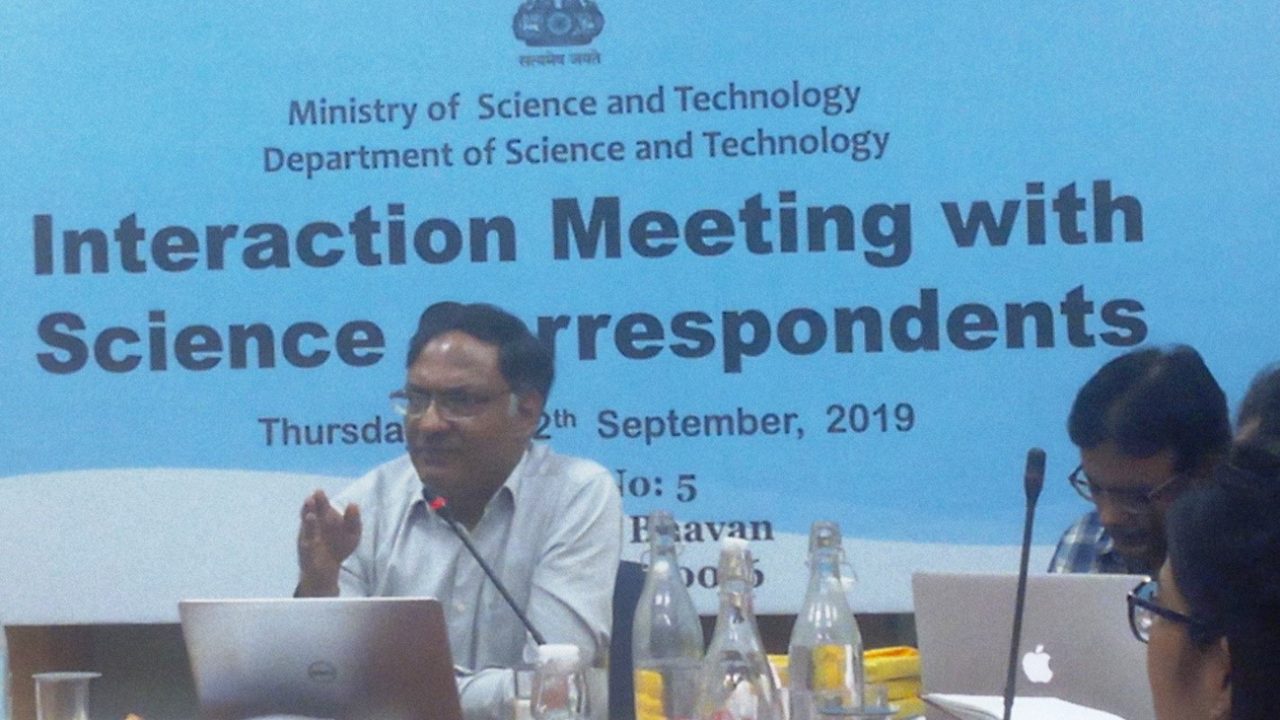
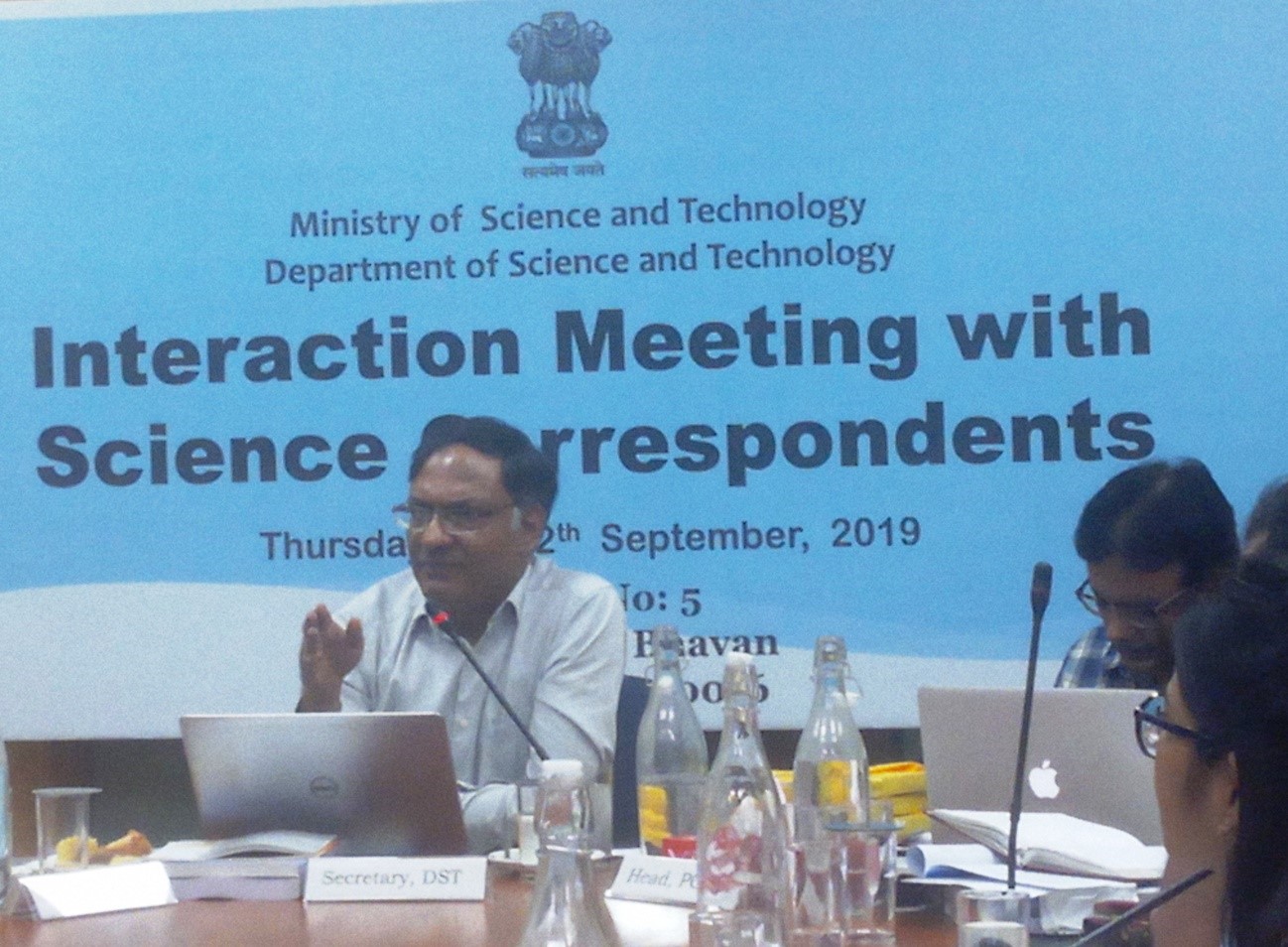
Announcing the missions at a press conference here DST Secretary Ashutosh Sharma said the government was working continuously shape a seamless science, technology, and innovation system, which was cutting edge, collaborative, inclusive, relevant and aligned to national priorities.

The new package of technological initiatives also includes a mission on promoting research and development in quantum technology and related areas of quantum computing, quantum cryptography, quantum communication, quantum metrology, and sensing, and quantum-enhanced imaging. Quantum technology is an emerging field of physics and engineering based on the properties of quantum mechanics.

The fourth mission in the package seeks to promote developments in the area of cyber-physical systems, which includes artificial intelligence, robotics, sensors, big data analytics, geographical information systems, and advanced materials.

The aim is to give a fillip to the manufacturing sector through the development of new products and services, creation of skilled human resources at different levels, from technician to researchers and entrepreneurs. The mission outlines time-bound strategies for implementation of cyber-physical systems in various sectors such as agriculture, transport, energy, water, and health.

The fifth mission envisages the production of digital maps across the country to a scale of 1:500 with the help of satellites and drones. The entire country would be mapped within the next two years. (ISW)

Sunderarajan Padmanabhan

If you liked this article, then please subscribe to our YouTube Channel for the latest Science & Tech news. You can also find us on Twitter & Facebook.

Rate

Under the mission methanol, centers of excellence would be established for the production and utilization of methanol and dimethyl ether using various solid fuels and natural gas and develop a knowledge base and trained manpower in the area. Countries across the world are working on developing what is called `methanol economy’ as a replacement for fossil fuels as a means of energy storage, ground transportation fuel, and raw material for synthetic hydrocarbons and their products.

The aim is to ensure a cleaner environment and at the same time reduce dependence on fossil fuels, which are a non-renewable source of energy. Methanol can be produced from a wide variety of sources including agricultural products and municipal waste, and wood and other biomass. It can also be made from chemical recycling of carbon dioxide.

Announcing the missions at a press conference here DST Secretary Ashutosh Sharma said the government was working continuously shape a seamless science, technology, and innovation system, which was cutting edge, collaborative, inclusive, relevant and aligned to national priorities.

The new package of technological initiatives also includes a mission on promoting research and development in quantum technology and related areas of quantum computing, quantum cryptography, quantum communication, quantum metrology, and sensing, and quantum-enhanced imaging. Quantum technology is an emerging field of physics and engineering based on the properties of quantum mechanics.

The fourth mission in the package seeks to promote developments in the area of cyber-physical systems, which includes artificial intelligence, robotics, sensors, big data analytics, geographical information systems, and advanced materials.

The aim is to give a fillip to the manufacturing sector through the development of new products and services, creation of skilled human resources at different levels, from technician to researchers and entrepreneurs. The mission outlines time-bound strategies for implementation of cyber-physical systems in various sectors such as agriculture, transport, energy, water, and health.

The fifth mission envisages the production of digital maps across the country to a scale of 1:500 with the help of satellites and drones. The entire country would be mapped within the next two years. (ISW)

Sunderarajan Padmanabhan

If you liked this article, then please subscribe to our YouTube Channel for the latest Science & Tech news. You can also find us on Twitter & Facebook.
" }
Researchers Bring Out Human Microbiome-Prakriti Correlation

Researchers Bring Out Human Microbiome-Prakriti Correlation

Researchers at the Pune-based National Centre for Cellular Sciences have carried out studies to understand the association between the human microbiome and Ayurveda’s `Prakriti’. A comprehensive microbial analysis of samples from the gut, oral cavity and skin of healthy individuals was carried out.

  • News
  • 1.8K
Read more
A New Paradigm for Better Drug Discovery Targeting GPCRs

A New Paradigm for Better Drug Discovery Targeting GPCRs

Researchers from the Indian Institute of Technology-Kanpur have found structural differences between beta-arrestin Isoforms 1 and 2 upon their interaction with receptors. Beta-arrestin is a cellular protein that acts as a universal regulator of GPCRs, and this finding may help in designing novel therapeutic targets.

  • News
  • 1.7K
Read more

This Biosensor Attached to Your Phone Can Sniff Bacteria

Researchers at Indian Institute of Technology Delhi have developed a biosensor and a mobile app, which together can be used for bacterial detection

  • News
  • 2.8K
Read more

Internet is huge! Help us find great content

Newsletter

Never miss a thing! Sign up for our newsletter to stay updated.

About

Research Stash is a curated collection of tools and News for S.T.E.M researchers

Have any questions or want to partner with us? Reach us at hello@researchstash.com

Navigation

Submit