
Science Needs More Space in Mainstream Media

Science Needs More Space in Mainstream Media

  • Research Stash
  • News
  • 1.7K

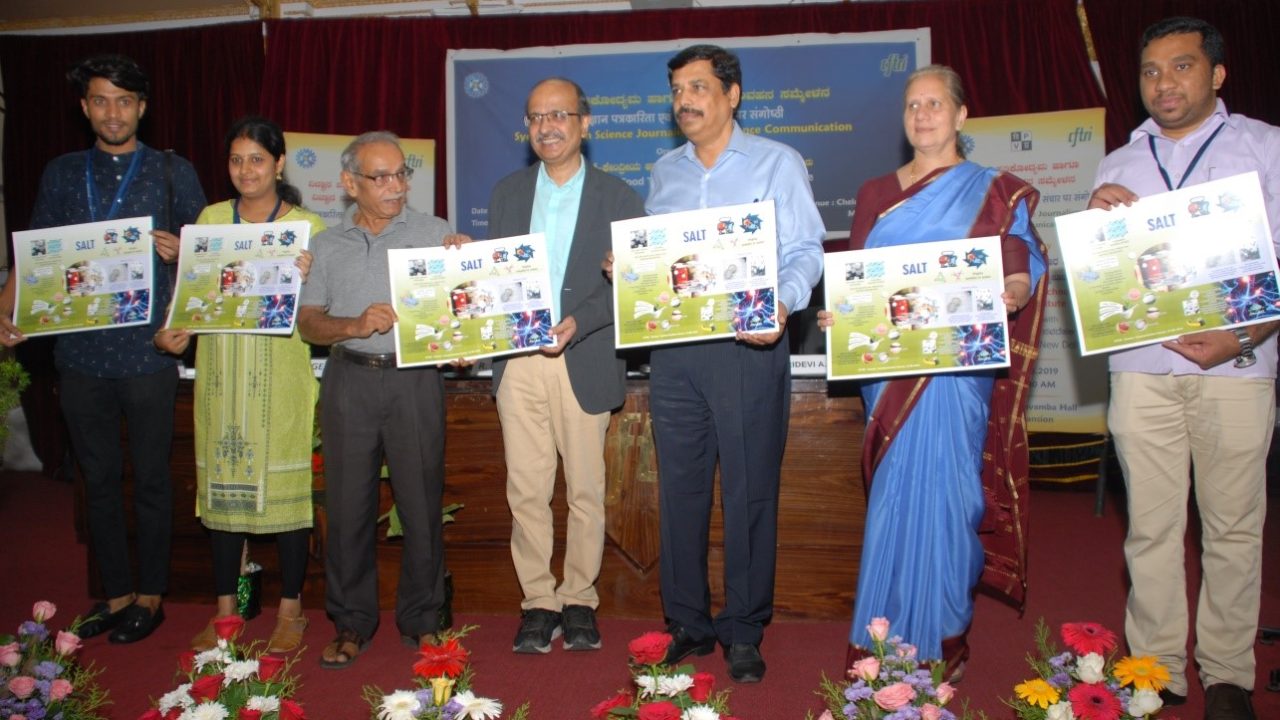
Science media, journalists and communicators have a vital role to play in connecting science with society, and in inculcating scientific temper in general public. This was emphasized by experts attending a symposium on science journalism and communication here on Tuesday.
Science Needs More Space in Mainstream Media 1

“It is an irony that while our scientists can detect traces of methane on distant Mars, closer home we see people getting asphyxiated in manholes.  It is the role of science communicators to point out such dichotomies to make decision-makers so that solutions for day to day problems of people could be developed and benefits of research reach everyone,” said veteran science journalist Nagesh Hegde while inaugurating the symposium at the Central Food Technological Research Institute (CFTRI).

Science journalists and science communicators should bridge the gap between the scientists and policymakers, he said. Dr. R. Subramanian, a senior scientist who presided over the inauguration pointed out the efforts by CSIR-CFTRI in the past and in the present for reaching out to lay public.  “Ahara Vijnana was the first-ever specialized science magazine in any Indian language was published way back in 1955. Moving with times the Institute was now producing ThaliTales, a podcast,” he said.

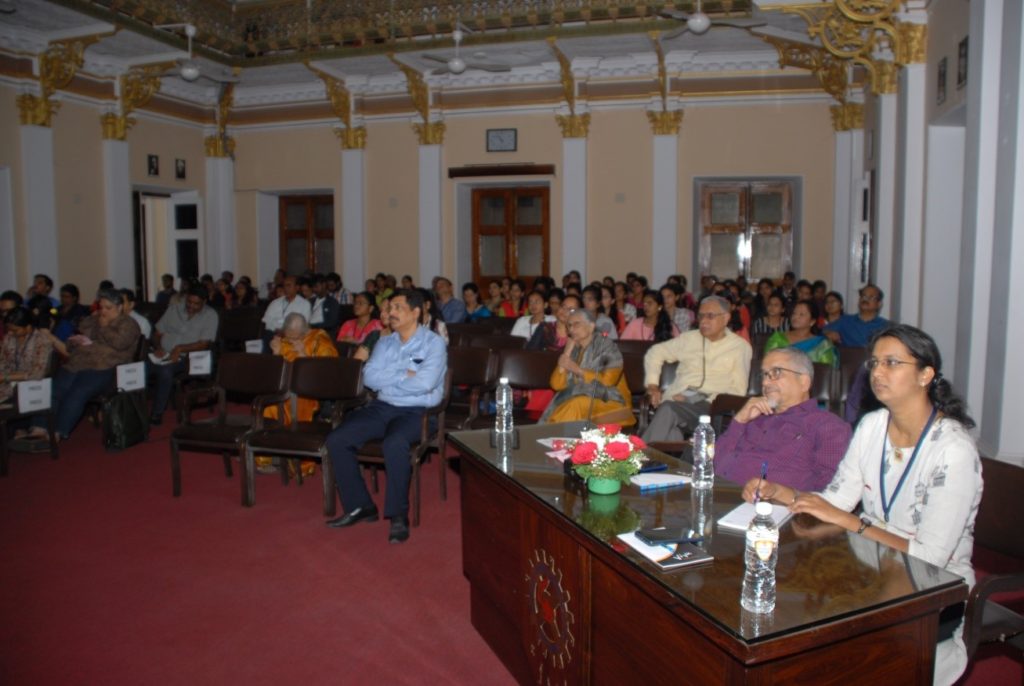
The symposium was an effort to reach out to science journalists and science communicators in Karnataka and was jointly organized by Vigyan Prasar, New Delhi, and CSIR-CFTRI. Researchers, students, and faculty of science and journalism took part in the discussions.  Elaborating on the efforts of Vigyan Prasar to promote research of Indian scientists, Dinesh C Sharma, Managing Editor, India Science Wire, delineated the shortcomings of science journalism in India.  D R Mohan Raj, a media consultant and former professor of mass communication and journalism, said that science communication is the result of a partnership between scientists, communicators and the citizen.

The use of Indian Languages is critical in partnering with the public for effective science communication. “Mere translation from English to Indian languages is not science communication,” opined Piyush Pandey, former Director, Nehru Planetarium, Mumbai who highlighted the efforts of science communication in Hindi. For T G Srinidhi of ejnana, a Kannada webzine on science and technology, the difficulty was not in the use of language or the media, but in scaling up the reach.  “Collaboration between different agencies is the need of the hour for scaling up the reachout.,” Kollegala Sharma stressed on the need to create content in Indian languages for the future when fast-paced developments in technology such as artificial intelligence could create a greater digital divide.

Raviprakash, Senior Reporter, Prajavani, spoke about his experiences in accessing and editing science writings for a newspaper, while Mahinn Ali Khan, Communications Manager, National Centre for Biological Science, explained the Institute’s experience in reaching out science to the general public through art and ‘Out of Lab’ interactions.

The shrinking space for science and technology in mainstream media was highlighted by panelists in the discussion on science journalism in India, chaired by Prof. Usha Rani, Media consultant and former professor, University of Mysore.  S. Kumar of Tech Kannada felt that senior editors need to be sensitive for science.

Amshi Prasanna Kumar said poor reportage of science was generally because journalists lacked necessary skills for science reporting.  They need to visit labs like CSIR-CFTRI and understand the research process for effective and efficient reporting.  Unless one understands well, communicating in regional languages will be difficult. The symposium was attended by over 120 participants from Mysooru, Bengaluru, Tumakuru, Chamarajanagar, and Mangaluru. (ISW)

P. Ajana

If you liked this article, then please subscribe to our YouTube Channel for the latest Science & Tech news. You can also find us on Twitter & Facebook.

Rate

The symposium was an effort to reach out to science journalists and science communicators in Karnataka and was jointly organized by Vigyan Prasar, New Delhi, and CSIR-CFTRI. Researchers, students, and faculty of science and journalism took part in the discussions.  Elaborating on the efforts of Vigyan Prasar to promote research of Indian scientists, Dinesh C Sharma, Managing Editor, India Science Wire, delineated the shortcomings of science journalism in India.  D R Mohan Raj, a media consultant and former professor of mass communication and journalism, said that science communication is the result of a partnership between scientists, communicators and the citizen.

The use of Indian Languages is critical in partnering with the public for effective science communication. “Mere translation from English to Indian languages is not science communication,” opined Piyush Pandey, former Director, Nehru Planetarium, Mumbai who highlighted the efforts of science communication in Hindi. For T G Srinidhi of ejnana, a Kannada webzine on science and technology, the difficulty was not in the use of language or the media, but in scaling up the reach.  “Collaboration between different agencies is the need of the hour for scaling up the reachout.,” Kollegala Sharma stressed on the need to create content in Indian languages for the future when fast-paced developments in technology such as artificial intelligence could create a greater digital divide.

Raviprakash, Senior Reporter, Prajavani, spoke about his experiences in accessing and editing science writings for a newspaper, while Mahinn Ali Khan, Communications Manager, National Centre for Biological Science, explained the Institute’s experience in reaching out science to the general public through art and ‘Out of Lab’ interactions.

The shrinking space for science and technology in mainstream media was highlighted by panelists in the discussion on science journalism in India, chaired by Prof. Usha Rani, Media consultant and former professor, University of Mysore.  S. Kumar of Tech Kannada felt that senior editors need to be sensitive for science.

Amshi Prasanna Kumar said poor reportage of science was generally because journalists lacked necessary skills for science reporting.  They need to visit labs like CSIR-CFTRI and understand the research process for effective and efficient reporting.  Unless one understands well, communicating in regional languages will be difficult. The symposium was attended by over 120 participants from Mysooru, Bengaluru, Tumakuru, Chamarajanagar, and Mangaluru. (ISW)

P. Ajana

If you liked this article, then please subscribe to our YouTube Channel for the latest Science & Tech news. You can also find us on Twitter & Facebook.
" }
New Technique May Help Accelerate Production of Blood Cancer Drug

New Technique May Accelerate Production of Blood Cancer Drug

Researchers at Madurai Kamaraj University have developed a technique that promises to quicken the process of production of L-asparaginase, an enzyme used in the treatment of acute lymphoblastic leukemia

  • News
  • 2.1K
Read more
Popular Rice Variety Gets Extra Gene Power to Fight Bacterial Attacks

Popular Rice Variety Gets Extra Gene Power to Fight Bacterial Attacks

Researchers at the Hyderabad-based Indian Institute of Rice Research have developed a new variety of the popular Improved Samba Mahsuri (ISM) rice that can resist bacterial blight disease.

  • News
  • 2.7K
Read more
Scientists Develop Transgenic Rice That Can Grow Under High Salinity and Drought

Scientists Develop Transgenic Rice That Can Grow Under High Salinity

A group of researchers from Jawaharlal Nehru University, International Centre for Genetic Engineering and Biotechnology and University of Illinois have developed transgenic rice that promises to generate high yields even under conditions of high salinity, high temperature, and drought

  • News
  • 2.5K
Read more

Internet is huge! Help us find great content

Newsletter

Never miss a thing! Sign up for our newsletter to stay updated.

About

Research Stash is a curated collection of tools and News for S.T.E.M researchers

Have any questions or want to partner with us? Reach us at hello@researchstash.com

Navigation

Submit