
AI Helps Identify Bat Species Suspected of Carrying Nipah Virus

AI Helps Identify Bat Species Suspected of Carrying Nipah Virus

  • Research Stash
  • News
  • 2.2K

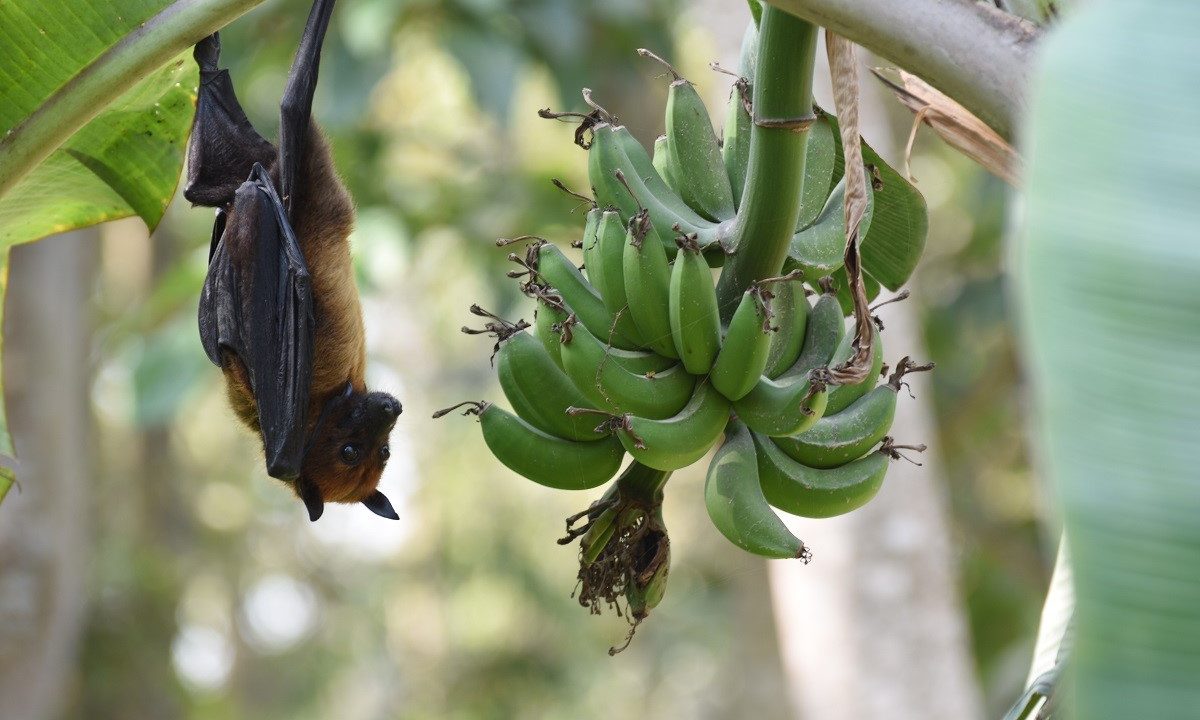
The recent outbreak of Nipah virus in Kerala, which follows one that occurred in 2018, has brought the focus back on bats which are known to host the virus. Using machine learning an international group of scientists has identified bat species with the potential to host the Nipah virus.

Based on traits of bats to carry the virus, researchers have pointed out that more bat species in India may be reservoirs of Nipah than the only one confirmed so far.

“One of our major findings is that until now the Nipah virus presence in India was known from only one species of fruit bats – the Indian Flying Fox. However, our analysis reveals that at least 11 species of bats in India could be carriers of Nipah,” Dr. P.O. Nameer, Head, Centre for Wildlife Studies, College of Forestry, Kerala Agricultural University, and a member of the research team, told India Science Wire.

The machine learning analysis is based on already published scientific studies globally, and no samples have been actually tested for this study. Still, the findings are important from a public health point of view.

“Since Nipah presence is now suspected from more species of bats, including some species of insect bats, we need detailed studies by collecting samples. Such studies would help in taking necessary precautions by people and in reducing chances of possible outbreaks in the future,” added Dr. Nameer.

The analysis covered 523 bat species and 48 traits such as foraging methods, diet, migration behaviors, geographic spread, reproduction as well as environmental conditions. The data included 31 bat species found in India and 11 of these species have been found to host Nipah virus in studies elsewhere.

The algorithm could identify bat species already known to carry Nipah with 83% accuracy. It also identified six species in Asia, Australia, and Oceana that have traits which make them possible hosts of the virus. Four of these species also occur in India, two of are found in Kerala.

“Our work provides a list of species to guide early surveillance and should not be taken as a definitive list of reservoirs. A series of further studies are required to triangulate on the reservoir hosts that pose a risk to humans,” researchers have cautioned in their study published in the journal PLoS Neglected Tropical Diseases.

Nipah is a deadly virus that can be transmitted to humans from the body fluids of infected bats. When infected bats feed on fruits or date palms, they contaminate the fruits. Once someone gets infected, he or she can spread the virus to others. Domestic pigs have also been identified as a ‘bridging host’ in some cases.

The research team included Raina K. Plowright, Daniel E. Crowley and Alex D. Washburne (Montana State University); Daniel J. Becker (University of Georgia, Athens); Barbara A. Han and Tao Huang (Cary Institute of Ecosystem Studies); P.O. Nameer (Kerala Agricultural University) and Emily S. Gurley (Johns Hopkins Bloomberg School of Public Health).

By Dinesh C Sharma

If you liked this article, then please subscribe to our YouTube Channel for the latest Science & Tech news. You can also find us on Twitter & Facebook.
Rate

The machine learning analysis is based on already published scientific studies globally, and no samples have been actually tested for this study. Still, the findings are important from a public health point of view.

“Since Nipah presence is now suspected from more species of bats, including some species of insect bats, we need detailed studies by collecting samples. Such studies would help in taking necessary precautions by people and in reducing chances of possible outbreaks in the future,” added Dr. Nameer.

The analysis covered 523 bat species and 48 traits such as foraging methods, diet, migration behaviors, geographic spread, reproduction as well as environmental conditions. The data included 31 bat species found in India and 11 of these species have been found to host Nipah virus in studies elsewhere.

The algorithm could identify bat species already known to carry Nipah with 83% accuracy. It also identified six species in Asia, Australia, and Oceana that have traits which make them possible hosts of the virus. Four of these species also occur in India, two of are found in Kerala.

“Our work provides a list of species to guide early surveillance and should not be taken as a definitive list of reservoirs. A series of further studies are required to triangulate on the reservoir hosts that pose a risk to humans,” researchers have cautioned in their study published in the journal PLoS Neglected Tropical Diseases.

Nipah is a deadly virus that can be transmitted to humans from the body fluids of infected bats. When infected bats feed on fruits or date palms, they contaminate the fruits. Once someone gets infected, he or she can spread the virus to others. Domestic pigs have also been identified as a ‘bridging host’ in some cases.

The research team included Raina K. Plowright, Daniel E. Crowley and Alex D. Washburne (Montana State University); Daniel J. Becker (University of Georgia, Athens); Barbara A. Han and Tao Huang (Cary Institute of Ecosystem Studies); P.O. Nameer (Kerala Agricultural University) and Emily S. Gurley (Johns Hopkins Bloomberg School of Public Health).

By Dinesh C Sharma

If you liked this article, then please subscribe to our YouTube Channel for the latest Science & Tech news. You can also find us on Twitter & Facebook.

" }
Modifications in School Bag Can Reduce Load for Children

Modifications in School Bag Can Reduce Load for Children

Heavy school bags are always a problem for school children. A group of Indian researchers has now redesigned school bag pack so that it can reduce the load on spine and shoulders of children

  • News
  • 3.1K
Read more
Science Festival Opens in Lucknow

Science Festival Opens in Lucknow

The fourth edition of the India International Science Festival (IISF) began here today. A number of conferences and exhibitions showcasing the work of young scientists were held

  • News
  • 2.6K
Read more

Peptide Nasal Spray to Delay Onset of Alzheimer’s disease

Dr. Rita P.-Y. Chen, an Associate Research Fellow at the Institute of Biological Chemistry along with Dr. Pang-hsien Tu, a former Assistant Research Fellow at the Institute of Biomedical Sciences, and their research teams recently found that a modified short peptide delays the onset of Alzheimer’s disease when delivered in the form of a nasal drop in a mouse model.

  • News
  • 5.2K
Read more

Internet is huge! Help us find great content

Newsletter

Never miss a thing! Sign up for our newsletter to stay updated.

About

Research Stash is a curated collection of tools and News for S.T.E.M researchers

Have any questions or want to partner with us? Reach us at hello@researchstash.com

Navigation

Submit