
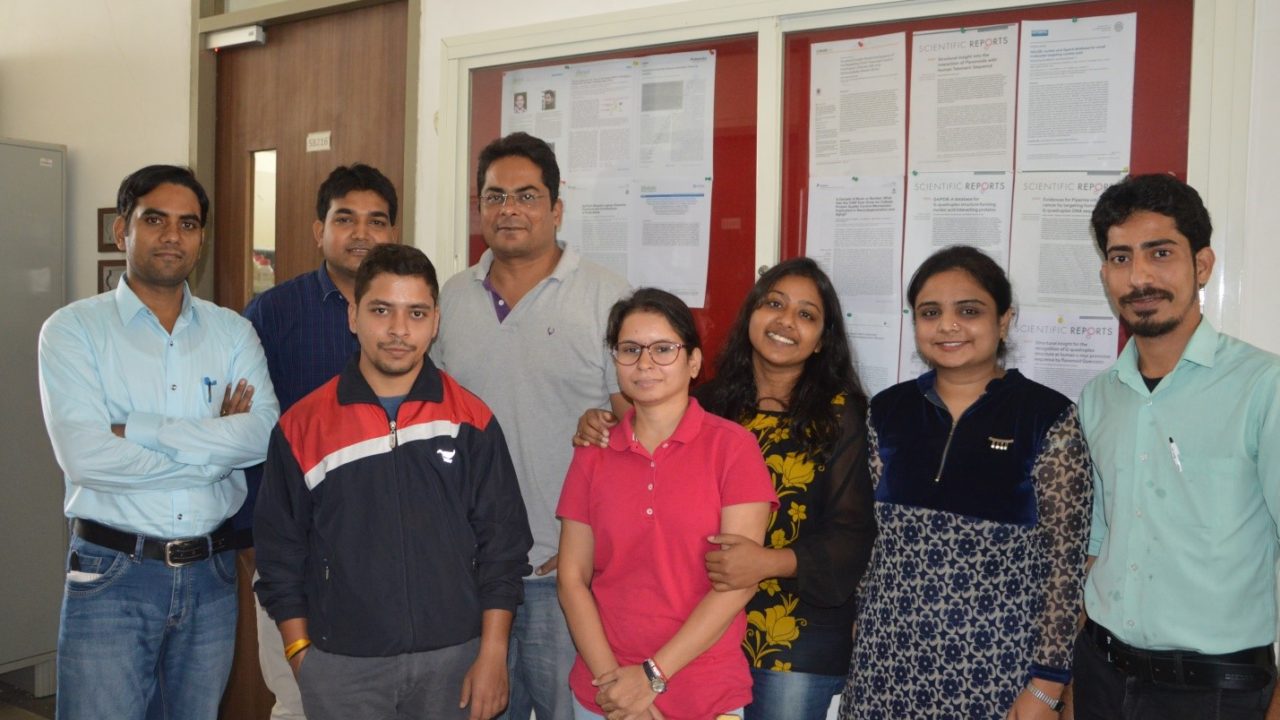
Dr. Amit Kumar with his team at his lab in IIT-Indore

New Study May Help Address Drug Resistant Pneumococcal Diseases

  • Research Stash
  • News
  • 3.4K

Indian researchers have identified three drug target sites in the genome of Streptococcus pneumoniae, paving the way for developing newer drugs to treat Pneumococcal diseases.
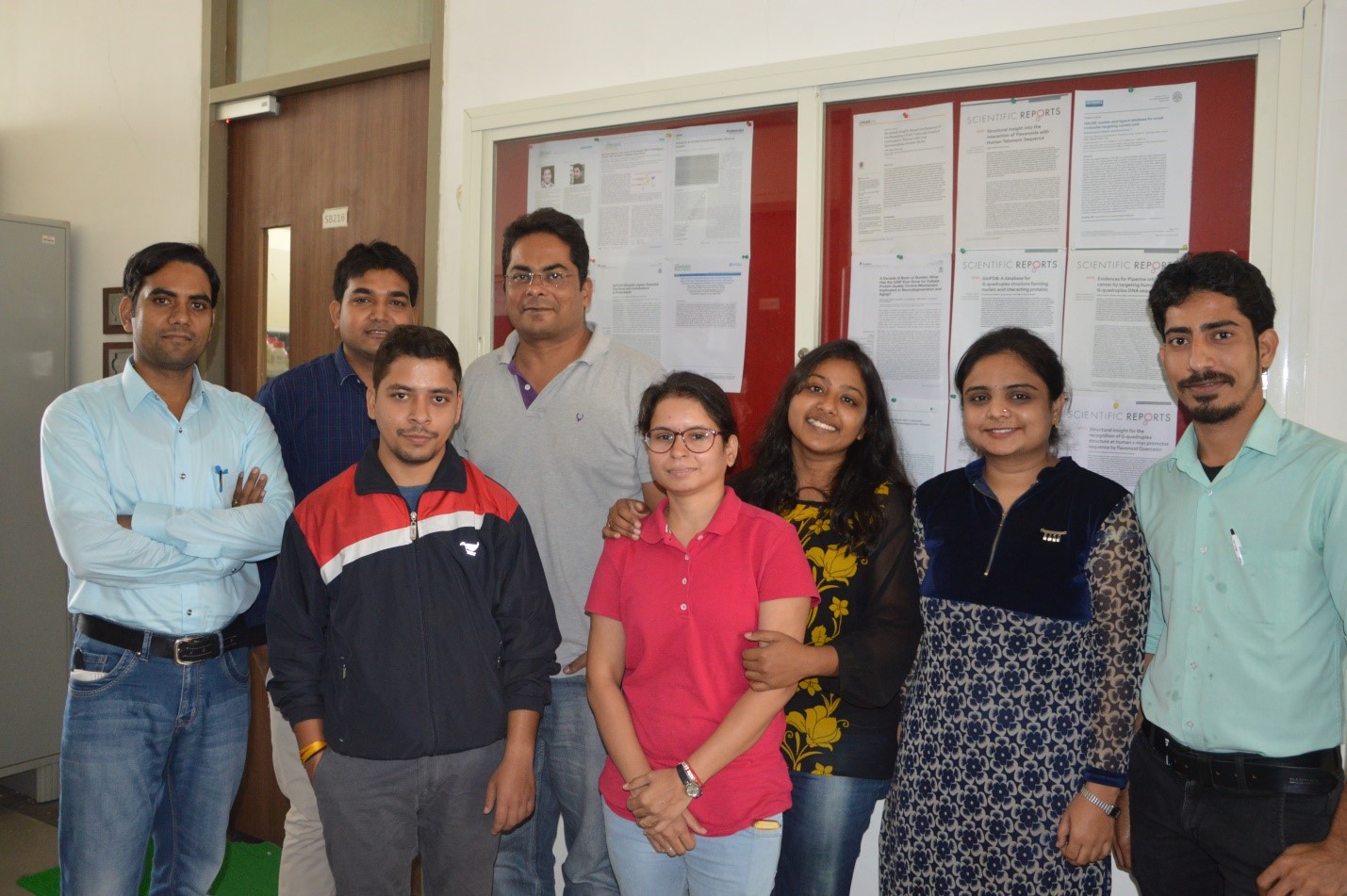
Dr. Amit Kumar with his team at his lab in IIT-Indore

In recent years, Streptococcus pneumoniae has rapidly acquired resistance to several available drugs. This has prompted scientists to look for potential drug targets in the genome of the pathogen.

Over the years, various studies have indicated that a set of genome sequences called potential G-Quadruplex motifs (PGQs) are present in the regulatory regions of the genome of different organisms and they form unique structures called G-Quadruplexes, which influence various biological processes like DNA replication, recombination, and gene expression through the genes where they are located.

In the new study, a group of scientists of Indian Institute of Technology- Indore, and Translational Health Science and Technology Institute (THSTI), Faridabad, have identified three potential G-Quadruplex motifs in Streptococcus pneumoniae in three essential genes called hsdS, recD, and pmrA.

Speaking to India Science Wire, Dr. Amit Kumar of Discipline of Biosciences and Biomedical Engineering at IIT Indore, who was leader of the team, said, “Previous studies have already observed that the three genes, where the potential G-Quadruplex motifs were located play a vital role in providing virulence to the bacteria, by participating in the host-pathogen interaction, drug-efflux system and recombination – repair system. Now, we have gone deeper. The genome sequences we have identified can be promising target sites for combating Streptococcus pneumoniae infection”.

Asked about the next step, he said he and his team are working on developing a small molecule that could be made to attach to the genomic sequences forming the G-Quadruplex structures and thus prevent the expression of the genes responsible for providing virulence to the pathogen. “We have some very optimistic results already. But, more work has to be done”

Dr. Amit Kumar and his colleagues conducted the study in collaboration with Dr. Tarun K. Sharma of Translational Health Science and Technology Institute (THSTI), Faridabad and his team.  A report on the work has been published in science journal Nature’s Scientific Reports. Apart from Dr. Amit Kumar and Dr. Tarun Sharma, Dr.Subodh K Mishra, Dr.Arpita Tawani, Neha Jain, and Uma Shankar were involved in the study. (India Science Wire)

By Sunderarajan Padmanabhan

Journal Article

Characterization of highly conserved G-quadruplex motifs as potential drug targets in Streptococcus pneumoniae

If you liked this article, then please subscribe to our YouTube Channel for the latest Science & Tech news. You can also find us on Twitter & Facebook.

Rate

In the new study, a group of scientists of Indian Institute of Technology- Indore, and Translational Health Science and Technology Institute (THSTI), Faridabad, have identified three potential G-Quadruplex motifs in Streptococcus pneumoniae in three essential genes called hsdS, recD, and pmrA.

Speaking to India Science Wire, Dr. Amit Kumar of Discipline of Biosciences and Biomedical Engineering at IIT Indore, who was leader of the team, said, “Previous studies have already observed that the three genes, where the potential G-Quadruplex motifs were located play a vital role in providing virulence to the bacteria, by participating in the host-pathogen interaction, drug-efflux system and recombination – repair system. Now, we have gone deeper. The genome sequences we have identified can be promising target sites for combating Streptococcus pneumoniae infection”.

Asked about the next step, he said he and his team are working on developing a small molecule that could be made to attach to the genomic sequences forming the G-Quadruplex structures and thus prevent the expression of the genes responsible for providing virulence to the pathogen. “We have some very optimistic results already. But, more work has to be done”

Dr. Amit Kumar and his colleagues conducted the study in collaboration with Dr. Tarun K. Sharma of Translational Health Science and Technology Institute (THSTI), Faridabad and his team.  A report on the work has been published in science journal Nature’s Scientific Reports. Apart from Dr. Amit Kumar and Dr. Tarun Sharma, Dr.Subodh K Mishra, Dr.Arpita Tawani, Neha Jain, and Uma Shankar were involved in the study. (India Science Wire)

By Sunderarajan Padmanabhan

Journal Article

Characterization of highly conserved G-quadruplex motifs as potential drug targets in Streptococcus pneumoniae

If you liked this article, then please subscribe to our YouTube Channel for the latest Science & Tech news. You can also find us on Twitter & Facebook.

" }

Tools for Successful Collaboration

Collaboration tools on researchstash.com

  • News
  • 2.7K
Read more
Women in STEMM Encounter Bias1

Women in STEMM Encounter Bias

“Women’s involvement in science and technology encounters bias in regard to disciplines and academic or professional level of responsibility,” observed Kesari Nath Tripathi, Governor of West Bengal, while inaugurating the Women Science Congress during in the Indian Science Congress session here.

  • News
  • 1.9K
Read more
Project Launched to Convert High-Ash Coal into Methanol

Project Launched to Convert High-Ash Coal into Methanol

Researchers at Indian Institute of Technology Delhi and engineers from Pune-based Thermax have joined hands to set up a pilot plant for producing methanol from high-ash content Indian coal

  • News
  • 15.2K
Read more

Internet is huge! Help us find great content

Newsletter

Never miss a thing! Sign up for our newsletter to stay updated.

About

Research Stash is a curated collection of tools and News for S.T.E.M researchers

Have any questions or want to partner with us? Reach us at hello@researchstash.com

Navigation

Submit