Tomato Gene Involved in Viral Infection and Heat Stress Identified

Tomato Gene Involved in Viral Infection and Heat Stress Identified

  • Research Stash
  • News
  • 2.5K

While trying to understand the genetics of stress to make tomatoes and other crop plants more productive, Indian researchers have identified a gene that helps tomato plant tackle pathogens as well as heat stress.
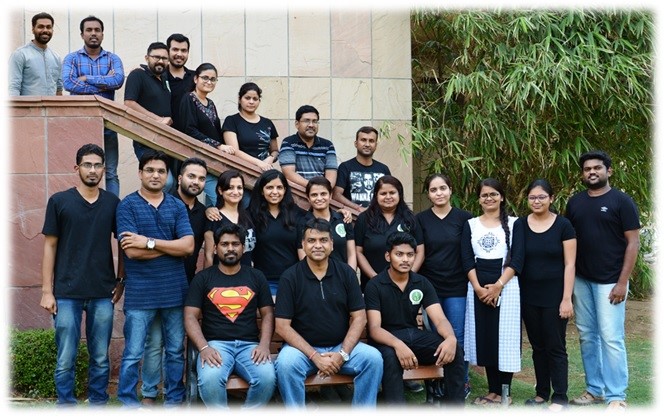
Team of researchers at NIPGR, New Delhi

Scientists at New Delhi-based National Institute of Plant Genome Research (NIPGR) have deciphered the critical role of a single gene – SlDEAD35 – in tomato plant whose expression controls its response to both heat stress and viral infection.

It has been known that RNA helicases, one of the largest gene families that function in almost all aspects of RNA metabolism, play a role in growth, development and stress response of a species. They are present in most of the organisms ranging from bacteria to humans, and plants. However, its role in the tomato plant’s response to environmental stresses is not known.

The NIPGR team has observed that two genes (SlDEAD23 and SlDEAD35) help plants to withstand biotic and abiotic stresses. “We had looked into the transcriptome dynamics of a tomato variety tolerant to Tomato leaf Curl New Delhi Virus infection. Comparative transcriptome analysis of virus-infected as well as uninfected plants showed a significant upregulation of one DEAD-box RNA helicase gene which prompted us to go for its characterization,” explained Dr. Manoj Prasad, who led the research team.

“We find that SlDEAD35 gene plays a crucial role against the virus as well as heat stress, which might provide the framework for improved yield and tolerance against combined stress in tomato,” he added.

Developing systems for tolerance or resistance against combined stresses is important for future crop production. “We have found a candidate gene which might provide the framework to understand the science behind plants’ response against combined stresses.

We can introduce the gene through molecular breeding to develop varieties for the combined stress tolerance in tomato,” said the lead author, Saurabh Pandey.

The results have been published in journal Environmental and Experimental Botany. The team included Saurabh Pandey, Muthamilarasan, Namisha Sharma, Vaishali Chaudhry, Priya Dulani, Shweta, Sarita Jha, Saloni Mathur, and Manoj Prasad. (India Science Wire)

By Ratneshwar Thakur

Journal Article

Characterization of DEAD-box family of RNA helicases in tomato provides insights into their roles in biotic and abiotic stresses

If you liked this article, then please subscribe to our YouTube Channel for the latest Science & Tech news. You can also find us on Twitter & Facebook.

Rate

The NIPGR team has observed that two genes (SlDEAD23 and SlDEAD35) help plants to withstand biotic and abiotic stresses. “We had looked into the transcriptome dynamics of a tomato variety tolerant to Tomato leaf Curl New Delhi Virus infection. Comparative transcriptome analysis of virus-infected as well as uninfected plants showed a significant upregulation of one DEAD-box RNA helicase gene which prompted us to go for its characterization,” explained Dr. Manoj Prasad, who led the research team.

“We find that SlDEAD35 gene plays a crucial role against the virus as well as heat stress, which might provide the framework for improved yield and tolerance against combined stress in tomato,” he added.

Developing systems for tolerance or resistance against combined stresses is important for future crop production. “We have found a candidate gene which might provide the framework to understand the science behind plants’ response against combined stresses.

We can introduce the gene through molecular breeding to develop varieties for the combined stress tolerance in tomato,” said the lead author, Saurabh Pandey.

The results have been published in journal Environmental and Experimental Botany. The team included Saurabh Pandey, Muthamilarasan, Namisha Sharma, Vaishali Chaudhry, Priya Dulani, Shweta, Sarita Jha, Saloni Mathur, and Manoj Prasad. (India Science Wire)

By Ratneshwar Thakur

Journal Article

Characterization of DEAD-box family of RNA helicases in tomato provides insights into their roles in biotic and abiotic stresses

If you liked this article, then please subscribe to our YouTube Channel for the latest Science & Tech news. You can also find us on Twitter & Facebook.

" }
Need for Science Communication Module at School Level

Need for Science Communication Module at School Level

Science communication is an integral part of our daily lives in modern times. Rapidly growing India needs more science communicators to let its people keep abreast of scientific and technological advancements.

  • News
  • 1.6K
Read more
Fight against Pollution May Witness a Paradigm Shift

Fight against Pollution May Witness a Paradigm Shift

The fight against environmental pollution could soon witness a paradigm shift, with a new study showing that domestic sewage is increasingly becoming a major source of Nitrogen pollution.

  • News
  • 1.6K
Read more
IMD Predicts a Normal Monsoon in India

IMD Predicts a Normal Monsoon in India

India Meteorological Department (IMD) on Monday forecast that the monsoon this year will be normal, with rainfall of 97 percent of the long period average (LPA) with an error of plus or five percent.

  • News
  • 2.3K
Read more

Internet is huge! Help us find great content

Newsletter

Never miss a thing! Sign up for our newsletter to stay updated.

About

Research Stash is a curated collection of tools and News for S.T.E.M researchers

Have any questions or want to partner with us? Reach us at hello@researchstash.com

Navigation

Submit