
Improved Catalyst Can Speed Up Conversion of Industrial Biomass into Biofuel

Improved Catalyst Can Speed Up Conversion of Industrial Biomass into Biofuel

  • Research Stash
  • News
  • 3.4K

In their quest for greener sources of energy, researchers are focusing their attention on efficient conversion of biomass into biofuel. Scientists at the National Chemical Laboratory (NCL), Pune, have developed a faster, environment-friendly method for conversion of industrial biomass into biodiesel.

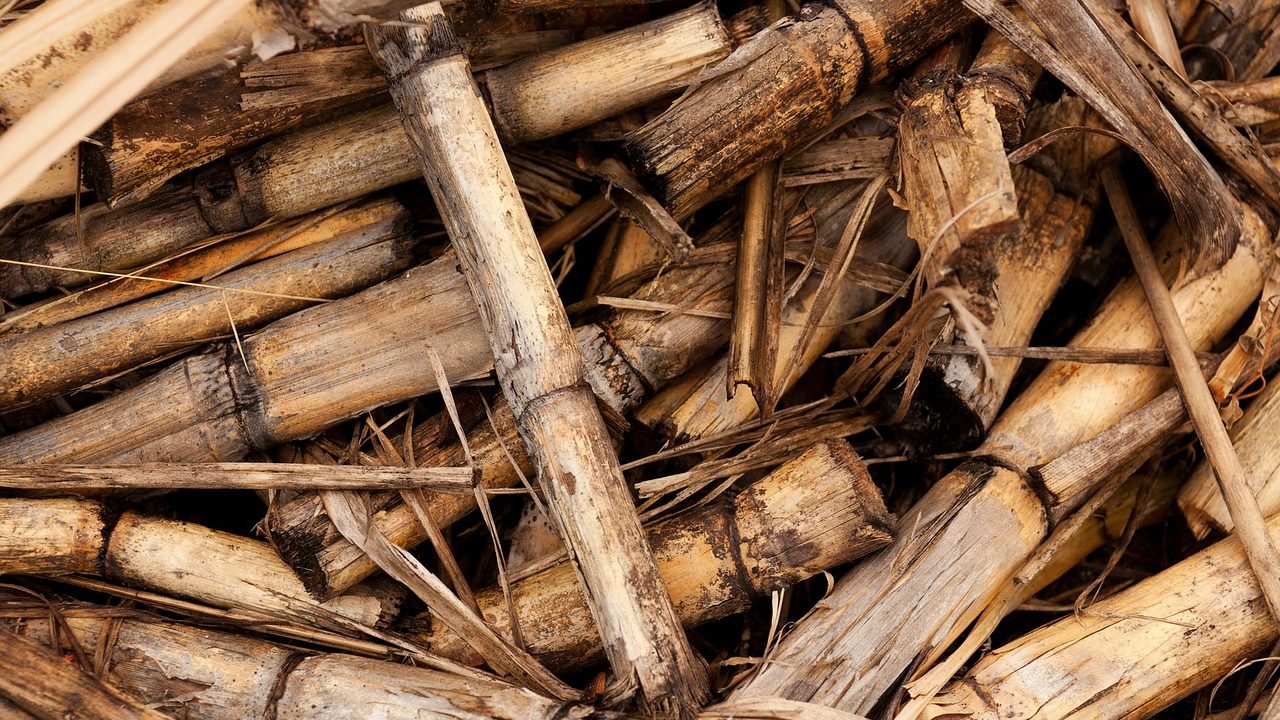
An organic compound called furfural is produced from agricultural waste biomass like bagasse, cottonseed hulls, sawdust, oat hulls, rice hulls, wheat husk and bran. Typically furfural is first chemically changed into furfuryl alcohol. It is processed further to produce alkyl levulinates, such as ethyl levulinate.

The process, however, involves multiple steps and takes a relatively long time. The NCL team has developed a new version of zeolite catalyst – HPW/Meso-HZ-5 – which can speed up the process of conversion.

The catalyst exhibits good performance with 100% furfural alcohol conversion along with 97% ethyl levulinate biodiesel yield and 3% ethoxy methyl furan yield. Ethoxy methyl furan is used as a food additive. The catalyst showed superior activity when compared to the parent H-ZSM-5 and Meso-HZ-5 used separately.

“Due to a higher number of active sites and larger pore size, the travel distance is reduced, thereby improving the accessibility of active sites. The low molar ratio of reactants would do away with the separation cost associated with unreacted ethanol, operational cost and reactor size, making the process economically viable and industrially safe,” researchers said.

India is among leading producers of rice, pulses, wheat, and the world’s second largest producer of sugarcane. A large amount of agricultural waste is produced. Converting this non-food waste into furfural and upgrading it further to biodiesel could give additional income to farmers and also generate employment.

Globally, researchers are seeking to explore biomass as a sustainable alternative feedstock. Ethyl levulinate is one of the top ten biomass-derived ‘building blocks’ recognized for use in biorefineries. It is a renewable oxygenate additive and can be added to diesel.

In this context, the new process would comprise green chemistry and engineering principles such as mild reaction conditions, solid catalyst, reduced byproduct formation, the usage of green solvent (ethanol), sustainable and renewable synthetic routes, and lowering cost involved in separation and purification.

The research team included Kakasaheb Y. Nandiwale, Ashwini M. Pande and Vijay V. Bokade. The study results have been published in journal Environmental Progress & Sustainable Energy.

(India Science Wire)

By Monika Kundu Srivastava

Journal Article

HPW anchored Meso‐HZ‐5, a novel catalyst for selective synthesis of ethyl levulinate biofuel by alcoholysis of biomass‐derived furfuryl alcohol

If you liked this article, then please subscribe to our YouTube Channel for the latest Science & Tech news. You can also find us on Twitter & Facebook.

Rate

The catalyst exhibits good performance with 100% furfural alcohol conversion along with 97% ethyl levulinate biodiesel yield and 3% ethoxy methyl furan yield. Ethoxy methyl furan is used as a food additive. The catalyst showed superior activity when compared to the parent H-ZSM-5 and Meso-HZ-5 used separately.

“Due to a higher number of active sites and larger pore size, the travel distance is reduced, thereby improving the accessibility of active sites. The low molar ratio of reactants would do away with the separation cost associated with unreacted ethanol, operational cost and reactor size, making the process economically viable and industrially safe,” researchers said.

India is among leading producers of rice, pulses, wheat, and the world’s second largest producer of sugarcane. A large amount of agricultural waste is produced. Converting this non-food waste into furfural and upgrading it further to biodiesel could give additional income to farmers and also generate employment.

Globally, researchers are seeking to explore biomass as a sustainable alternative feedstock. Ethyl levulinate is one of the top ten biomass-derived ‘building blocks’ recognized for use in biorefineries. It is a renewable oxygenate additive and can be added to diesel.

In this context, the new process would comprise green chemistry and engineering principles such as mild reaction conditions, solid catalyst, reduced byproduct formation, the usage of green solvent (ethanol), sustainable and renewable synthetic routes, and lowering cost involved in separation and purification.

The research team included Kakasaheb Y. Nandiwale, Ashwini M. Pande and Vijay V. Bokade. The study results have been published in journal Environmental Progress & Sustainable Energy.

(India Science Wire)

By Monika Kundu Srivastava

Journal Article

HPW anchored Meso‐HZ‐5, a novel catalyst for selective synthesis of ethyl levulinate biofuel by alcoholysis of biomass‐derived furfuryl alcohol

If you liked this article, then please subscribe to our YouTube Channel for the latest Science & Tech news. You can also find us on Twitter & Facebook.

" }
India Is Getting Ready for A Nationwide Healthcare Program

India Is Getting Ready for Nationwide Healthcare Program

Indian Health Ministry partners with Dell and Tata Trusts to provide the technology solution for a nationwide healthcare program

  • News
  • 2.8K
Read more

NCKU President shares her love of science with high school girls in Taiwan

National Cheng Kung University (NCKU) President Huey-Jen Jenny Su was invited by Taipei First Girls High School (TFG) to share her learning experience and reflection on being a female scientist in global community on April 14 in Taipei.

  • News
  • 3.1K
Read more
A New Method to Study the Environment of Exoplanets

A New Method to Study the Environment of Exoplanets

A new research study has shown that the planets going around stars other than the Sun can also be studied by observing the polarization of light and studying polarisation signatures or variations in scattering intensity of light

  • News
  • 1.8K
Read more

Internet is huge! Help us find great content

Newsletter

Never miss a thing! Sign up for our newsletter to stay updated.

About

Research Stash is a curated collection of tools and News for S.T.E.M researchers

Have any questions or want to partner with us? Reach us at hello@researchstash.com

Navigation

Submit