New Invasive Weed Spotted in Karnataka

  • Research Stash
  • News
  • 3.8K

Plant scientists have sounded an alarm over a new weed that has been spotted in parts of Karnataka.

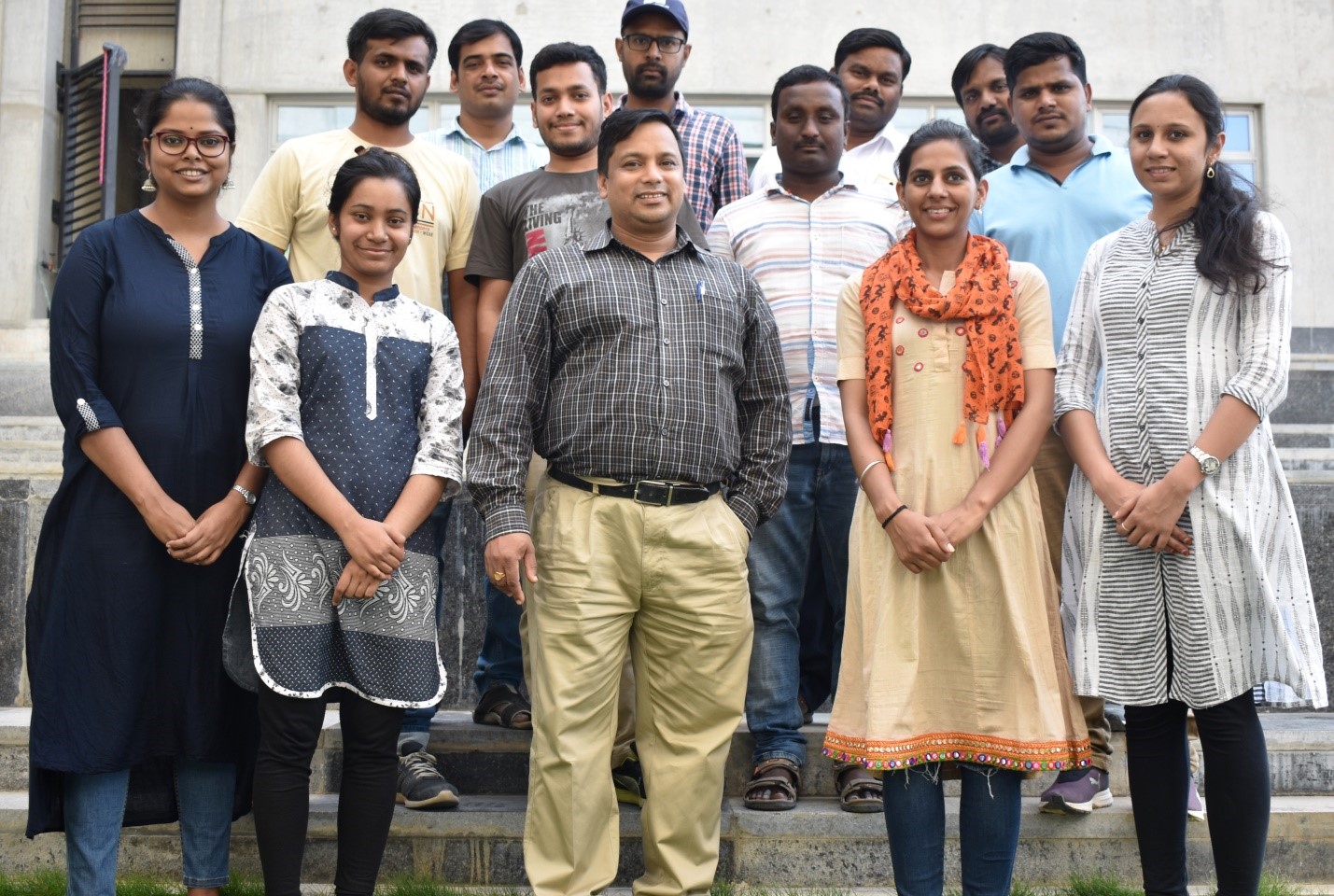
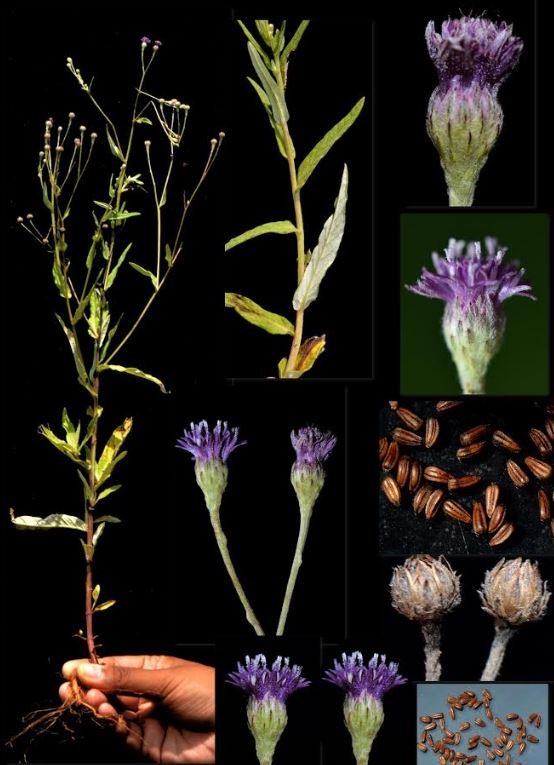
The plant, identified as Ethulia gracilis Delile, is growing wildly as a weed in several places of Belagavi district of Karnataka and may have come from Africa. It was first collected near Nipani- Chikodi road in the late monsoon of 2017. During subsequent visits, researchers spotted it in Mahalingpur, Mudhol and Jamkhandi Taluks of Bagalkot district also.
New Invasive Weed Spotted in Karnataka

“There are good chances of this weed spreading to other parts of the country like other noxious weeds like Parthenium and Lantana,” fear researchers from the Department of Botany, Shivaji University, Kolhapur, who have conducted the study. The research findings have been published in the journal Current Science.

“It does not affect any specific crop, but is growing in the cultivated fields of drier parts of Karnataka, adversely affecting on the growth of many crops just like other weeds such as Parthenium, Vernonia, Tridax, Chromolaena,” Jagdish Dalavi, who was involved in the identification of the new weed, told India Science Wire.


In a casual look, the weed can be mistaken with Vernonia cinereal, another commonly found weed, except that the seeds of Ethulia are without the parachute mechanism which helps in seed dispersal. The weed belongs to a widespread family of decorative plants called Asteraceae. It grows to about two feet height with very sharp leaves and an inflorescence at the top. It was discovered during a survey in the dry fields of Belagavi district of Karnataka.

The possibility of it spreading fast is greater because plants of the Asteraceae family are highly evolved among the flower-bearing plants, produce a large number of seeds which can disperse far and wide. They are also resistant to diseases, insect pests and are repulsive to grazing animals. Their tremendous ability to reproduce makes them highly invasive weeds

So far it has been reported only from Karnataka. There are some possibilities of occurrence of this species in similar habitats. Only two other species of Ethulia have been found in India, and that too in the North Eastern region.  But the new weed Ethulia gracilis is much different from them and resembles a plant growing in Africa.

“How this weed came into India is a serious issue because it is a native of Africa. India has imported Cajanus and some other crops from Africa, and there are chances of mixing some seeds of this weed with those,” felt Dalvi. At present, there is no specific herbicide or weedicide for the Ethulia gracilis.

Besides Jagadish Dalavi, the research team included Sneha Bramhadande, Chirag Narayankar, Suraj Patil and Shrirang Yadav.

By Kollegala Sharma

If you liked this article, then please subscribe to our YouTube Channel for the latest Science & Tech news. You can also find us on Twitter & Facebook.

Rate

“There are good chances of this weed spreading to other parts of the country like other noxious weeds like Parthenium and Lantana,” fear researchers from the Department of Botany, Shivaji University, Kolhapur, who have conducted the study. The research findings have been published in the journal Current Science.

“It does not affect any specific crop, but is growing in the cultivated fields of drier parts of Karnataka, adversely affecting on the growth of many crops just like other weeds such as Parthenium, Vernonia, Tridax, Chromolaena,” Jagdish Dalavi, who was involved in the identification of the new weed, told India Science Wire.

In a casual look, the weed can be mistaken with Vernonia cinereal, another commonly found weed, except that the seeds of Ethulia are without the parachute mechanism which helps in seed dispersal. The weed belongs to a widespread family of decorative plants called Asteraceae. It grows to about two feet height with very sharp leaves and an inflorescence at the top. It was discovered during a survey in the dry fields of Belagavi district of Karnataka.

The possibility of it spreading fast is greater because plants of the Asteraceae family are highly evolved among the flower-bearing plants, produce a large number of seeds which can disperse far and wide. They are also resistant to diseases, insect pests and are repulsive to grazing animals. Their tremendous ability to reproduce makes them highly invasive weeds

So far it has been reported only from Karnataka. There are some possibilities of occurrence of this species in similar habitats. Only two other species of Ethulia have been found in India, and that too in the North Eastern region.  But the new weed Ethulia gracilis is much different from them and resembles a plant growing in Africa.

“How this weed came into India is a serious issue because it is a native of Africa. India has imported Cajanus and some other crops from Africa, and there are chances of mixing some seeds of this weed with those,” felt Dalvi. At present, there is no specific herbicide or weedicide for the Ethulia gracilis.

Besides Jagadish Dalavi, the research team included Sneha Bramhadande, Chirag Narayankar, Suraj Patil and Shrirang Yadav.

By Kollegala Sharma

If you liked this article, then please subscribe to our YouTube Channel for the latest Science & Tech news. You can also find us on Twitter & Facebook.
" }
Here Is Why Improved Forecasts Are Not Helping Prevent Floods and Droughts

Here Is Why Improved Forecasts Are Not Helping Prevent Floods and Droughts

A systematic evaluation of the perception of forecast accuracy among engineers and managers who make decisions and uncertainty on dam operations as well as water resources is needed to bridge the gap from forecasts to lifesaving decisions

  • News
  • 2.3K
Read more

New functions of hippocampus unveiled to bring insights to causes and treatments of brain diseases

A research team led by Lam Woo Professor of Biomedical Engineering Ed X. Wu of the Department of Electrical and Electronic Engineering at the University of Hong Kong has made a major breakthrough in unveiling the mysteries of the brain

  • News
  • 2K
Read more
Surprise! India and China Are Greening Faster Than Rest of the World

Surprise! India and China Are Greening Faster Than Rest of the World

China and India – two economic powerhouses of Asia – are contributing significantly to the greening of the planet, a new global study released on Monday has found

  • News
  • 2.9K
Read more

Internet is huge! Help us find great content

Newsletter

Never miss a thing! Sign up for our newsletter to stay updated.

About

Research Stash is a curated collection of tools and News for S.T.E.M researchers

Have any questions or want to partner with us? Reach us at hello@researchstash.com

Navigation

Submit