
Scientists Look To Mathematics to Make Cancer Treatment More Effective

Scientists Look to Mathematics to Make Cancer Treatment More Effective

  • Research Stash
  • News
  • 3.9K

Scientists at the Pune-based National Chemical Laboratory (NCL) of Council of Scientific and Industrial Research (CSIR) have developed a mathematical model that promises to deliver better protocols for cancer treatment.
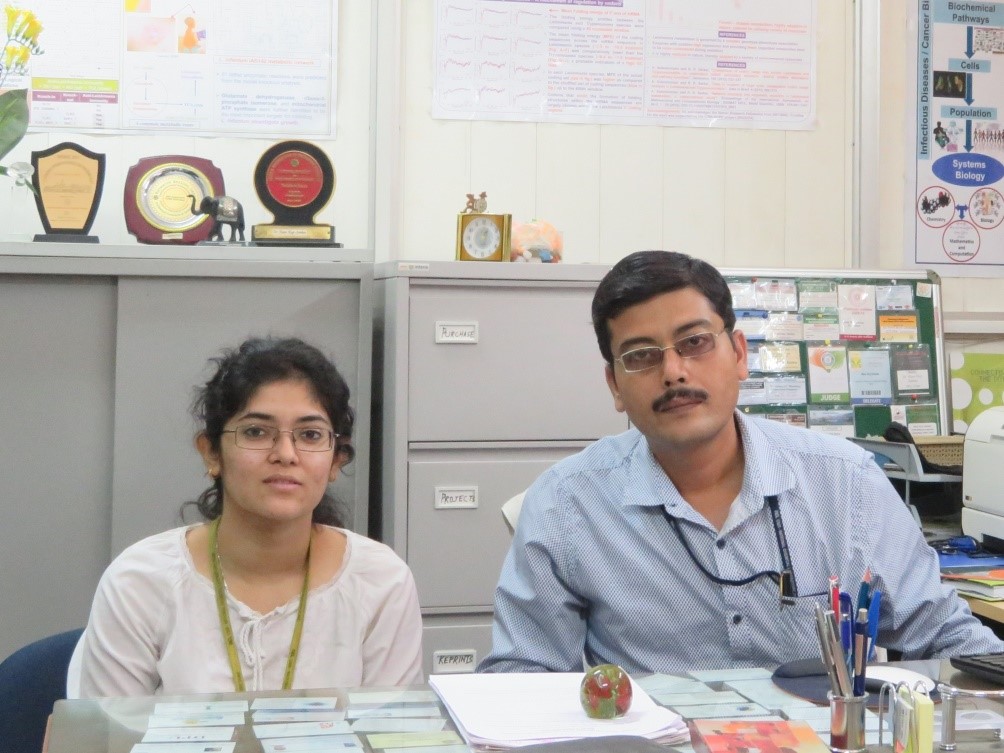
Researchers at National Chemical Laboratory (NCL), Pune

IMAGE: Researchers at National Chemical Laboratory (NCL), Pune

The model has three main components — one for a core tumor and other cells that subsequently get affected by cancer; the second for immune stimulators or boosters that help protect normal cells from getting affected; and the third for immune suppressors or dampeners that allow cancer to spread. The model describes most of the ways by which the three ‘actors’ could affect or influence each other.

It is expected to be of significance as treatment protocols could be developed based on accurate calculations, thus avoiding the preventable and uncomfortable side-effects of cancer treatment, researchers said.

A cancer tumor consists mainly of cancer stem cells (94.6%), followed by cancer cells (4.5%), resistant cancer cells (1%) and drug-resistant stem cells (0.001%). The stem cells, depending on the kind of stimulation received, are capable of changing into any type of cell and multiply rapidly. The spread of the disease can be limited significantly if within 400 days of tumor detection cancer stem cells can be stopped from multiplying and resistant cancer cells stopped from changing into cancer stem cells and drug-resistant stem cells respectively.

After 400 days, when the cells multiply rapidly, it becomes difficult to treat. Many structural changes happen due to mutation, breakages and other factors, which can result in the cells becoming resistant to traditional drugs or radiation and treatment becomes ineffective.

Researchers tested two treatment protocols based on various interactions: one using only radiation and medication while the second included immunotherapy. They found that there was a vast improvement in the latter protocol in the form of a huge reduction in multiplication rate of tumor cells. This was because radiation had no effect on resistant stem cells, and chemotherapy impacted both stem and cancer resistant cells.

Immunotherapy, on the other hand, was found to be beneficial both at early and later stages. In the early stage (till 400 days), it did not allow the number of resistant cells to increase and in later stages, it did not allow a tumor to have its full effect due to an increase in the number of
protective cells fighting cancer cells.

“The model can be used as a potential tool for the prediction of cancer prognosis and calculation of fold changes in the tumor subpopulations in response to a new treatment regimen. The study opens up new avenues for further research in cancer treatment,” researchers said.

Commenting on the new model, Dr. Radhika Nair, Ramanujan Faculty Fellow at the Rajiv Gandhi Centre for Biotechnology, Thiruvananthapuram, said it was a novel study and the model could be applied to most cancers.

“The mathematical basis can help predict optimal drug dosage and treatment cycles which can have a huge benefit in avoiding unnecessary side effects of treatment. The model can also tell us how much intra-tumor heterogeneity, as well as drug-resistant cell population, evolves in response to a new treatment regimen, that is, how cancer might progress,” Dr. Nair said. However, she said, while researchers have verified the model with known experimental data, it is essential to prove its clinical applicability as patients may have a unique manifestation of the disease.

The scientists – Piyali Ganguli and Ram Rup Sarkar of Chemical Engineering and Process Development Division at NCL – have published findings of their research in the journal, PLOS One. The work was funded by the Science and Engineering Research Board (SERB). (India Science Wire)

By Monika Kundu Srivastava

Journal Article 

Exploring immuno-regulatory mechanisms in the tumor microenvironment: Model and design of protocols for cancer remission

If you liked this article, then please subscribe to our YouTube Channel for the latest Science & Tech news. You can also find us on Twitter & Facebook.

The model has three main components — one for a core tumor and other cells that subsequently get affected by cancer; the second for immune stimulators or boosters that help protect normal cells from getting affected; and the third for immune suppressors or dampeners that allow cancer to spread. The model describes most of the ways by which the three ‘actors’ could affect or influence each other.

It is expected to be of significance as treatment protocols could be developed based on accurate calculations, thus avoiding the preventable and uncomfortable side-effects of cancer treatment, researchers said.

A cancer tumor consists mainly of cancer stem cells (94.6%), followed by cancer cells (4.5%), resistant cancer cells (1%) and drug-resistant stem cells (0.001%). The stem cells, depending on the kind of stimulation received, are capable of changing into any type of cell and multiply rapidly. The spread of the disease can be limited significantly if within 400 days of tumor detection cancer stem cells can be stopped from multiplying and resistant cancer cells stopped from changing into cancer stem cells and drug-resistant stem cells respectively.

After 400 days, when the cells multiply rapidly, it becomes difficult to treat. Many structural changes happen due to mutation, breakages and other factors, which can result in the cells becoming resistant to traditional drugs or radiation and treatment becomes ineffective.

Researchers tested two treatment protocols based on various interactions: one using only radiation and medication while the second included immunotherapy. They found that there was a vast improvement in the latter protocol in the form of a huge reduction in multiplication rate of tumor cells. This was because radiation had no effect on resistant stem cells, and chemotherapy impacted both stem and cancer resistant cells.

Immunotherapy, on the other hand, was found to be beneficial both at early and later stages. In the early stage (till 400 days), it did not allow the number of resistant cells to increase and in later stages, it did not allow a tumor to have its full effect due to an increase in the number of
protective cells fighting cancer cells.

“The model can be used as a potential tool for the prediction of cancer prognosis and calculation of fold changes in the tumor subpopulations in response to a new treatment regimen. The study opens up new avenues for further research in cancer treatment,” researchers said.

Commenting on the new model, Dr. Radhika Nair, Ramanujan Faculty Fellow at the Rajiv Gandhi Centre for Biotechnology, Thiruvananthapuram, said it was a novel study and the model could be applied to most cancers.

“The mathematical basis can help predict optimal drug dosage and treatment cycles which can have a huge benefit in avoiding unnecessary side effects of treatment. The model can also tell us how much intra-tumor heterogeneity, as well as drug-resistant cell population, evolves in response to a new treatment regimen, that is, how cancer might progress,” Dr. Nair said. However, she said, while researchers have verified the model with known experimental data, it is essential to prove its clinical applicability as patients may have a unique manifestation of the disease.

The scientists – Piyali Ganguli and Ram Rup Sarkar of Chemical Engineering and Process Development Division at NCL – have published findings of their research in the journal, PLOS One. The work was funded by the Science and Engineering Research Board (SERB). (India Science Wire)

By Monika Kundu Srivastava

Journal Article 

Exploring immuno-regulatory mechanisms in the tumor microenvironment: Model and design of protocols for cancer remission

If you liked this article, then please subscribe to our YouTube Channel for the latest Science & Tech news. You can also find us on Twitter & Facebook.
" }
Making Recycling Of Rubber Eco-Friendly

Making Recycling Of Rubber Eco-Friendly

A group of scientists at the Indian Institute of Technology, Mandi, have documented steps involved in breaking natural rubber down in order to make it environmentally safe.

  • News
  • 2.7K
Read more
Study Finds Mechanism for Mother-Child Transmission of Chickenpox Immunity

Study Finds Mechanism for Mother-Child Transmission of Chickenpox Immunity

A new study has found that women who have had Chickenpox infection may transmit the DNA of the disease-causing virus to their babies during pregnancy, thus stimulating their immunity against the infection and protecting them

  • News
  • 1.8K
Read more
CSIR-CFTRI’s Protein-Enriched Biscuits Reach COVID-19 Patients

CSIR-CFTRI’s Protein-Enriched Biscuits Reach COVID-19 Patients

The Mysuru-based CSIR-Central Food Technological Research Institute has supplied high-protein biscuits to the COVID-19 patients undergoing treatment in the All India Institute of Medical Science

  • News
  • 1.8K
Read more

Internet is huge! Help us find great content

Newsletter

Never miss a thing! Sign up for our newsletter to stay updated.

About

Research Stash is a curated collection of tools and News for S.T.E.M researchers

Have any questions or want to partner with us? Reach us at [email protected]

Navigation

Submit