New Algorithm May Help Heart Patients in Remote Areas

New Algorithm May Help Heart Patients in Remote Areas

  • Research Stash
  • News
  • 2.7K

There is some good news for heart patients in remote places. Scientists at the Indian Institute of Technology, Hyderabad (IIT-Hyderabad) have developed a new algorithm that promises to help transmit heart parameters even on a low-bandwidth network and make it easier for cardiologists to interpret the data.

Many heart patients need to keep a check on their health by regular monitoring of heart parameters. In India, in every one lakh, heart patients about 5000 need such regular monitoring. While portable devices are available to help continuously monitor the status of the heart, cardiologists who can interpret such data are mostly not available in rural areas.

Telemedicine can bridge this gap by helping to transmit the data to specialists over the telephone or other networks. But such transmission of this data – which is massive – requires high bandwidth networks and a specialist to sift through it.

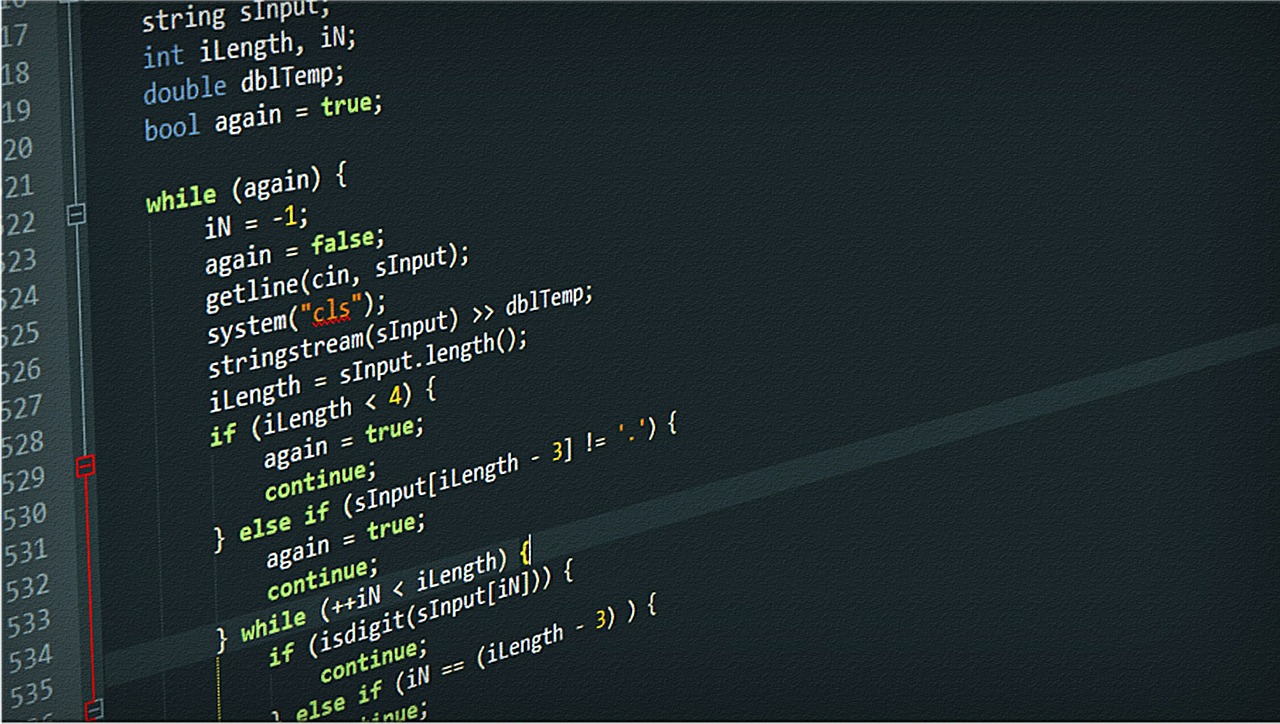
The new algorithm can address these problems. It can process the enormous amount of data and packages it in a way that it can be transmitted over a lower bandwidth network. “It not only detects an abnormal heartbeat in the ECG but also compresses this data so that it can be sent easily over limited bandwidth internet available in rural areas. The compressed data can be easily decompressed and interpreted at the other end,” explain the researchers.

The piece of software, researchers said, has been found to have low error rate –it may miss at the most one heartbeat in a hundred.  It is also less expensive. The system can operate at even a bandwidth of 33.6 bits per second. In addition, it makes diagnosis easier. “The burden on the specialist is reduced by at least 85.9% because he or she now has to only look at the anomalies that have already been sifted apart by the algorithm,” researchers said.

The team has also developed an artificial intelligence (AI)-based procedure that combines information like heartbeat and blood pressure with ECG data. The procedure mimicked the human thinking process involved in analyzing and combining multiple parameters into a realistic diagnosis, using a form of computing called Artificial Neural Networking (ANN).

The algorithm was tested on available datasets and it gave accurate results.  “We are looking at working with hardware groups to incorporate the algorithm into monitoring devices. We are planning to conduct a field trial and an end-to-end system is expected to be available by 2020,” said Bolelpalli S. Chandra, a member of the research team.

The team included Professor Soumya Jana and Dr. C S Sastry from  IIT-Hyderabad, and Dr.Laxminarayana Anumandla, a cardiac surgeon from Maxcare Hospital, Warangal. The research results have been published in two journals IEEE Transactions on Biomedical Engineering and Artificial Intelligence in Medicine. (India Science Wire)

By Kollegala Sharma

If you liked this article, then please subscribe to our YouTube Channel for the latest Science & Tech news. You can also find us on Twitter & Facebook.

The new algorithm can address these problems. It can process the enormous amount of data and packages it in a way that it can be transmitted over a lower bandwidth network. “It not only detects an abnormal heartbeat in the ECG but also compresses this data so that it can be sent easily over limited bandwidth internet available in rural areas. The compressed data can be easily decompressed and interpreted at the other end,” explain the researchers.

The piece of software, researchers said, has been found to have low error rate –it may miss at the most one heartbeat in a hundred.  It is also less expensive. The system can operate at even a bandwidth of 33.6 bits per second. In addition, it makes diagnosis easier. “The burden on the specialist is reduced by at least 85.9% because he or she now has to only look at the anomalies that have already been sifted apart by the algorithm,” researchers said.

The team has also developed an artificial intelligence (AI)-based procedure that combines information like heartbeat and blood pressure with ECG data. The procedure mimicked the human thinking process involved in analyzing and combining multiple parameters into a realistic diagnosis, using a form of computing called Artificial Neural Networking (ANN).

The algorithm was tested on available datasets and it gave accurate results.  “We are looking at working with hardware groups to incorporate the algorithm into monitoring devices. We are planning to conduct a field trial and an end-to-end system is expected to be available by 2020,” said Bolelpalli S. Chandra, a member of the research team.

The team included Professor Soumya Jana and Dr. C S Sastry from  IIT-Hyderabad, and Dr.Laxminarayana Anumandla, a cardiac surgeon from Maxcare Hospital, Warangal. The research results have been published in two journals IEEE Transactions on Biomedical Engineering and Artificial Intelligence in Medicine. (India Science Wire)

By Kollegala Sharma

If you liked this article, then please subscribe to our YouTube Channel for the latest Science & Tech news. You can also find us on Twitter & Facebook.
" }
Satellite-Based Advisory Service Launched for Deep Sea Fishermen

Satellite-Based Advisory Service Launched for Deep Sea Fishermen

The Indian National Centre for Ocean Information Services and Airport Authority of India on Wednesday launched a new system that expands the scope for disseminating alerts and other messages to fishermen who go for multi-day fishing and other such activities deep inside the seas

  • News
  • 2.2K
Read more
A Blueprint to Develop A Rapid qRT-PCR kit To Detect SARS-CoV-2

A Blueprint to Develop A Rapid qRT-PCR kit To Detect SARS-CoV-2

Researchers at the Advanced Centre for Treatment, Research, and Education in Cancer have published a report in the Cell Press journal ‘Heliyon’ in which they present a Rapid qRT-PCR kit To Detect SARS-CoV-2

  • News
  • 2K
Read more
New Nano Molecule for Breast Cancer Therapy Shows Promise

New Nano Molecule for Breast Cancer Therapy Shows Promise

Researchers have developed a molecule that could potentially be used as a photosensitizer in a non-invasive cancer treatment known as photodynamic therapy

  • News
  • 1.9K
Read more

Internet is huge! Help us find great content

Newsletter

Never miss a thing! Sign up for our newsletter to stay updated.

About

Research Stash is a curated collection of tools and News for S.T.E.M researchers

Have any questions or want to partner with us? Reach us at [email protected]

Navigation

Submit