
Innovative Products and Solutions on Display at IISF1

Innovative Products and Solutions on Display at IISF

  • Research Stash
  • News
  • 2K

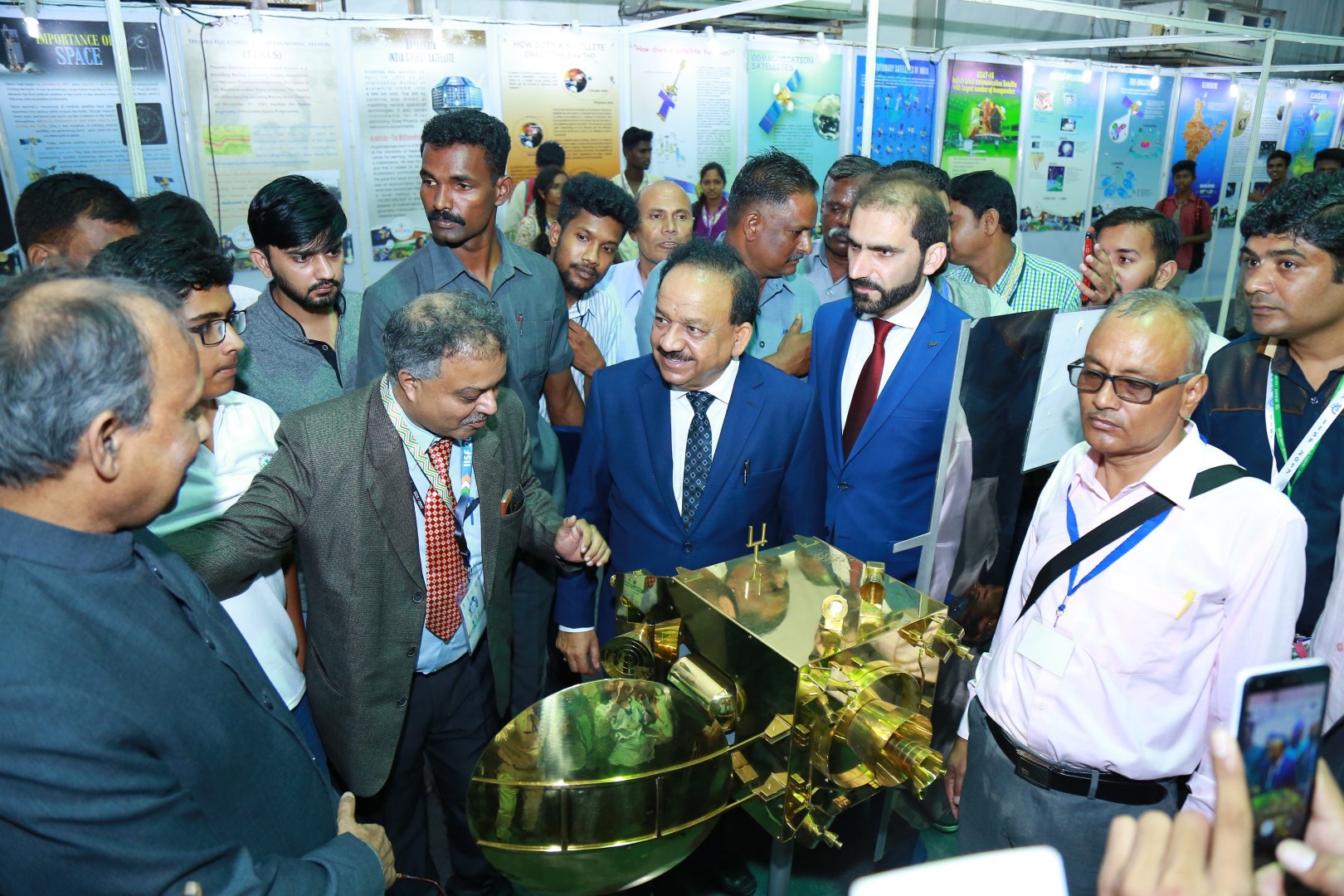
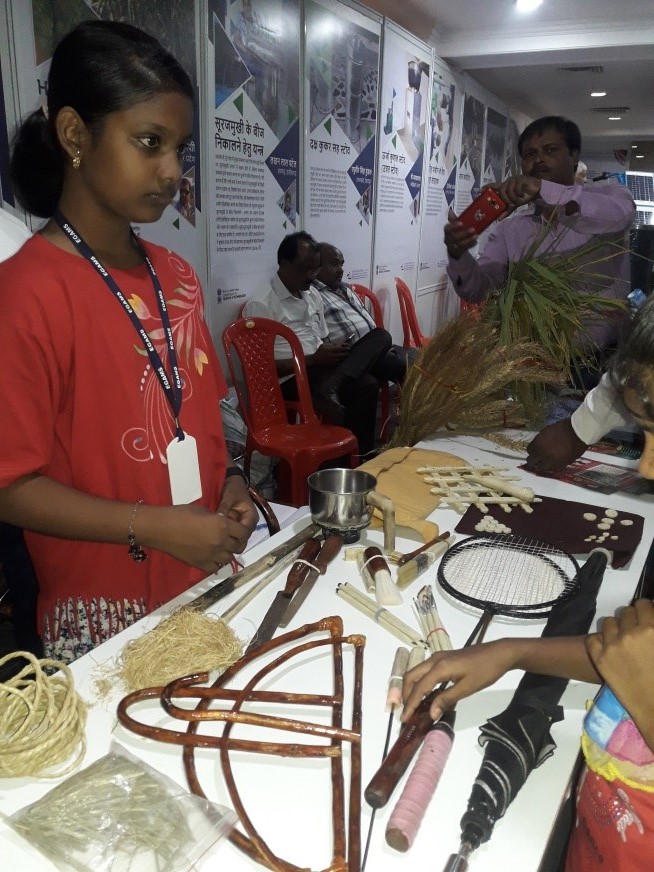
A cost-effective, cloud-enabled device for diabetes care, an obstacle avoiding robot, a weed that can be used to make useful items and many more. These are some of the ideas and products on display at the Science and Technology for Harnessing Innovations (SATHI) exhibition which concludes at the fourth India International Science Festival (IISF) today.
Innovative Products and Solutions on Display at IISF

The programme was aimed at providing a common platform for students, innovators, researchers, and policymakers engaged in innovation. Seminars and roundtable discussions on innovations, incubation, and entrepreneurship also held to encourage young aspirants to take innovations for start-ups.

Among the participants was a start-up named Skywalkers. It is an aero-modeling startup funded by the Delhi government. “Our objective is to improve practical skills of students by making them learn aerodynamics in simple language. We have made some very cost efficient aero models that would help them to learn the basics of aeromodelling,” said Jyoti Bakshi, founder member of Skywalkers.

Tactopus, an interactive audio-tactile learning tool was also exhibited. “We design inclusive educational resources for the needs of children with vision loss. The inclusive and multi-sensory nature of this tool provides an opportunity for children with different abilities to share experience on a level playing field,” said Garima.

Swarnim Electronics has made an automatic wash basin sensor that can help in saving water as well as stop spreading bacteria through wash basins especially at public places. While explaining the mechanism Dheeren, the innovator said, “there are wash basins that work on sensor technology but they are expensive and have a high maintenance cost.

They work on a photosensor mechanism while our product works on proximity sensors. As we bring our hands close to it the sensor will sense the hand and water would start flowing and would stop as we take our hands away.”

The innovative products attracted a huge crowd at the exhibition. “This is really thrilling to see that how people have made such innovative products. I really got inspired,” quipped Sabreena, a ninth standard student. She came to see the exhibition with her friend who was equally excited to see all the exhibits. “I can spend my whole day here observing these exhibits and getting ideas. Hopefully next year I would also come here with my exhibit,” said Amreen.

Over 60 exhibits based on innovative ideas were displayed. Among the participants were All India Council for Technical Education (AICTE), Biotechnology Industry Research Assistance Council (BIRAC) and schools having Atal Tinkering labs, informed Dr. Nitin Jain, coordinator and scientist with the Department of Biotechnology.

By Jyoti Singh

If you liked this article, then please subscribe to our YouTube Channel for the latest Science & Tech news. You can also find us on Twitter & Facebook.
Rate

Among the participants was a start-up named Skywalkers. It is an aero-modeling startup funded by the Delhi government. “Our objective is to improve practical skills of students by making them learn aerodynamics in simple language. We have made some very cost efficient aero models that would help them to learn the basics of aeromodelling,” said Jyoti Bakshi, founder member of Skywalkers.

Tactopus, an interactive audio-tactile learning tool was also exhibited. “We design inclusive educational resources for the needs of children with vision loss. The inclusive and multi-sensory nature of this tool provides an opportunity for children with different abilities to share experience on a level playing field,” said Garima.

Swarnim Electronics has made an automatic wash basin sensor that can help in saving water as well as stop spreading bacteria through wash basins especially at public places. While explaining the mechanism Dheeren, the innovator said, “there are wash basins that work on sensor technology but they are expensive and have a high maintenance cost.

They work on a photosensor mechanism while our product works on proximity sensors. As we bring our hands close to it the sensor will sense the hand and water would start flowing and would stop as we take our hands away.”

The innovative products attracted a huge crowd at the exhibition. “This is really thrilling to see that how people have made such innovative products. I really got inspired,” quipped Sabreena, a ninth standard student. She came to see the exhibition with her friend who was equally excited to see all the exhibits. “I can spend my whole day here observing these exhibits and getting ideas. Hopefully next year I would also come here with my exhibit,” said Amreen.

Over 60 exhibits based on innovative ideas were displayed. Among the participants were All India Council for Technical Education (AICTE), Biotechnology Industry Research Assistance Council (BIRAC) and schools having Atal Tinkering labs, informed Dr. Nitin Jain, coordinator and scientist with the Department of Biotechnology.

By Jyoti Singh

If you liked this article, then please subscribe to our YouTube Channel for the latest Science & Tech news. You can also find us on Twitter & Facebook.

" }
New Study Raises Prospect of Zika Virus Therapy

New Study Raises Prospect of Zika Virus Therapy

New drugs could soon be in the offing for Zika virus infection with a team of scientists at the Institute of Medical Sciences in Banaras Hindu University, Varanasi, getting new insights into how the virus multiplies inside the host.

  • News
  • 2K
Read more
Researchers Develop Transgenic Rice with Reduced Arsenic Accumulation

Researchers Develop Transgenic Rice with Reduced Arsenic Accumulation

Arsenic accumulation in rice grains is one of the serious agricultural issues in India. To address this, researchers at Lucknow- based CSIR-National Botanical Research Institute have developed transgenic rice by inserting a novel fungal gene, which results in reduced arsenic accumulation in rice grain

  • News
  • 3.8K
Read more
Why Black Kites Attack Humans

Why Black Kites Attack Humans

A new study has found that the probability of attack by kites, birds of prey that inhabit urban areas, increases in neighborhoods where human population is high and conditions are unhygienic. The birds also get more aggressive when they have eggs in their nests.

  • News
  • 2.6K
Read more

Internet is huge! Help us find great content

Newsletter

Never miss a thing! Sign up for our newsletter to stay updated.

About

Research Stash is a curated collection of tools and News for S.T.E.M researchers

Have any questions or want to partner with us? Reach us at hello@researchstash.com

Navigation

Submit