
New Approach Can Make Better Titanium Alloy for Implants

  • Research Stash
  • News
  • 2.8K

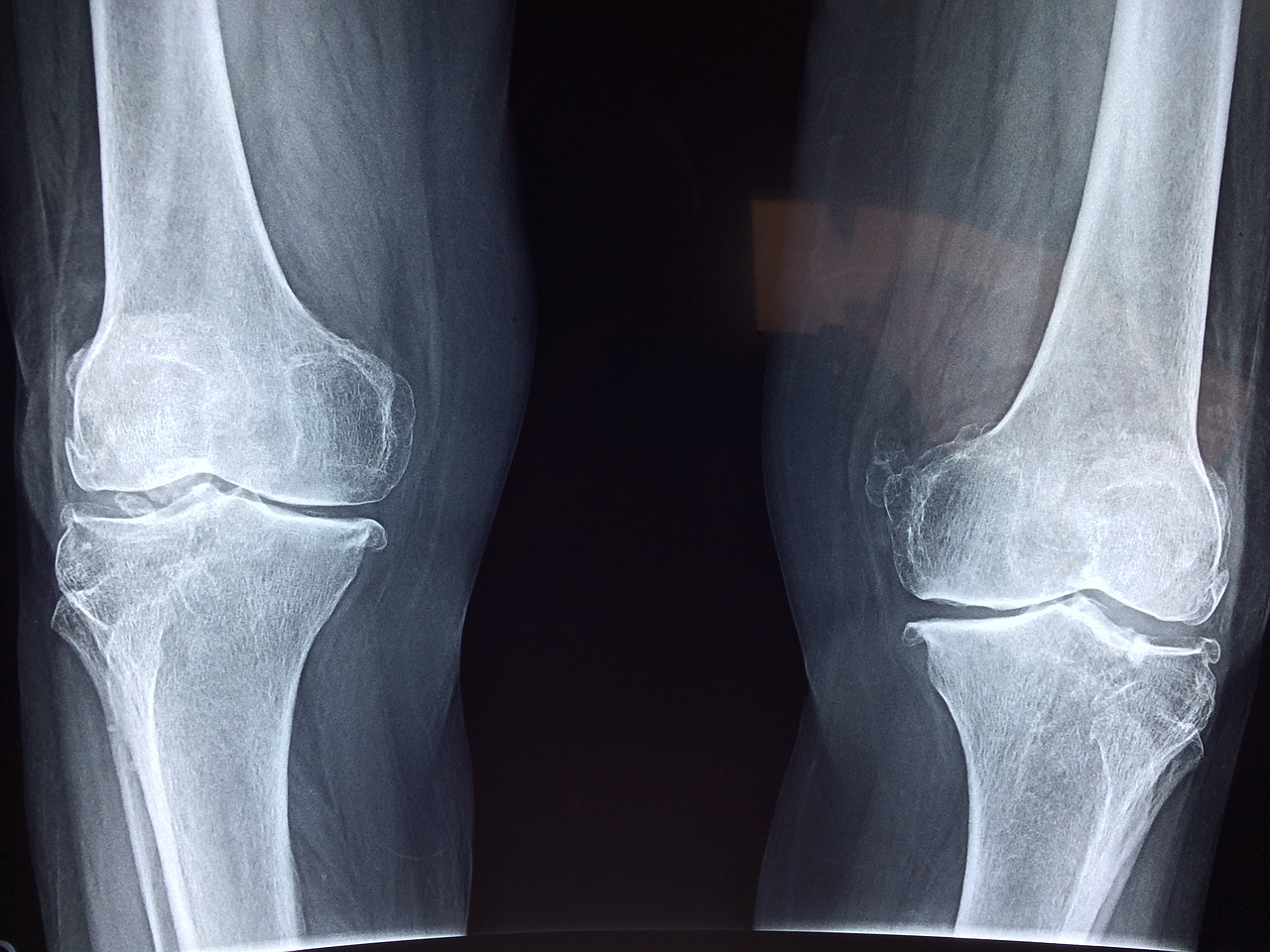
Researchers at the Indian Institute of Science (IISc) in Bengaluru have proposed a new approach for developing orthopedic implants with better ability to bond with the bone.

Currently, orthopedic implants for knee and hip arthroplasty are made of metallic alloys that contain potentially toxic elements like aluminum, vanadium, and nickel. They are also much stiffer than human bone and don’t bond well with the bone.
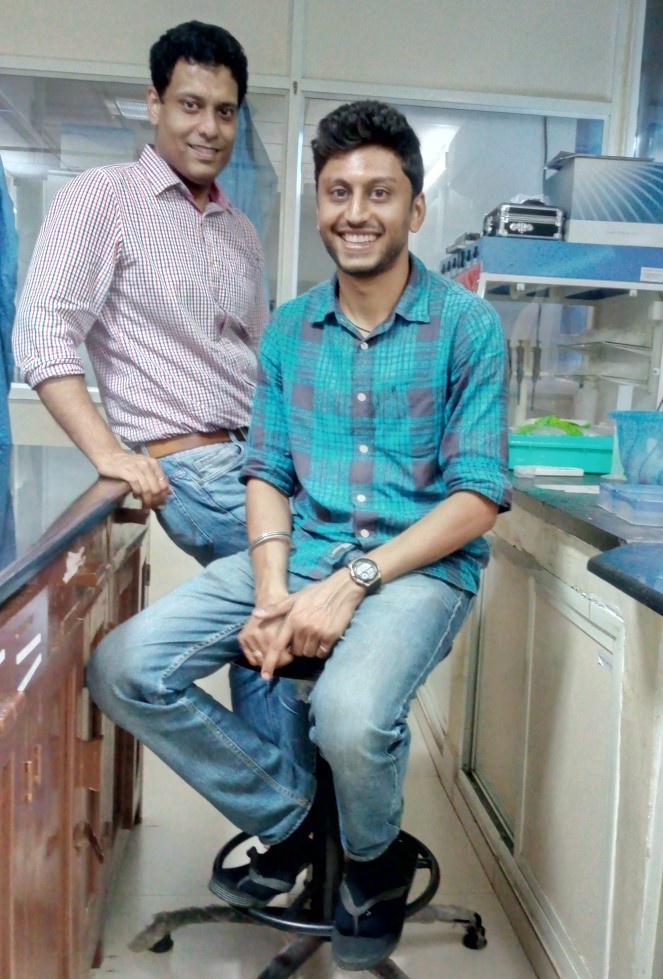
Kaushik Chatterjee and Sumit Bahl (Left to Right)

Image: Kaushik Chatterjee and Sumit Bahl (Left to Right)

The research team at IISc has developed a strategy to increase the bioactivity of titanium alloy consisting of non-toxic elements – titanium, niobium, and tin, through surface severe plastic deformation (metalworking techniques). This approach could help produce new titanium alloys that are less stiff compared to currently used. The researchers have published a report on their work in the journal ‘ACS Biomaterials Science & Engineering.’

The researchers used a technique known as surface mechanical attrition treatment (SMAT) to boost bioactivity of alloy’s surface. In this technique, the metal alloy sheet is placed inside a chamber containing hard steel balls typically used in ball bearings. The chamber is vibrated using electromechanical means because of which the balls start to move randomly at high speed inside the chamber.

“The SMAT treatment deforms the surface of the metal sheet, which leads to an increase in surface hardness, modification in surface roughness and surface wettability and its chemistry. These modifications are responsible for increasing biological activity of the metal,” explained Dr. Kaushik Chatterjee, who led the research, while speaking to India Science Wire.

SMAT can improve biomechanical properties like fatigue and wear resistance, added Dr. Sumit Bahl, lead author of the study. The equipment used for the experiment was developed in collaboration with a Bengaluru company.

“The study has shown that traditional metal processing techniques can be still used to improve the cell-material interaction of new class of titanium alloys,” commented Dr. T.S. Sampath Kumar of Indian Institute of Technology, Madras, who was not connected with the study.

The research team included Sai Rama Krishna Meka, Sumit Bahl, Satyam Suwas, and Kaushik Chatterjee. The study was supported by the Science and Engineering Research Board (SERB). (India Science Wire)

By Ratneshwar Thakur

Journal Article

Surface Severe Plastic Deformation of an Orthopedic Ti–Nb–Sn Alloy Induces Unusual Precipitate Remodeling and Supports Stem Cell Osteogenesis through Akt Signaling

If you liked this article, then please subscribe to our YouTube Channel for the latest Science & Tech news. You can also find us on Twitter & Facebook.
Rate

Image: Kaushik Chatterjee and Sumit Bahl (Left to Right)

The research team at IISc has developed a strategy to increase the bioactivity of titanium alloy consisting of non-toxic elements – titanium, niobium, and tin, through surface severe plastic deformation (metalworking techniques). This approach could help produce new titanium alloys that are less stiff compared to currently used. The researchers have published a report on their work in the journal ‘ACS Biomaterials Science & Engineering.’

The researchers used a technique known as surface mechanical attrition treatment (SMAT) to boost bioactivity of alloy’s surface. In this technique, the metal alloy sheet is placed inside a chamber containing hard steel balls typically used in ball bearings. The chamber is vibrated using electromechanical means because of which the balls start to move randomly at high speed inside the chamber.

“The SMAT treatment deforms the surface of the metal sheet, which leads to an increase in surface hardness, modification in surface roughness and surface wettability and its chemistry. These modifications are responsible for increasing biological activity of the metal,” explained Dr. Kaushik Chatterjee, who led the research, while speaking to India Science Wire.

SMAT can improve biomechanical properties like fatigue and wear resistance, added Dr. Sumit Bahl, lead author of the study. The equipment used for the experiment was developed in collaboration with a Bengaluru company.

“The study has shown that traditional metal processing techniques can be still used to improve the cell-material interaction of new class of titanium alloys,” commented Dr. T.S. Sampath Kumar of Indian Institute of Technology, Madras, who was not connected with the study.

The research team included Sai Rama Krishna Meka, Sumit Bahl, Satyam Suwas, and Kaushik Chatterjee. The study was supported by the Science and Engineering Research Board (SERB). (India Science Wire)

By Ratneshwar Thakur

Journal Article

Surface Severe Plastic Deformation of an Orthopedic Ti–Nb–Sn Alloy Induces Unusual Precipitate Remodeling and Supports Stem Cell Osteogenesis through Akt Signaling

If you liked this article, then please subscribe to our YouTube Channel for the latest Science & Tech news. You can also find us on Twitter & Facebook.
" }
Team of NPL researchers.

India’s Timekeeper Says Country Need Two Time Zones

A new analysis by the National Physical Laboratory - India’s official timekeeper - has supported long-standing demand for a separate time zone for eastern states - Assam, Meghalaya, Nagaland, Arunachal Pradesh, Manipur, Mizoram, Tripura – and Andaman and the Nicobar Islands

  • News
  • 2.4K
Read more

Study Disproves Hawking, Shows Tiny Black Holes May Not Account for Dark Matter

An international research team including Dr. Surhud More and Dr. Anupreeta More from Inter-University Centre for Astronomy and Astrophysics, Pune has ruled out the possibility of primordial black holes being a major constituent of Dark matter. This finding disproves a theoretical claim of Prof Stephen Hawking

  • News
  • 2.2K
Read more
Dr Sagar Sengupta with his colleagues in his lab

Study Opens New Avenue for Preventing Cancer

In a new development in the area of cancer research, scientists at Delhi-based National Institute of Immunology have found a way to stop the degradation of a protein called p53 that prevents cancer cells from proliferating and forming tumors in the body

  • News
  • 4K
Read more

Internet is huge! Help us find great content

Newsletter

Never miss a thing! Sign up for our newsletter to stay updated.

About

Research Stash is a curated collection of tools and News for S.T.E.M researchers

Have any questions or want to partner with us? Reach us at hello@researchstash.com

Navigation

Submit