
Scientists Find New Use for Orange Peel from Printing Tattoos and Oil Cleaning

  • Research Stash
  • News
  • 4K

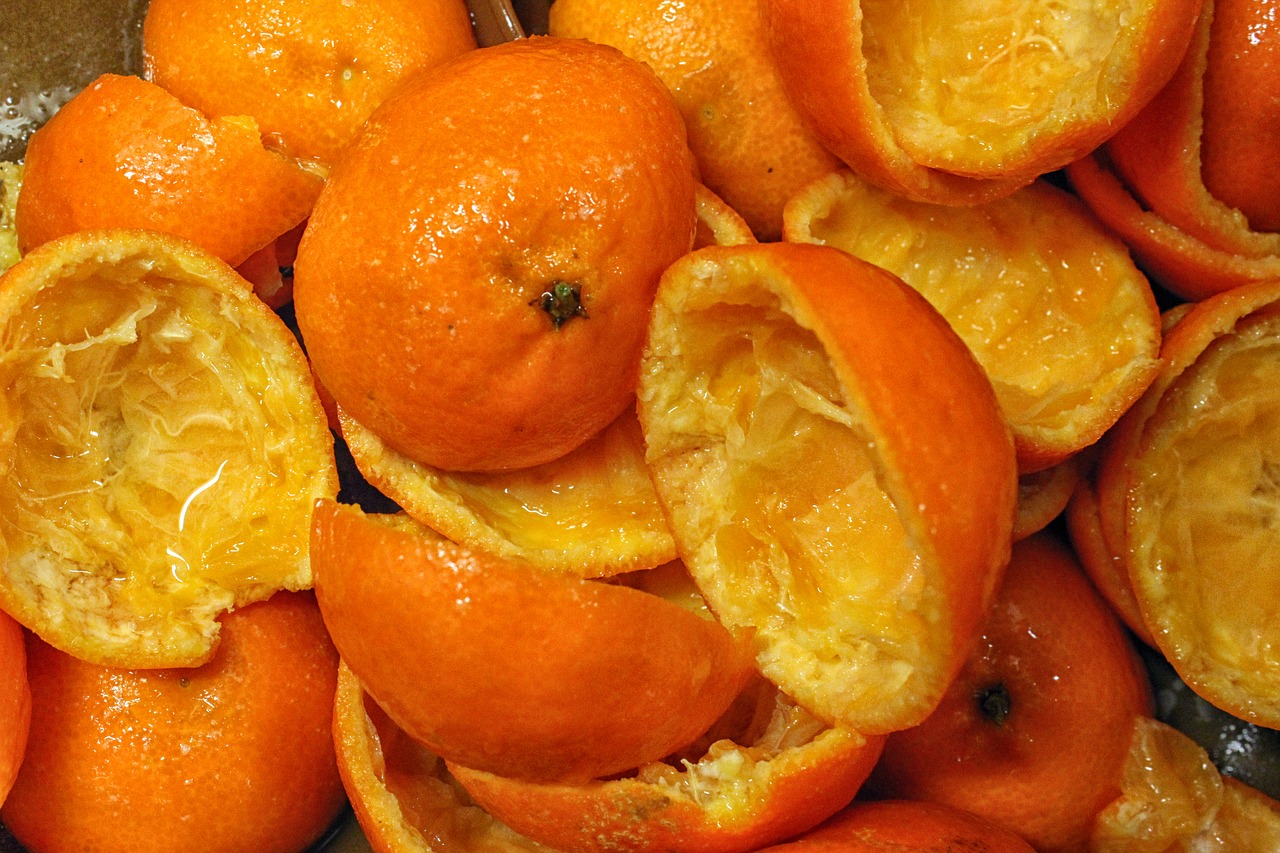
Researchers at the Indian Institute of Hyderabad (IIT) Hyderabad have developed novel methods to recycle citrus peel waste more efficiently. Peel of citrus fruits, after extraction of fruit juice, has no commercial value. Peel extracts can be used to make a few specialty chemicals like limonene, but the process to do so is highly energy intensive and unviable.
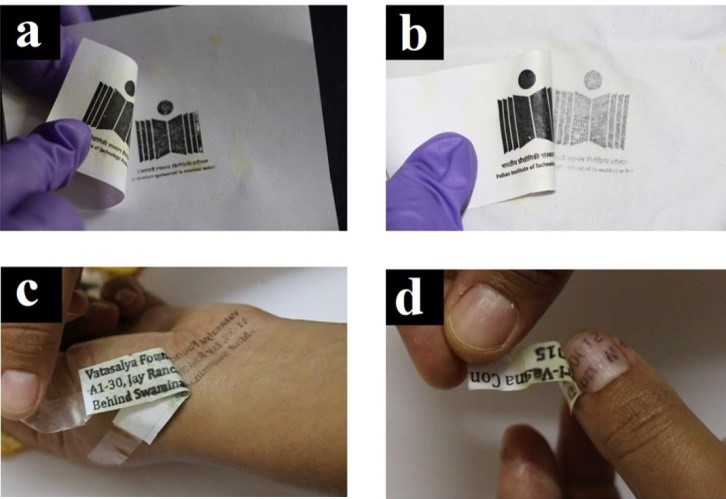
Print transfer on various surfaces using citrus peel extract

Print transfer on various surfaces using citrus peel extract

The researchers at IIT have developed multiple ways to use citrus peel extract directly. For instance, the pure extract can be used for recycling polystyrene waste. It is a non-biodegradable waste but its life can be extended after recycling, and recycled polystyrene waste-based ultrathin fibers polystyrene fabric can be used for cleaning oil spills at the household level as well as for large oil spills in industrial units or water bodies. It can also be used as a flexible insulator in building construction. Additionally, this fabric can be further converted into yarns for textile applications.

Chandra Shekhar Sharma

Chandra Shekhar Sharma

According to researchers, the presence of limonene compound in the citrus peel is responsible for polystyrene fabric formation. Another use of citrus peel extract is for print transfer. Print transfer technique is basically used to directly transfer any pattern from one surface to another. The same can be applied to make artificial tattoos on human skin, as nail arts or even for printing various objects made up of wood, mica, paper, clothes, glass etc.

Shital Yadav

Shital Yadav

Once this citrus peel extract is allowed to sediment under gravity, it forms three layers. The top layer (oil type) can be further used again for polystyrene recycling while the second layer is nothing but cellulose particles which can be converted into carbon material upon heating in an inert atmosphere and thus can be used as an electrode for Lithium-ion batteries. The bottom, a water-like layer can be used as a natural solvent for biopolymers like gelatin, which, in turn, can be used to make nanofibers.

The research team has incubated a start-up company to commercialize the innovative processes. “We are in discussion with investors to develop small-scale machines that can recycle polystyrene waste using citrus peel extract as the point of generation of waste itself.

We also plan to develop the market for kitchen towels and napkins for cleaning oil spills” Prof. Chandra Shekhar Sharma told India Science Wire. A pilot-scale machine has already been developed with funding from the Department of Science and Technology (DST).

Prof Sharma, along with colleague Shital Yadav, has published results of the research in journal Polymer Bulletin and also filed for patents. (India Science Wire)

By Yogesh Sharma

Journal Article

Novel and green processes for citrus peel extract: a natural solvent to source of carbon

For the latest Science, Tech news and conversations, follow Research Stash on TwitterFacebook, and subscribe to our YouTube channel 

Rate

The researchers at IIT have developed multiple ways to use citrus peel extract directly. For instance, the pure extract can be used for recycling polystyrene waste. It is a non-biodegradable waste but its life can be extended after recycling, and recycled polystyrene waste-based ultrathin fibers polystyrene fabric can be used for cleaning oil spills at the household level as well as for large oil spills in industrial units or water bodies. It can also be used as a flexible insulator in building construction. Additionally, this fabric can be further converted into yarns for textile applications.

Chandra Shekhar Sharma

Chandra Shekhar Sharma

According to researchers, the presence of limonene compound in the citrus peel is responsible for polystyrene fabric formation. Another use of citrus peel extract is for print transfer. Print transfer technique is basically used to directly transfer any pattern from one surface to another. The same can be applied to make artificial tattoos on human skin, as nail arts or even for printing various objects made up of wood, mica, paper, clothes, glass etc.

Shital Yadav

Shital Yadav

Once this citrus peel extract is allowed to sediment under gravity, it forms three layers. The top layer (oil type) can be further used again for polystyrene recycling while the second layer is nothing but cellulose particles which can be converted into carbon material upon heating in an inert atmosphere and thus can be used as an electrode for Lithium-ion batteries. The bottom, a water-like layer can be used as a natural solvent for biopolymers like gelatin, which, in turn, can be used to make nanofibers.

The research team has incubated a start-up company to commercialize the innovative processes. “We are in discussion with investors to develop small-scale machines that can recycle polystyrene waste using citrus peel extract as the point of generation of waste itself.

We also plan to develop the market for kitchen towels and napkins for cleaning oil spills” Prof. Chandra Shekhar Sharma told India Science Wire. A pilot-scale machine has already been developed with funding from the Department of Science and Technology (DST).

Prof Sharma, along with colleague Shital Yadav, has published results of the research in journal Polymer Bulletin and also filed for patents. (India Science Wire)

By Yogesh Sharma

Journal Article

Novel and green processes for citrus peel extract: a natural solvent to source of carbon

For the latest Science, Tech news and conversations, follow Research Stash on TwitterFacebook, and subscribe to our YouTube channel 
" }

Researchers Quantify Breast Cancer Risk Based on Rare Variants and Background Risk Findings Reported at ASHG 2017 Annual Meeting

Rare variants combined with background genetic risk factors may account for many unexplained cases of familial breast cancer, and knowing the specific genes involved could inform choice of prevention and treatment strategies

  • News
  • 1.9K
Read more

MOST, Taiwan unveils plan for AI research centers

The Ministry of Science and Technology unveiled plans July 6 to establish up to four artificial intelligence innovation research centers across Taiwan as part of government efforts to enhance the nation’s competitiveness in AI technology.

  • News
  • 2.7K
Read more
Slow Downloads, Dropped Calls Integration of Mobile Networks with Wi-Fi May Be the Answer

Slow Downloads, Dropped Calls? Integration of Mobile Networks with Wi-Fi May Be the Answer

The demand for data-fueled by smartphones and other internet-connected devices is rising continuously. At the same time, poor mobile phone connectivity inside buildings has become a point of concern for operators and consumers. Researchers may have found a solution to these problems – integrating cellular or mobile networks with widely used Wi-Fi networks

  • News
  • 1.6K
Read more

Internet is huge! Help us find great content

Newsletter

Never miss a thing! Sign up for our newsletter to stay updated.

About

Research Stash is a curated collection of tools and News for S.T.E.M researchers

Have any questions or want to partner with us? Reach us at hello@researchstash.com

Navigation

Submit