

Time Stamping with IST Can Help Crack Cybercrimes

Time Stamping with IST Can Help Crack Cybercrimes

  • Research Stash
  • News
  • 2.2K

All digital transactions being carried out in India could soon have to timestamp with Indian Standard Time (IST). The National Physical Laboratory (NPL) – the official timekeeper of IST – has signed an agreement with the Department of Telecommunication (DoT) to establish a nationwide network for time stamping and time synchronization and to ensure traceability of time signals.

The new system is expected to particularly help security agencies in dealing with cyber crimes by making it easier for analyzing and correlating cyber events particularly in the context of increasing network speeds. In addition, it is expected to help improve the telecom network efficiency by reducing packet loss through a better synchronized digital network.
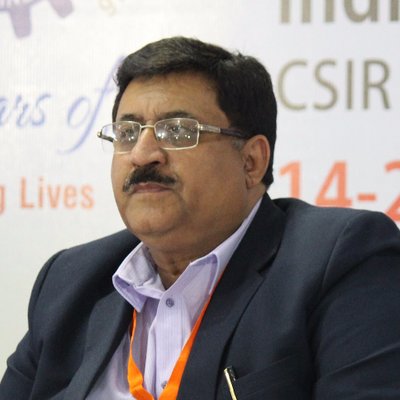
Dr. Girish Sahni

Dr Girish Sahni

There is a need for the time set on Indian telecom networks to be in IST zone to help uniquely identify users or subscribers of the network on tracing of the IP address and other parameters, explained Dr Girish Sahni, director general of Council of Scientific and Industrial Research (CSIR). Presently, it is not possible as telecom and internet service providers take their reference time from different sources such as GPS from GNSS and these do not do not have the traceability with IST.

Dr. D. K. Aswal

Dr D. K. Aswal

NPL director Dr D.K. Aswal said time stamping and time synchronization network would be made up of one-time synchronization centre for each of the 22 licensed service areas (LSAs) of DoT.  These centres would provide synchronization pulse in Indian Standard Time to telecom and internet service providers served by the respective LSA. In the first phase, four metro LSAs would be covered and in the second, the balance service areas.

Member (Technology) in DoT, Mr Prabhash Singh, said the network will, among other things, help in reducing the Voice Over Internet Protocol (VOIP) call drops, and improve the quality of services of the network, voice and video. “The time standardization will help to curb cyber crimes and will also help to identify and correlate the various digital financial transactions”.

Since the accuracy of time depends upon the distance between the time synchronization centre (the reference source) and the location of the telecom and internet services, stratum-1 time synchronization centres would be established at all the 22 LSAs, according to an official press release. (India Science Wire)

By Sunderarajan Padmanabhan

For the latest Science, Tech news and conversations, follow Research Stash on TwitterFacebook, and subscribe to our YouTube channel 

Rate

Dr Girish Sahni

There is a need for the time set on Indian telecom networks to be in IST zone to help uniquely identify users or subscribers of the network on tracing of the IP address and other parameters, explained Dr Girish Sahni, director general of Council of Scientific and Industrial Research (CSIR). Presently, it is not possible as telecom and internet service providers take their reference time from different sources such as GPS from GNSS and these do not do not have the traceability with IST.

Dr. D. K. Aswal

Dr D. K. Aswal

NPL director Dr D.K. Aswal said time stamping and time synchronization network would be made up of one-time synchronization centre for each of the 22 licensed service areas (LSAs) of DoT.  These centres would provide synchronization pulse in Indian Standard Time to telecom and internet service providers served by the respective LSA. In the first phase, four metro LSAs would be covered and in the second, the balance service areas.

Member (Technology) in DoT, Mr Prabhash Singh, said the network will, among other things, help in reducing the Voice Over Internet Protocol (VOIP) call drops, and improve the quality of services of the network, voice and video. “The time standardization will help to curb cyber crimes and will also help to identify and correlate the various digital financial transactions”.

Since the accuracy of time depends upon the distance between the time synchronization centre (the reference source) and the location of the telecom and internet services, stratum-1 time synchronization centres would be established at all the 22 LSAs, according to an official press release. (India Science Wire)

By Sunderarajan Padmanabhan

For the latest Science, Tech news and conversations, follow Research Stash on TwitterFacebook, and subscribe to our YouTube channel 
" }
New Study to Help Develop Salt-Tolerant Plants

New Study to Help Develop Salt-Tolerant Plants

Efforts to make use of mangrove plants to meet the increasing need for food production in the wake of a growing world population could get a major boost with a team of Indian researchers reporting a reference-grade genome of a highly salt-tolerant mangrove species called Avicennia marina. It grows optimally in 75% seawater and can tolerate even 250% seawater.

  • News
  • 1.9K
Read more
NRDC To Extend Its Footprint to America

NRDC To Extend Its Footprint to America

The National Research Development Corporation, which is engaged in promoting indigenous technologies in the Indian industry and startups, will soon expand its wings to the U.S

  • News
  • 1.5K
Read more

Dr. Arun Netravali, HDTV tech pioneer, wins Prestigious Marconi Award

Dr. Arun Netravali, former president of Bell Labs (now Nokia Bell Labs) and leader of key base technology for MPEG 1, 2 and 4 that ushered in digital video revolution in TV and mobile and streaming video has been awarded the prestigious Marconi Prize for 2017.

  • News
  • 5.5K
Read more

Internet is huge! Help us find great content

Newsletter

Never miss a thing! Sign up for our newsletter to stay updated.

About

Research Stash is a curated collection of tools and News for S.T.E.M researchers

Have any questions or want to partner with us? Reach us at hello@researchstash.com

Navigation

Submit