
Distributed Incubation May Help Promote Grassroots Innovations

Distributed Incubation May Help Promote Grassroots Innovations

  • Research Stash
  • News
  • 1.8K

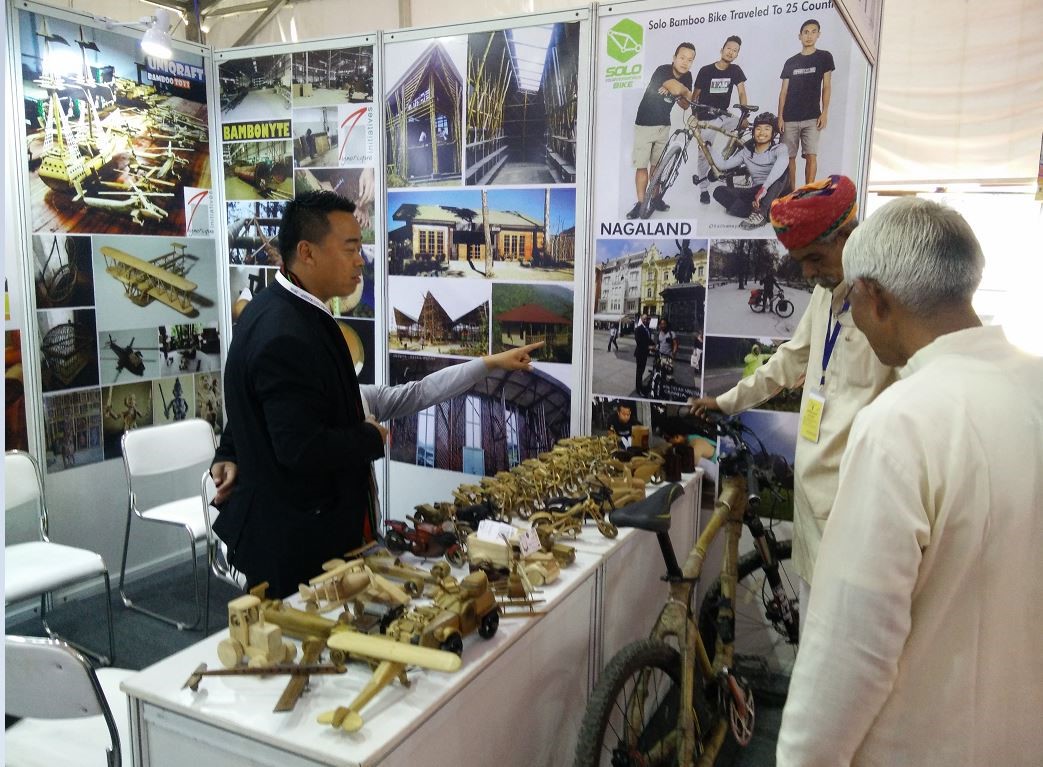
Several grassroots innovations which we often hear about failing to make it to the market. This is due to a number of factors including lack of access to formal incubation facilities, venture capital, prototyping and mentoring. In order to overcome these hurdles, experts have suggested setting up of special purpose incubators that can provide necessary technical and mentoring support to innovators in the non-formal sector.

“The idea is to develop some kind of distributed incubation and to nurture ventures in their respective regions, in the spirit of in-situ incubation,” said Dr Ashutosh Sharma, secretary, Department of Science and Technology (DST) while presenting recommendations emerging from roundtables held as part of the Festival of Innovation and Entrepreneurship at the Rashtrapati Bhawan this week.

It was also suggested that since most innovative products fail to compete with large companies and against established products and brands, the government must develop norms for a preference in public procurement for such products.

Besides distributed incubation facilities, the roundtable also came up with the idea of ‘value addition centers’ which should be open for all innovators so that prototypes of innovations could be further developed and converted into marketable products. At present, academic and research institutions are involved in developing prototypes only and innovators have to look elsewhere for fabrication. Commercial fabricators accept orders for large quantities.  “Innovators need special fabrication centers where limited units of a finished product can be developed for a pilot study, market research and test commercialization,” Dr. Sharma added.

There is a need for testing and calibration of technologies developed by a large number of innovators. However, many innovators and start-ups do not have adequate funds for this. A fund through which testing and calibration of technologies could be facilitated is required.

In order to correctly ascertain the needs of the people, an appropriate need-gap analysis is essential to guide the R&D efforts in the right direction. If the industry could be involved during the initial phase of product development, the chances of the products’ acceptance by the people increase manifold. Hence, industry and R&D linkages at institutions be facilitated.

The roundtable on sustainable agriculture recommended that adoption of one innovator by every agriculture institute and university. The Indian Council for Agriculture Research (ICAR) already runs a program called Innovator Farmers – IARI Fellows. It was recommended that this scheme should be extended to central and state agriculture universities for innovations in agriculture and allied activities.

“We have seen that coming together of innovators from informal sector and institutions in the formal sector can help disseminate innovations on a wider scale,” observed Dr. Anil K Gupta, executive vice chairperson of National Innovation Foundation which organized the innovation festival in collaboration with the Office of the President and DST.

“The exhibition of innovations held at Rashtrapati Bhavan has demonstrated to industry, government and civil society how innovators are collaborating for a creative and compassionate India,” President Ramnath Kovind said while speaking at the concluding session.

However, he said, merely showcasing innovations was not the sole purpose of this Festival. “We must translate innovative ideas into accessible and affordable products and services for our people. It is important to connect the bottom of the innovation pyramid with the other layers. And to clear the path for grassroots innovations to be scaled up for mass adoption,” the President added. (India Science Wire)

By Dinesh C Sharma

For the latest Science, Tech news and conversations, follow Research Stash on TwitterFacebook, and subscribe to our YouTube channel 

Rate

Besides distributed incubation facilities, the roundtable also came up with the idea of ‘value addition centers’ which should be open for all innovators so that prototypes of innovations could be further developed and converted into marketable products. At present, academic and research institutions are involved in developing prototypes only and innovators have to look elsewhere for fabrication. Commercial fabricators accept orders for large quantities.  “Innovators need special fabrication centers where limited units of a finished product can be developed for a pilot study, market research and test commercialization,” Dr. Sharma added.

There is a need for testing and calibration of technologies developed by a large number of innovators. However, many innovators and start-ups do not have adequate funds for this. A fund through which testing and calibration of technologies could be facilitated is required.

In order to correctly ascertain the needs of the people, an appropriate need-gap analysis is essential to guide the R&D efforts in the right direction. If the industry could be involved during the initial phase of product development, the chances of the products’ acceptance by the people increase manifold. Hence, industry and R&D linkages at institutions be facilitated.

The roundtable on sustainable agriculture recommended that adoption of one innovator by every agriculture institute and university. The Indian Council for Agriculture Research (ICAR) already runs a program called Innovator Farmers – IARI Fellows. It was recommended that this scheme should be extended to central and state agriculture universities for innovations in agriculture and allied activities.

“We have seen that coming together of innovators from informal sector and institutions in the formal sector can help disseminate innovations on a wider scale,” observed Dr. Anil K Gupta, executive vice chairperson of National Innovation Foundation which organized the innovation festival in collaboration with the Office of the President and DST.

“The exhibition of innovations held at Rashtrapati Bhavan has demonstrated to industry, government and civil society how innovators are collaborating for a creative and compassionate India,” President Ramnath Kovind said while speaking at the concluding session.

However, he said, merely showcasing innovations was not the sole purpose of this Festival. “We must translate innovative ideas into accessible and affordable products and services for our people. It is important to connect the bottom of the innovation pyramid with the other layers. And to clear the path for grassroots innovations to be scaled up for mass adoption,” the President added. (India Science Wire)

By Dinesh C Sharma

For the latest Science, Tech news and conversations, follow Research Stash on TwitterFacebook, and subscribe to our YouTube channel 

" }
Positioning India as A Global Leader in Science and Technology

Positioning India as A Global Leader in Science and Technology

The second day of the India International Science Festival (IISF) evoked a huge response from students, young researchers, teachers, and the scientific community. Speakers in different sessions discussed ways of connecting science with society

  • News
  • 2.7K
Read more
IMD Predicts `Near Normal’ South West Monsoon

IMD Predicts `Near Normal’ South West Monsoon

The India Meteorological Department on Monday forecast that the coming southwest monsoon season is likely to be near normal, with a rainfall of 96 percent of the long period average with a model error of plus or minus five percent

  • News
  • 1.6K
Read more
Here Is All You Wanted to Know About Annular Solar Eclipse of December 2019

Here Is All You Wanted to Know About Annular Solar Eclipse of December 2019

The solar eclipse occurring on December 26 is not only the last one this year, but is also going to very special. During the eclipse, the Sun will appear as a ‘Ring of fire’ for a brief moment

  • News
  • 4.1K
Read more

Internet is huge! Help us find great content

Newsletter

Never miss a thing! Sign up for our newsletter to stay updated.

About

Research Stash is a curated collection of tools and News for S.T.E.M researchers

Have any questions or want to partner with us? Reach us at hello@researchstash.com

Navigation

Submit