Hot Springs Harbor Microbial Diversity

Hot Springs Harbor Microbial Diversity

  • Research Stash
  • News
  • 2.7K

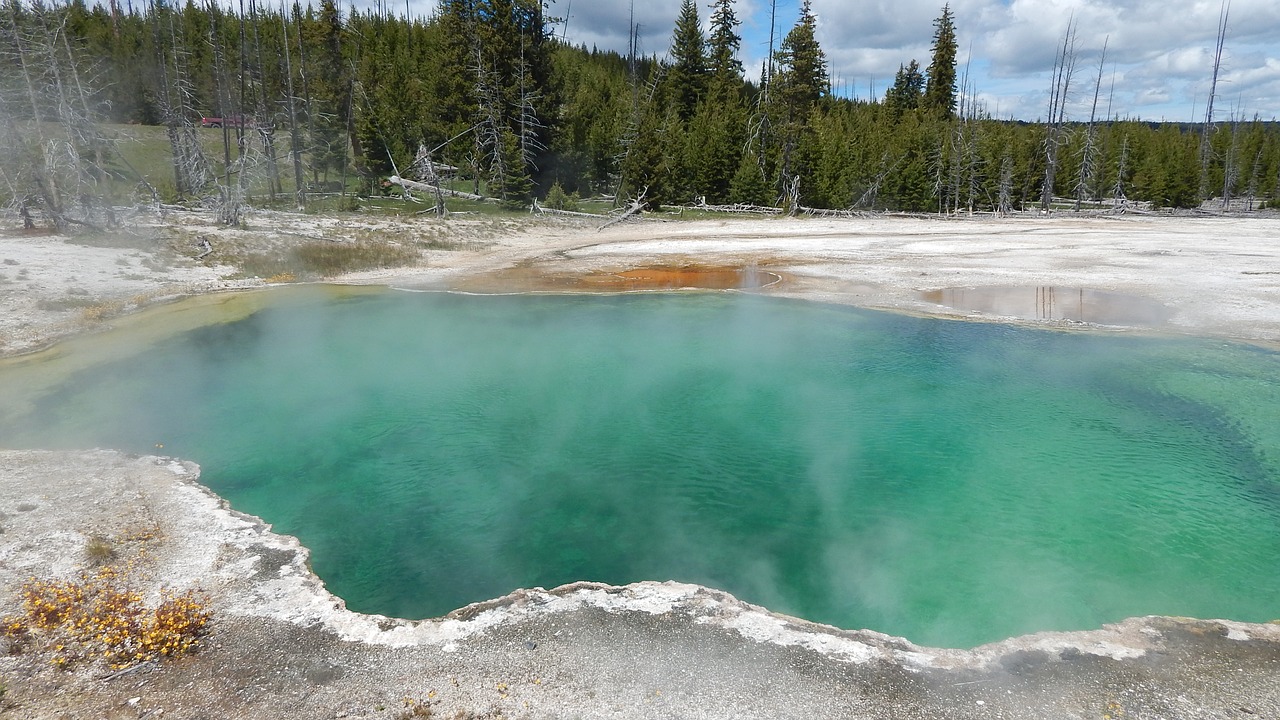
Microorganisms can be found in almost every habitat in the environment owing to their capacity to adapt and survive. Some of them can withstand extremely hot environments such as natural hot springs. Studying such organisms can help in understanding not just why they are so hardy but may also yield new and useful chemicals.

A team of scientists from National Collection of Industrial Microorganisms (NCIM) at National Chemical Laboratory, Pune have isolated untapped bacterial cultures from Unkeshwar hot springs on the bank of river Penganga in Maharashtra. These bacteria are being studied for their metabolic use in enzyme biotechnology and environmental remediation.
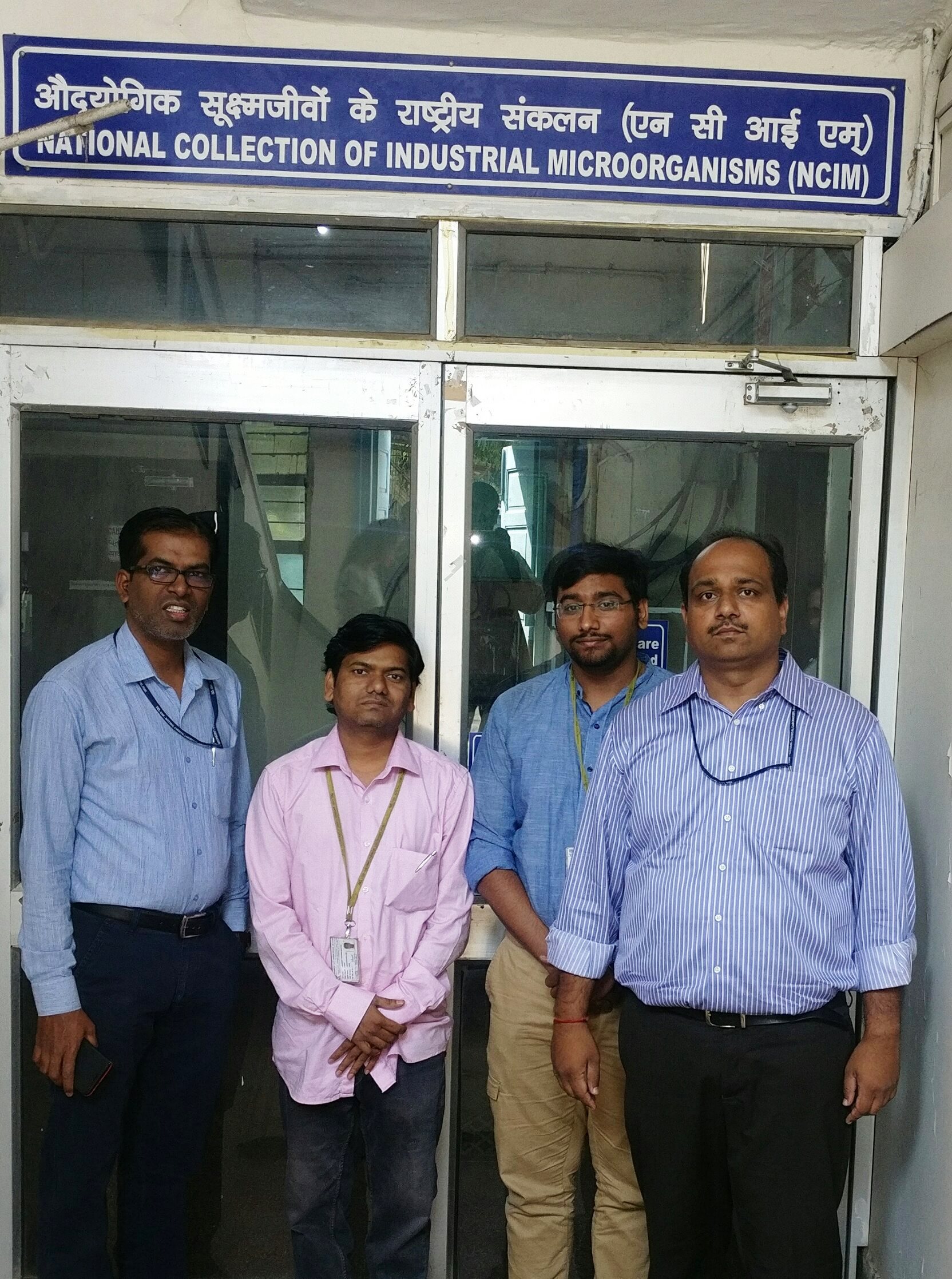
Team of scientists from National Collection of Industrial Microorganisms (NCIM) at National Chemical Laboratory, Pune

Team of scientists from National Collection of Industrial Microorganisms (NCIM) at National Chemical Laboratory, Pune

A total of 454 bacterial isolates obtained were mapped into 57 unique bacterial genera and 4 different bacterial phyla. Interestingly, 37 genera are not yet reported from Indian hot springs, were isolated for the first time in the study.  “Most of these genera (23 out of 37) were reported only in genetic material recovered from the environment from Indian and global hot springs. Furthermore, around 14 genera not previously cultivated and not detected in such studies of hot springs are documented in our study,” Dr. Mahesh Dharne, team leader and In-Charge of NCIM, told India Science Wire.

Simulation analyses of these isolates revealed the presence of around 315 metabolic pathways responsible for the metabolism of carbohydrates, synthesis of secondary metabolites and degradation of xenobiotic compounds. Further studies showed that 33 and 25 bacterial genera were positive for enzyme production (cellulase, xylanase, amylase, and protease) and were resistant to heavy metals like chromium and arsenic.

“Our study promotes the use of larger scale microbial cultivation studies for isolating the unexplored species which can be further exploited in basic and applied microbiology areas like enzyme technology for biofuel production, cleaning up polluted areas. However, still, newer cultivation approaches need to be applied for gaining increased access to a greater part of bacterial communities in Indian hot spring environments using systematic and coordinated approach”, Dr. Dharne explained.

The research team included Gajanan Mehetre, Manan Shah, Syed G. Dastager, Dr.  Mahesh S. Dharne. The research work was funded by Science and Engineering Board (SERB), Department of Science and Technology under a special grant for critical zone research and fellowship support from Academy of Scientific and Innovative Research (AcSIR), New Delhi. The study has been published in the journal Archives of Microbiology. (India Science Wire)

By Dr. Vaishali Lavekar

Journal Article

Untapped bacterial diversity and metabolic potential within Unkeshwar hot springs, India

For the latest Science, Tech news and conversations, follow Research Stash on TwitterFacebook, and subscribe to our YouTube channel 

Rate

Team of scientists from National Collection of Industrial Microorganisms (NCIM) at National Chemical Laboratory, Pune

A total of 454 bacterial isolates obtained were mapped into 57 unique bacterial genera and 4 different bacterial phyla. Interestingly, 37 genera are not yet reported from Indian hot springs, were isolated for the first time in the study.  “Most of these genera (23 out of 37) were reported only in genetic material recovered from the environment from Indian and global hot springs. Furthermore, around 14 genera not previously cultivated and not detected in such studies of hot springs are documented in our study,” Dr. Mahesh Dharne, team leader and In-Charge of NCIM, told India Science Wire.

Simulation analyses of these isolates revealed the presence of around 315 metabolic pathways responsible for the metabolism of carbohydrates, synthesis of secondary metabolites and degradation of xenobiotic compounds. Further studies showed that 33 and 25 bacterial genera were positive for enzyme production (cellulase, xylanase, amylase, and protease) and were resistant to heavy metals like chromium and arsenic.

“Our study promotes the use of larger scale microbial cultivation studies for isolating the unexplored species which can be further exploited in basic and applied microbiology areas like enzyme technology for biofuel production, cleaning up polluted areas. However, still, newer cultivation approaches need to be applied for gaining increased access to a greater part of bacterial communities in Indian hot spring environments using systematic and coordinated approach”, Dr. Dharne explained.

The research team included Gajanan Mehetre, Manan Shah, Syed G. Dastager, Dr.  Mahesh S. Dharne. The research work was funded by Science and Engineering Board (SERB), Department of Science and Technology under a special grant for critical zone research and fellowship support from Academy of Scientific and Innovative Research (AcSIR), New Delhi. The study has been published in the journal Archives of Microbiology. (India Science Wire)

By Dr. Vaishali Lavekar

Journal Article

Untapped bacterial diversity and metabolic potential within Unkeshwar hot springs, India

For the latest Science, Tech news and conversations, follow Research Stash on TwitterFacebook, and subscribe to our YouTube channel 
" }

A Lesson from Ramanujan’s Elbow

A Lesson from Ramanujan’s Elbow

Scribbled in black ink, about 130 unlabeled pages with mystifying mathematical equations that made no sense at the first glance was gathering the proverbial dust in a quiet corner in a box with assorted bills and letters at the library of Trinity College, Cambridge, for about fifty years, until accidentally chanced upon by Prof George Andrews of Pennsylvania State University one fine day in 1976.

  • News
  • 10K
Read more
Tinkering With Root Hair May Help Boost Crop Yields

Tinkering With Root Hair May Help Boost Crop Yields

Have you ever wondered how a plant is able to sense nutrients in the soil? The answer lies in the root design. Plants have the capability to change angle and length of their roots as well as hair-like extensions on roots for absorbing nutrients from the soil.

  • News
  • 3.4K
Read more
Study Warns Kala Azar Patients Can Infect Others Even After Treatment

Study Warns Kala Azar Patients Can Infect Others Even After Treatment

Adding a new dimension to the fight against kala-azar, a study has highlighted the need to keep track of patients even after they are treated successfully to see whether they develop a skin condition called post-kala-azar dermal leishmaniasis down the line

  • News
  • 2.3K
Read more

Internet is huge! Help us find great content

Newsletter

Never miss a thing! Sign up for our newsletter to stay updated.

About

Research Stash is a curated collection of tools and News for S.T.E.M researchers

Have any questions or want to partner with us? Reach us at hello@researchstash.com

Navigation

Submit