
Low Protein Diet in Early Life Increases Lifespan in Fruit Flies

  • Research Stash
  • News
  • 2.3K
  • Fruit flies raised on a low protein diet early in life can live over twice as long as their peers.
  • Adult fruit flies release toxic lipids from their ‘skin’ that shorten their own lifespan and other nearby flies.
  • These lipids were less toxic if the fly ate a low-protein diet during its early life before it became an adult.

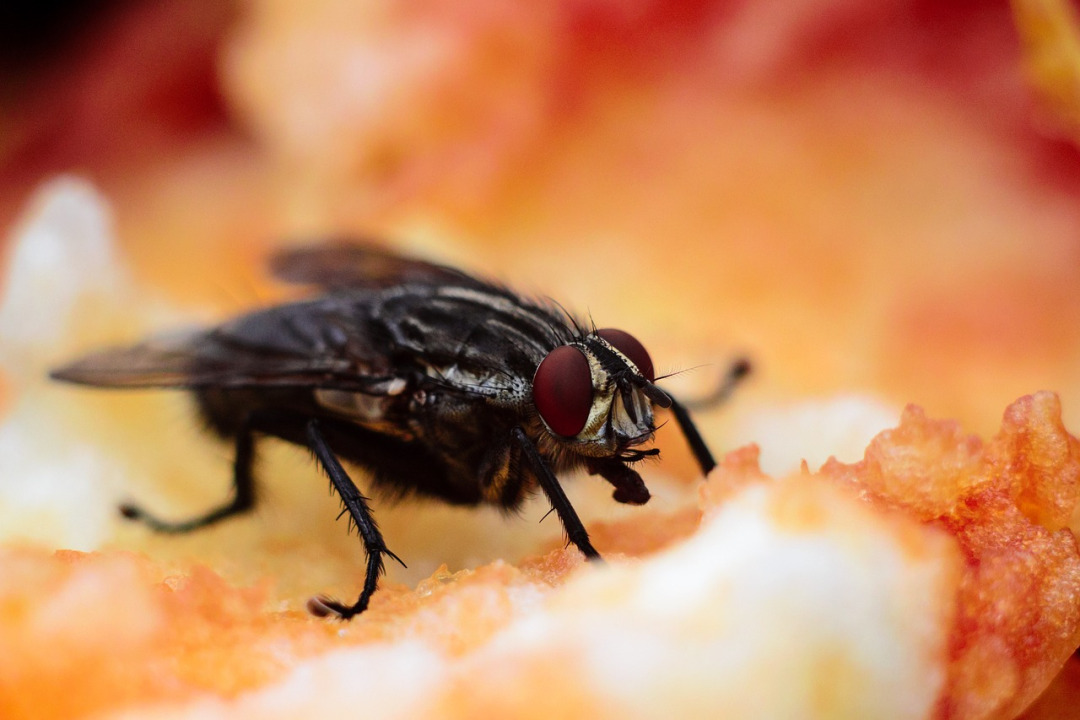
Fruit flies raised on a low protein diet early in life can live over twice as long as their peers, according to new research from the Francis Crick Institute published in Nature Communications.

To understand how diet in early life acts to alter lifespan, scientists used the fruit fly, Drosophila melanogaster. This insect shares more than two-thirds of disease genes in humans and is used in lifespan experiments because it lives for only two to three months, rather than many years.

The researchers found that flies raised on a low protein diet during the early part of their life but then swapped onto a standard diet as adults lived more than twice as long as flies fed throughout on a standard diet.

“There is evidence in humans and other mammals that a mother’s diet can alter the risk of her offspring developing cardiovascular disease and diabetes much later in life, but the genetic processes underlying this effect remain to be identified,” says Alex Gould, senior author of the paper and Group Leader at the Francis Crick Institute. “Obviously fruit flies are not humans, and it’s important to be clear that our results in flies are certainly not a recommendation that expecting mothers should eat a low-protein diet.”

The team found that adult fruit flies release toxic lipids from their ‘skin’ that shorten lifespan. These lipids were less toxic if the fly ate a low-protein diet during its early life before it became an adult.

“Skin lipids have beneficial functions in flies such as preventing dehydration and stimulating courtship behaviors, but our results now show that they also have a dark side,” says Irina Stefana, first author of the paper.

The scientists were surprised to find that toxic lipids produced by flies not only affect their own lifespan, but also that of other nearby flies.

“It isn’t just a case of ‘you are what you eat’ but ‘you are what your neighbor ate’, at least if you are a fruit fly,” says Alex.

The team wondered if the toxic skin lipids could also help explain why fruit flies have a shortened lifespan when they are densely populated – a phenomenon that scientists have been studying for nearly a century.

They found that doubling the number of flies in a container significantly shortened their lifespan. If, however, these flies had been genetically modified to prevent them from producing toxic skin lipids then doubling their number had no effect on lifespan. This and other experiments showed that the negative effect of population density on lifespan is caused by skin toxins.

“Like fruit flies, humans also produce skin lipids that moisturize and protect the skin against everyday wear and tear from the environment. But they too can be harmful because they react with sunlight and other stressors in the environment to produce harmful chemicals that can accelerate the signs of aging,” says Alex. “We know that many of the genes involved in making skin lipids are conserved from flies to humans. We now want to use fruit fly genetics to help pinpoint the ones that regulate how toxic they are.”

The paper ‘Developmental diet regulates Drosophila lifespan via lipid autotoxins‘ is published in Nature Communications.

The Francis Crick Institute

“There is evidence in humans and other mammals that a mother’s diet can alter the risk of her offspring developing cardiovascular disease and diabetes much later in life, but the genetic processes underlying this effect remain to be identified,” says Alex Gould, senior author of the paper and Group Leader at the Francis Crick Institute. “Obviously fruit flies are not humans, and it’s important to be clear that our results in flies are certainly not a recommendation that expecting mothers should eat a low-protein diet.”

The team found that adult fruit flies release toxic lipids from their ‘skin’ that shorten lifespan. These lipids were less toxic if the fly ate a low-protein diet during its early life before it became an adult.

“Skin lipids have beneficial functions in flies such as preventing dehydration and stimulating courtship behaviors, but our results now show that they also have a dark side,” says Irina Stefana, first author of the paper.

The scientists were surprised to find that toxic lipids produced by flies not only affect their own lifespan, but also that of other nearby flies.

“It isn’t just a case of ‘you are what you eat’ but ‘you are what your neighbor ate’, at least if you are a fruit fly,” says Alex.

The team wondered if the toxic skin lipids could also help explain why fruit flies have a shortened lifespan when they are densely populated – a phenomenon that scientists have been studying for nearly a century.

They found that doubling the number of flies in a container significantly shortened their lifespan. If, however, these flies had been genetically modified to prevent them from producing toxic skin lipids then doubling their number had no effect on lifespan. This and other experiments showed that the negative effect of population density on lifespan is caused by skin toxins.

“Like fruit flies, humans also produce skin lipids that moisturize and protect the skin against everyday wear and tear from the environment. But they too can be harmful because they react with sunlight and other stressors in the environment to produce harmful chemicals that can accelerate the signs of aging,” says Alex. “We know that many of the genes involved in making skin lipids are conserved from flies to humans. We now want to use fruit fly genetics to help pinpoint the ones that regulate how toxic they are.”

The paper ‘Developmental diet regulates Drosophila lifespan via lipid autotoxins‘ is published in Nature Communications.

The Francis Crick Institute

" }
Telamonia exhibiting araneophagy (Photo Somnath Kumbhar)

A Peek into Secret Lives of Indian Spiders

India is home to several unique species of spiders — some are known to science, while many others are yet to be discovered. According to an estimate, India is home to 59 families of spiders. Although spiders are often discussed based on their regional distribution – such as South Indian spiders and so on, they are not bound by these territories and can be found all over

  • News
  • 3.7K
Read more
New Book Explodes Myth about Cost of Instruments Used By Sir C V Raman

New Book Explodes Myth about Cost of Instruments Used By Sir C V Raman

It is a part of folklore about Indian science that Sir C V Raman made his Nobel-prize winning discovery in 1928 using instruments which cost just a few hundred rupees. A new book by a science historian has busted this myth.

  • News
  • 3.5K
Read more
Study Calls for Addressing All Gender Barriers to Ensure Universal Health Care

Study Calls for Addressing All Gender Barriers to Ensure Universal Health Care

A new study has shown that it is not enough to merely offer free care to encourage women to seek treatment in hospitals. It has found that gender disparity continued even where free health care was provided.

  • News
  • 2.4K
Read more

Internet is huge! Help us find great content

Newsletter

Never miss a thing! Sign up for our newsletter to stay updated.

About

Research Stash is a curated collection of tools and News for S.T.E.M researchers

Have any questions or want to partner with us? Reach us at [email protected]

Navigation

Submit