

Taiwan’s National Health Insurance Reduces Suicide Risk among Newly Diagnosed Cancer Patients

  • Research Stash
  • News
  • 2.1K

The launch of National Health Insurance (NHI) in Taiwan in 1995 has led to an average of 20% reduction of the relative magnitude of suicide mortality in newly diagnosed cancer patients versus the general population, according to a new study by researchers at National Taiwan University (NTU). This study has been published online on 2 March 2017 in Psycho-Oncology.
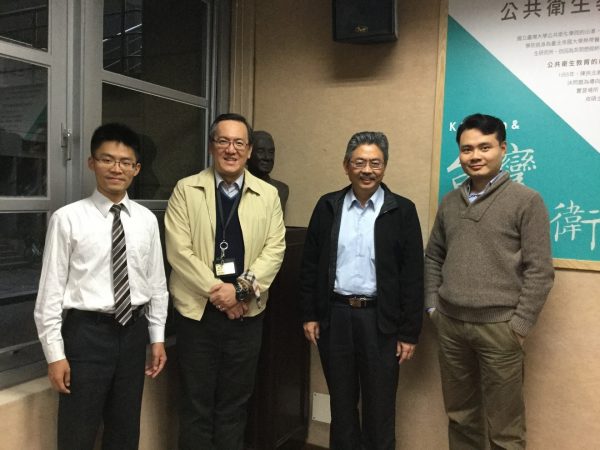
Taiwan’s National Health Insurance Reduces Suicide Risk among Newly Diagnosed Cancer Patients.jpg

People newly diagnosed with cancer are at an increased risk of suicide, says Dr. Po-Hsien Lin, the first author of the article and a psychiatrist working in Koo Foundation Sun Yat-Sen Cancer Center, “because they begin to face a myriad of stressors, including physical, psychological, and financial distress related to having cancer.”

In Taiwan, the single-payer universal health coverage of NHI covers all inpatient and ambulatory care. Professor Dr. Paul Krugman, a Nobel Laureate in Economics, has praised Taiwan’s health insurance system as the best in the world. ABC News reported on Taiwan’s NHI system, calling it a “Health Utopia.” In fact, the system’s excellent accessibility and low cost are partially due to Taiwanese healthcare workers’ relatively low pay and long work hours.

Although the NHI has been proved to remove some barrier to health care and change the outcome of psychiatric inpatients, its impact on suicide risk in patients with cancer is not clear. “The national cohorts of patients with newly diagnosed cancer of 23 years spanning across the period before and after the launch of NHI,” pointed out by Dr. Shih-Cheng Liao, the CEO of the Taiwan Suicide Prevention Center and one of the international contributors to the World Health Organization suicide report, “provides an invaluable quasi-experiment to examine the potential relationship between affordable medical care and the risk of suicide among cancer patients.”

“The financial toxicity of having cancer is substantially alleviated by NHI, which is one of the possible explanations of a 20% reduction in the Standardized Mortality Ratio of suicide after a cancer diagnosis,” says Dr. I-Ming Chen, an attending psychiatrist and Ph.D. candidate engaging in the study of health inequity.

“To the best of our knowledge,” says Dr. Wei J. Chen, the corresponding author and Dean of National Taiwan University College of Public Health, “this is the first study to demonstrate the impact of the universal coverage of health care on the reduction of the suicide risk in patients with cancer.”

The authors conclude, “The increased accessibility under a universal coverage of health care program that helps relieve both the physical and psychological distress related to cancer may account for the post-NHI reduction in suicide in patients with newly diagnosed cancer.”


Source: NTU

Rate

In Taiwan, the single-payer universal health coverage of NHI covers all inpatient and ambulatory care. Professor Dr. Paul Krugman, a Nobel Laureate in Economics, has praised Taiwan’s health insurance system as the best in the world. ABC News reported on Taiwan’s NHI system, calling it a “Health Utopia.” In fact, the system’s excellent accessibility and low cost are partially due to Taiwanese healthcare workers’ relatively low pay and long work hours.

Although the NHI has been proved to remove some barrier to health care and change the outcome of psychiatric inpatients, its impact on suicide risk in patients with cancer is not clear. “The national cohorts of patients with newly diagnosed cancer of 23 years spanning across the period before and after the launch of NHI,” pointed out by Dr. Shih-Cheng Liao, the CEO of the Taiwan Suicide Prevention Center and one of the international contributors to the World Health Organization suicide report, “provides an invaluable quasi-experiment to examine the potential relationship between affordable medical care and the risk of suicide among cancer patients.”

“The financial toxicity of having cancer is substantially alleviated by NHI, which is one of the possible explanations of a 20% reduction in the Standardized Mortality Ratio of suicide after a cancer diagnosis,” says Dr. I-Ming Chen, an attending psychiatrist and Ph.D. candidate engaging in the study of health inequity.

“To the best of our knowledge,” says Dr. Wei J. Chen, the corresponding author and Dean of National Taiwan University College of Public Health, “this is the first study to demonstrate the impact of the universal coverage of health care on the reduction of the suicide risk in patients with cancer.”

The authors conclude, “The increased accessibility under a universal coverage of health care program that helps relieve both the physical and psychological distress related to cancer may account for the post-NHI reduction in suicide in patients with newly diagnosed cancer.”
Source: NTU
" }
Dr. Amit Kumar with his team at his lab in IIT-Indore

New Study May Help Address Drug Resistant Pneumococcal Diseases

Indian researchers have identified three drug target sites in the genome of Streptococcus pneumoniae, paving the way for developing newer drugs to treat Pneumococcal diseases

  • News
  • 3.5K
Read more
Microsoft predicts everyone will soon have an AI "second self" to boost intelligence

Research Stash Weekly Review #12

Latest research news in science and technology across the globe, handpicked by Research Stash team

Read more

Peptide Nasal Spray to Delay Onset of Alzheimer’s disease

Dr. Rita P.-Y. Chen, an Associate Research Fellow at the Institute of Biological Chemistry along with Dr. Pang-hsien Tu, a former Assistant Research Fellow at the Institute of Biomedical Sciences, and their research teams recently found that a modified short peptide delays the onset of Alzheimer’s disease when delivered in the form of a nasal drop in a mouse model.

  • News
  • 5.1K
Read more

Internet is huge! Help us find great content

Newsletter

Never miss a thing! Sign up for our newsletter to stay updated.

About

Research Stash is a curated collection of tools and News for S.T.E.M researchers

Have any questions or want to partner with us? Reach us at hello@researchstash.com

Navigation

Submit